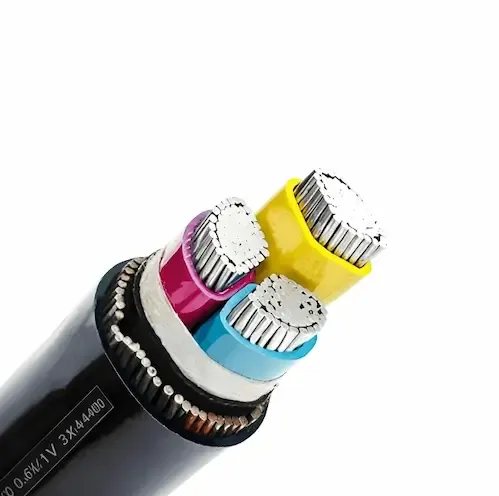
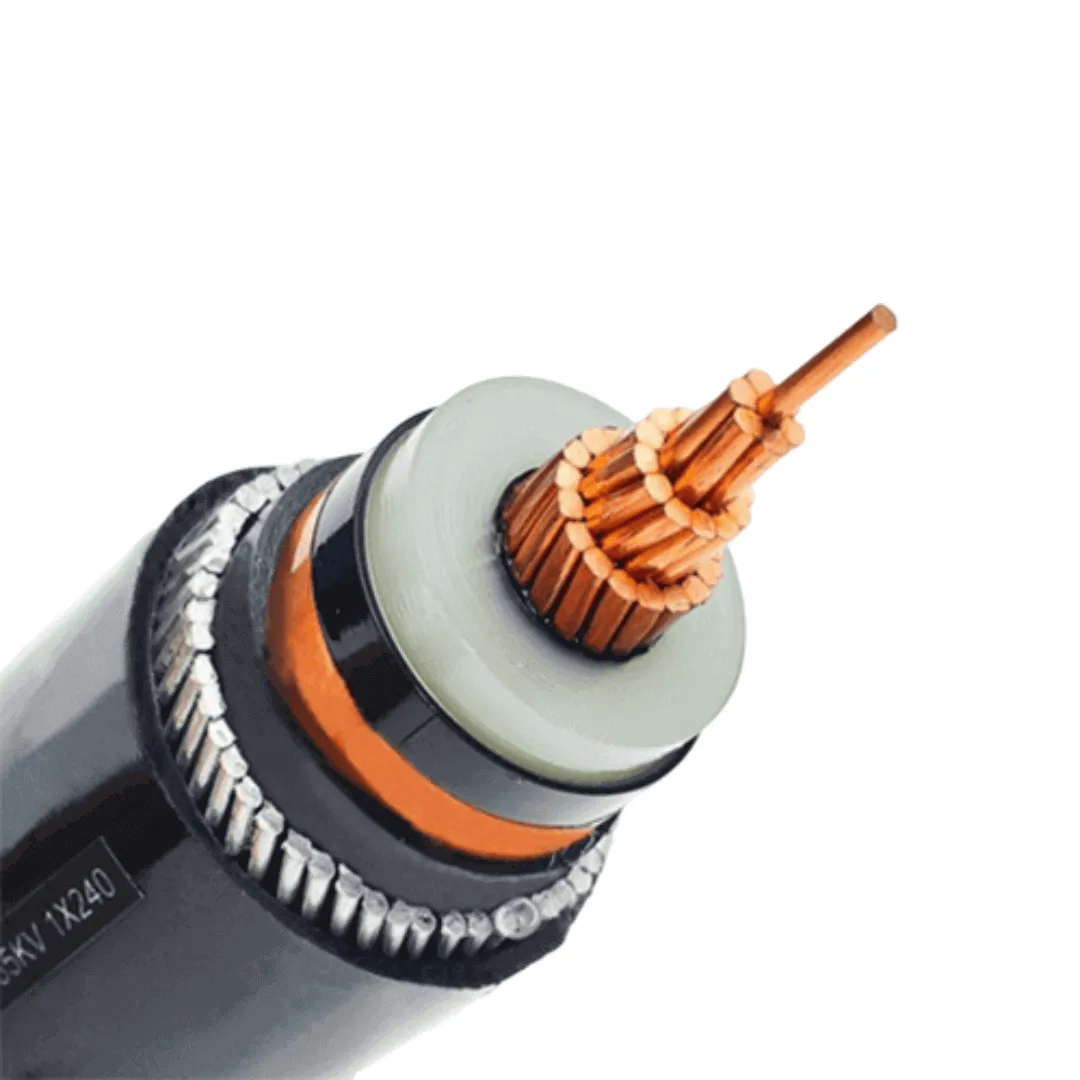
Key Takeaway
When NYY suits an underground fixed route, when to switch to NYBY, SWA or N2XY, and the 9 checks to complete before you send an NYY cable RFQ.
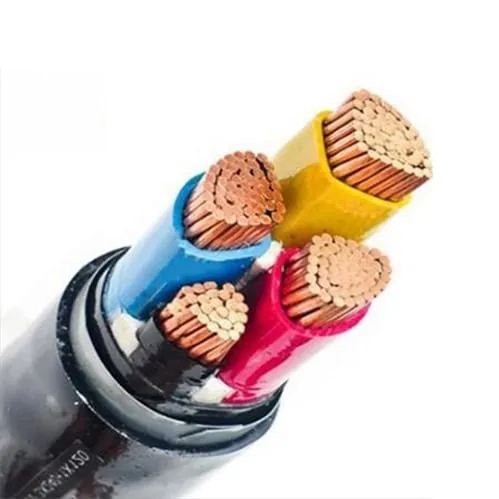
NYY is a reasonable choice for an underground run when the route is a fixed installation at 0.6/1 kV, the cable sits in a duct, conduit or protected trench, and the project specification or local practice accepts an unarmoured PVC cable in ground. It is not enough to write "NYY" on a purchase order when the cable will be laid directly in soil that will be dug, driven over or loaded with rock fill, or when the circuit needs to run hotter than PVC allows. In those cases the decision moves to an armoured construction (NYBY or SWA) or to an XLPE-insulated cable such as N2XY, and the RFQ should say so before any supplier quotes.
That is the short answer. The rest of this guide is for procurement engineers, electrical contractors and distributors in Southeast Asia, Africa, the Middle East and South Asia who have "NYY" in a drawing, BOQ or approved-materials list and need to turn it into an RFQ that a factory can quote without three rounds of clarification. It covers the decision between NYY and its alternatives, nine items to confirm before you ask for a price, a copyable RFQ template, and the documents to check when the drums arrive.
What this page does not do: it does not repeat a size or dimension table, and it does not give prices, burial depths or trench designs. Product details for our NYY-J and NYY-O range are on the NYY cable product page. For trench and laying methods, see our guide to underground cable types and installation methods by soil condition.
What exactly is an NYY cable?
NYY is a cable designation, not a standard. In common usage it describes a copper conductor, PVC insulated, PVC sheathed power cable for fixed installation, rated 0.6/1 kV. There is no armour and no metallic screen in a plain NYY. We deliberately do not decode the letters into a standard number here: the designation tells you the construction family, and the standard that governs it is whatever your tender names.
In the Huanghe factory product table, the NYY-J and NYY-O entry sits in the PVC insulated, PVC sheathed power cable group, with the construction written as Cu / PVC / PVC. The same table lists the core arrangements the factory family covers: 1 to 5 cores, plus 3+1, 3+2 and 4+1 unequal-core designs, across a family cross-section capability of 0.5 to 1000 mm². That range is the family capability, not a promise that every core count is made in every size. (Source: Huanghe factory data.)
Three boundaries matter for buyers:
- NYY is PVC-insulated. It is not an XLPE cable, and it should not be quoted, labelled or documented as one.
- NYY is close in construction to the Chinese GB designation VV, and both can come off the same PVC extrusion lines. They are still different orders. A buyer who writes NYY expects NYY marking, the core colours and earth-core arrangement in the specification, and test records for that construction. A VV cable shipped with an NYY label is a substitution, not an equivalent.
- The NYY designation does not by itself tell the factory which standard, which core colours or which conductor class you want. Those have to be written into the RFQ.
Is NYY cable suitable for underground installation?
It can be, within limits. NYY is a fixed-installation cable. On our product data it is listed for buildings, trays, ducts, and ground routes where the local practice accepts unarmoured PVC cable (source: Huanghe factory data). Whether your particular route accepts it is a design and local-code question, not a cable-catalogue question.
The practical test is what can reach the cable after it is laid. The sheath of an NYY is its only mechanical barrier. That is usually acceptable when:
- The cable is pulled into ducts or conduits, and the duct takes the crushing and digging risk.
- The route runs inside a controlled site, such as a plant or substation yard, where later excavation is managed.
- The backfill is selected or screened, and the route is protected and marked according to the project specification.
- The project designer has accepted unarmoured cable in writing for that route.
It is a weak choice, and an RFQ that only says "NYY" is incomplete, when:
- The cable will be laid directly in soil under roads, driveways or yards with vehicle loading.
- The route crosses public land where third-party excavation is likely and outside your control.
- The trench is in rocky ground and the backfill cannot be guaranteed free of sharp stones.
- Rodents, termites or ground movement are known problems at the site.
- The specification or the utility requires an armoured cable, or an armour that also serves as a protective conductor.
In those conditions, the question is no longer "which NYY" but "which armoured cable" or "which insulation", and that decision should be made by the designer before the RFQ goes out, not by the supplier at the quotation stage.
NYY, N2XY, NYBY or SWA: which construction fits the route?
The table below compares the four constructions buyers most often weigh against each other on a low-voltage underground package. It only lists what can be backed by the factory data or by the designation itself. It is a shortlist for the designer, not a substitute for the design.
| Construction | Insulation / sheath | Mechanical protection | Max. conductor temperature (continuous / short circuit, 5 s) | Typical reason to choose it |
|---|---|---|---|---|
| NYY (NYY-J / NYY-O) | PVC / PVC | None beyond the PVC sheath | 70 °C / 160 °C (PVC material, Huanghe factory data) | Fixed routes in ducts, conduits, trays or protected trenches where the specification accepts unarmoured PVC cable |
| N2XY | XLPE / PVC | None beyond the sheath | 90 °C / 250 °C for the XLPE insulation (Huanghe LV catalogue values for XLPE) | Same kind of route as NYY, but the circuit needs the higher thermal rating of XLPE |
| NYBY (VV22 in GB terms) | PVC / PVC | Double steel tape armour (Cu / PVC / DSTA / PVC) | 70 °C / 160 °C (PVC) | Direct-laid routes that need protection against crushing and impact, where tape armour is accepted |
| SWA PVC (VV32 in GB terms) | PVC / PVC | Steel wire armour (Cu / PVC / SWA / PVC) | 70 °C / 160 °C (PVC) | Direct burial and routes with higher mechanical risk, or where wire armour is specified |
Source notes: the NYY-J / NYY-O, VV22 / NYBY and VV32 constructions and the PVC and XLPE temperature values are taken from Huanghe factory data. N2XY is listed by its designation meaning (XLPE insulation, PVC sheath). Our closest XLPE-insulated, PVC-sheathed production is the YJV construction on the XLPE power cable page. If a tender names N2XY, treat it as its own construction and confirm it the same way as NYY. Do not assume a GB-designated cable meets it.
Two things the table does not settle. First, it does not tell you which conductor size you need. Moving from PVC to XLPE changes the current rating, so a size that was right for NYY may not be the same size for N2XY. That is a recalculation for the designer, done to the method the project uses. Second, steel tape and steel wire armour behave differently when used as an earth path and when the cable is pulled or bent. If the design counts on the armour for earthing, that must be stated, because it affects which armour type and cross-section is acceptable.
The 9 checks before you request an NYY quote
These are the items that, when they are missing from an RFQ, typically lead to a clarification round, a quote built on assumptions, or a cable that arrives right by name and wrong by detail. Each one is something the buyer or the designer has to supply. A factory should not guess any of them.
1. Project standard and edition
Write the standard that governs the cable, including the edition, exactly as it appears in the tender, the consultant's specification or the utility's approved-materials list. "NYY" alone is not a standard.
For extruded-insulation power cables at this voltage, IEC 60502-1 is the international reference. It covers cables rated 1 kV (Um = 1.2 kV) and 3 kV (Um = 3.6 kV). According to the IEC Webstore record we checked in September 2026, the current edition is IEC 60502-1:2021 (Edition 3.0). If your specification names a national or regional standard instead, put that standard and its edition in the RFQ. We will not substitute a standard number of our own, and you should be cautious of any quote that does.
Also say which documents the standard has to appear on: the datasheet, the drum label, the sheath marking, the test records. If the tender requires the marking to show the standard, the factory needs to know before printing.
2. Rated voltage
For NYY this is normally 0.6/1 kV. Write it as U0/U, not as "1 kV" or "415 V". The system voltage of the installation and the rated voltage of the cable are different numbers. A 400/415 V three-phase network is normally served by 0.6/1 kV cable, and the BOQ should use the cable designation so every bidder quotes the same insulation class.
If any line in the package is above 1 kV, it is not an NYY line and should be split out to its own BOQ section with the correct medium-voltage designation.
3. Conductor material, class and cross-section
NYY is a copper-conductor designation. If the BOQ allows aluminium, it is asking for a different cable and should say so on a separate line.
State the conductor class as well as the size. Our NYY data lists solid Class 1 or stranded Class 2 copper (source: Huanghe factory data). Conductor classes and their resistance limits are defined in IEC 60228, so referencing "Class 2 to IEC 60228" is clearer than writing "stranded". Smaller sizes are often offered in either class, and the two terminate differently, so the choice should come from the design, not from what is on the shelf.
Write the size as cores × cross-section in mm² for every line, for example 4 × 16 mm² or 3 × 95 + 1 × 50 mm². "16 mm² NYY" leaves the core count open, and that changes both the price and the drum.
4. Number of cores and NYY-J or NYY-O
Give the core count and state NYY-J or NYY-O on every line. These two suffixes are covered in more detail in the next section. In short, NYY-J includes a green/yellow protective core and NYY-O does not. A 4-core NYY-J and a 4-core NYY-O are different cables, because one of the four cores in the J version is the protective core.
Also state the core colour sequence required by your specification. Colour codes differ between standards and between markets, and the factory needs them before the insulation is extruded, not after.
5. Installation method along the route
Describe how the cable will be installed, section by section if the route changes. For example:
- In a duct bank or conduit, with draw-pit spacing if known.
- Laid directly in a trench.
- On a tray or ladder in a plant room before going underground.
- Through a wall or floor penetration that needs a particular gland.
This affects more than the cable type. Pulling length, bending at draw pits and terminations, and drum length all depend on it. Our PVC data gives a minimum installation bending radius of 15D for unarmoured multi-core cable and 12D for armoured multi-core cable, with tighter limits of 12D and 10D near joint boxes and terminations, where D is the overall diameter (source: Huanghe factory data). The minimum installation temperature for PVC cable is 0 °C. If you will be pulling in cold conditions or around tight draw-pit bends, say so in the RFQ.
6. Mechanical protection: is unarmoured actually accepted?
This is the check that decides whether NYY is the right cable at all. Before the RFQ goes out, get a clear answer from the designer or the specification:
- Is unarmoured cable accepted for this route?
- If not, is steel tape armour (NYBY) accepted, or is steel wire armour (SWA) required?
- Is the armour expected to act as a protective conductor?
- Is any section of the route under a road or other loaded surface?
If the answer is "armoured", do not ask for NYY and hope the supplier upgrades it. Write the armoured construction you need. If the answer is "it depends on the section", split the BOQ into separate lines by route section. We cover this in more detail in our comparison of armoured vs non-armoured cable and when mechanical protection is needed.
7. Environment and service conditions
List the conditions that the cable and its sheath will face. The ones that most often change the construction are:
- Ground temperature and ambient temperature on any exposed section. This matters directly for PVC, which has a maximum continuous conductor temperature of 70 °C (Huanghe factory data).
- Groundwater, waterlogged trenches or tidal ground.
- Chemical exposure, for example in industrial or petrochemical sites.
- Termites or rodents, where a protective sheath compound may be needed. Our PVC range lists anti-termite cable as an available option (Huanghe factory data).
- Flame-retardant or low-smoke requirements on the indoor end of the route, for example where an underground feeder rises into a building.
- UV exposure on any section that runs above ground.
If a sheath property is a requirement, write the test or standard that proves it. "Termite resistant" or "UV resistant" with no reference cannot be verified at inspection.
8. Tests and documents required
Ask for the documents you will actually need for approval, shipment and site acceptance, and name them in the RFQ. A quote that says "test certificate included" without saying which tests, to which standard, is hard to compare and harder to accept.
Separate the request into three groups:
- Before production: the datasheet for the exact construction, with overall diameter and weight for each size. On our NYY range, dimensions and weights are returned per order, because they follow the standard in your tender rather than a generic table (Huanghe factory data).
- With the shipment: factory test records for the order, identified by drum or batch, plus the commercial documents for customs. Our factory issues commercial invoices, packing lists and certificates of origin, including FORM E for ASEAN destinations, and each batch ships with factory test reports (Huanghe factory data).
- Only if the project requires it: a type test report, a witnessed test, or a third-party pre-shipment inspection. Our factory supports SGS, BV and SABS audits and inspections (Huanghe factory data). These have to be planned with the order, so state them at the RFQ stage.
On certification, be precise. We do not hold a CCC or CB certificate that names NYY. Our CB certificates cover specified IEC 60502-1 XLPE-insulated 0.6/1 kV constructions and do not name PVC-insulated NYY, so we do not offer them as NYY certification. If your approval process needs a third-party document specific to NYY, write that in the RFQ so the testing route can be agreed before production. The certificates we do hold, and what each one covers, are listed on our certificates page.
9. Length, drums, packaging and destination
Give the total length per size, and the drum lengths or drum schedule if the route design sets them. If there is no drum schedule yet, give the route lengths, the number of runs and any length per run that cannot be jointed. The factory can then confirm the maximum length per drum for each size.
Add the rest of the shipping information:
- Drum type and any limits on drum size or weight at site.
- Sheath marking text, for example buyer name, project code and length markings. Marking content and spacing should be agreed at contract stage.
- Incoterm and named place, for example FOB a Chinese port or CIF your destination port.
- The destination port and the final site, if inland transport limits the drum size.
We do not publish a fixed price, MOQ or delivery date for NYY in this guide. All three depend on the size and core mix, the standard, the quantity per size and the production schedule at the time of order, and they are confirmed with the quotation.
NYY-J vs NYY-O: what the suffix changes
In common industry usage, the J and O suffixes describe the earth core:
- NYY-J: includes a green/yellow protective core. This is the version most tenders call for when the cable feeds a distribution board, a motor or a pump and the protective conductor runs in the same cable.
- NYY-O: has no green/yellow protective core. All cores are used as line or neutral conductors, and the protective conductor is provided another way, for example by a separate earth cable.
Our factory product table lists the two together as "NYY-J (with a green/yellow earth wire) & NYY-O" (Huanghe factory data). The suffix is about core identification, not about insulation, armour or voltage. A 4 × 25 mm² NYY-J has three line or neutral cores and one green/yellow core, while a 4 × 25 mm² NYY-O has four cores and none of them is green/yellow.
Two mistakes to avoid:
- Do not infer a standard number from the letters. The J/O convention is used in more than one standard family, and the exact core colours, marking and test requirements depend on the standard your project names. Write the standard and the colour sequence. Do not rely on the suffix to carry them.
- Do not let J or O be decided at the factory. If the BOQ says only "NYY", a supplier has to pick one. If the design needs a protective core and the cable arrives without one, the problem is found at termination, when it is most expensive to fix.
If you are not sure which one the design needs, ask the designer how the protective conductor is provided on each circuit. The answer decides J or O.
When should you change from NYY to N2XY, NYBY or SWA?
Changing the construction is a design decision, and it should be written into the RFQ as a separate cable type, not as a note asking the supplier to "upgrade if needed". The usual triggers are below.
If the design moves away from NYY, our XLPE-insulated and steel wire armoured constructions are listed alongside NYY in our power cable product range.
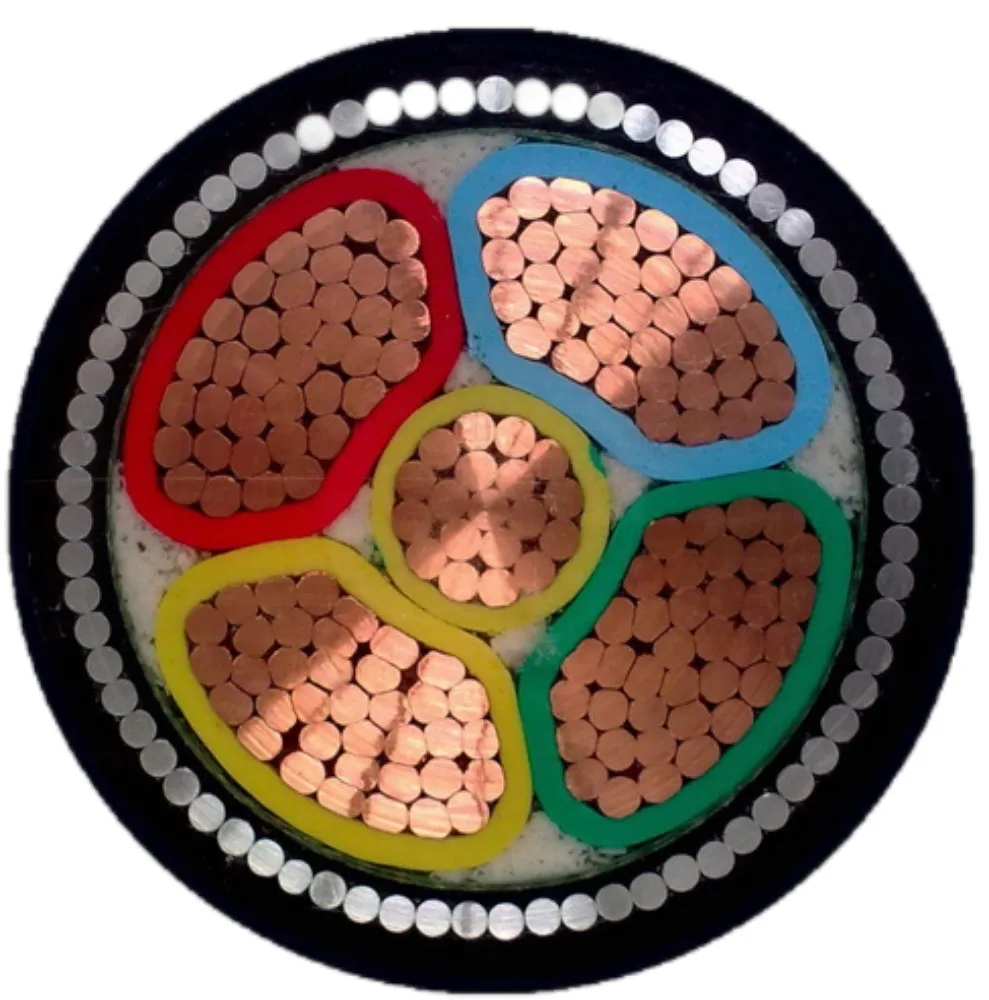
Move to N2XY (or another XLPE cable) when the thermal limit is the problem
PVC insulation is limited to 70 °C continuous and 160 °C for a short circuit of up to 5 seconds. The XLPE insulation in our LV catalogue is rated 90 °C continuous and 250 °C short circuit (both from Huanghe factory data). That difference matters when:
- The design calculation shows that PVC needs a larger conductor than XLPE for the same load, and the size difference matters for cost, weight or termination.
- The route has a high ground or ambient temperature, or groups of cables in the same duct bank, and the derated PVC rating is not enough.
- The fault level and protection clearing time are close to the PVC short-circuit limit.
What changes on the RFQ: the cable type, and often the conductor size. Do not just swap NYY for N2XY on the same size without the designer confirming the rating. Note that N2XY is still unarmoured, so it does not solve a mechanical-protection problem.
Move to NYBY when the route needs protection and tape armour is accepted
NYBY adds a double steel tape armour between the inner and outer PVC layers. Our construction is Cu / PVC / DSTA / PVC, listed in the factory table alongside its GB equivalent VV22 (Huanghe factory data). It is the usual step up when a direct-laid route needs protection against crushing and impact and the specification accepts steel tape.
What changes on the RFQ: the cable type, the bending limits (armoured multi-core cable is 12D at installation in our data, against 15D for unarmoured), the glands at each end, and the weight per drum.
Move to SWA when wire armour is specified or the mechanical risk is higher
Steel wire armour is the construction many specifications require for direct burial, for routes with higher tensile loads during pulling, or where the armour is used as part of the earthing arrangement. In PVC form it is the VV32 construction, Cu / PVC / SWA / PVC, in the Huanghe range. It is also available with XLPE insulation. See our SWA armoured cable page.
What changes on the RFQ: the cable type, the armour material and, if the armour is used as a protective conductor, the armour cross-section requirement. The glands also change, and they should be ordered for the actual overall diameter on the cable datasheet.
Substitutions to refuse
- VV offered as NYY. Close in construction, but the marking, core colours and documents are not the same. Accept a VV only if the specification allows it, and then buy it as VV, not under an NYY label.
- NYY offered where armour is specified. No amount of sheath thickness turns NYY into an armoured cable.
- N2XY on the same size "because XLPE is better". It might be fine, but the size should come from the calculation, and the change should be approved by whoever signed the design.
- Any unarmoured cable described as "suitable for direct burial" without a reference. Ask which standard or project clause supports that statement for your route.
A copyable RFQ template for an NYY cable package
Copy the block below into your RFQ email or attach it as a sheet. Fill one line per cable size. Leave a field as "to be confirmed" if you do not know it yet, rather than deleting it, so the supplier can see what is still open. This is a blank template, not an example from a real project.
RFQ – 0.6/1 kV NYY power cable

Project / tender reference: ____________________
Destination country and port: ____________________
Final site (if inland transport limits drum size): ____________________
Incoterm and named place: ____________________

Governing cable standard and edition: ____________________
Other specifications (consultant / utility / approved list): ____________________
Rated voltage U0/U: 0.6/1 kV

Line | Type (NYY-J / NYY-O / NYBY / SWA / N2XY) | Cores x mm² | Conductor class | Length (m) | Drum length (m) | Route section
1    |                                          |             |                 |            |                 |
2    |                                          |             |                 |            |                 |
3    |                                          |             |                 |            |                 |

Core colour sequence: ____________________
Installation per route section (duct / conduit / direct in trench / tray): ____________________
Unarmoured cable accepted on this route? Yes / No / Per section: ____________
Armour used as protective conductor? Yes / No
Environment (ground temp., water, chemicals, termites, UV on exposed sections): ____________________
Sheath requirements (flame retardant, anti-termite, other – with test reference): ____________________
Sheath marking text: ____________________

Documents before production: datasheet with OD and weight per size / drawing approval
Documents with shipment: factory test records per drum, packing list, certificate of origin (type: ______)
Third-party inspection or type test required? No / Yes – body and scope: ____________
Drum type or size/weight limits at site: ____________________
Required delivery window at site: ____________________
When several suppliers are quoting, send all of them the same filled template. Ask each one to answer line by line, and to mark any line where they propose a different construction. That makes substitutions visible instead of buried in a datasheet.
Inspection documents and acceptance checklist
When the documents and drums arrive, check them against the RFQ, not against the supplier's own datasheet. The checklist below follows the order in which most receiving teams see the material.
Before shipment
| Check | What to compare it with |
|---|---|
| Datasheet construction (insulation, sheath, armour or none) | RFQ line type: NYY is Cu / PVC / PVC, NYBY is Cu / PVC / DSTA / PVC |
| Core count and NYY-J or NYY-O | RFQ line and core colour sequence |
| Conductor material, class and size | RFQ line and IEC 60228 class, if named |
| Standard and edition shown on datasheet and test records | Governing standard in the RFQ |
| Overall diameter per size | Gland and duct sizes on the design |
| Drum schedule | Ordered lengths and any non-jointable runs |
| Third-party inspection report, if ordered | The scope agreed at order |
On receipt at site
- Drum labels: type, size, length, drum number and the project marking you specified.
- Sheath marking: printed text matches the agreed marking, including NYY designation and standard where required.
- Drum and cable end condition: end caps in place, no visible sheath damage, drum flanges intact.
- Factory test records: one record per drum or batch, and the drum numbers on the records match the drums delivered.
- Packing list: quantities and drum numbers match the commercial invoice.
- Certificate of origin and any other customs documents named in the contract.
Before energising
Site tests after laying and termination are set by the project specification and the local authority, not by the cable factory. Factory records show the condition of the cable when it left the factory. They do not replace a site test after transport, pulling and termination. Keep the drum numbers on the as-built records so any future fault can be traced back to the factory record for that length.
What to send us for an NYY quotation
If you have filled in the template above, send it as it is. If not, these are the items we need to quote an NYY, NYBY or SWA line without guessing:
- Rated voltage (0.6/1 kV for NYY) and the governing standard with its edition.
- Cable type per line: NYY-J, NYY-O, NYBY, SWA or N2XY.
- Number of cores and cross-section for every size, for example 4 × 16 mm² or 3 × 95 + 1 × 50 mm².
- Conductor class, if specified.
- Total length per size, and drum lengths if the route sets them.
- Installation method: duct, conduit, direct in trench or tray, and whether unarmoured cable is accepted.
- Destination port, Incoterm and any drum size or weight limits at site.
- Documents and inspection required with the shipment.
Product details, the factory construction table and the PVC material ratings for our range are on the NYY cable product page. You can see our production lines and test facilities on the factory page. When your list is ready, send it through the contact page, and we reply with a datasheet for the exact construction and a quotation confirmed against your specification.
FAQ
Can NYY cable be buried directly in the ground?
It can be used in ground where the project specification and local practice accept unarmoured PVC cable, typically in ducts, conduits or protected trenches. Where the route needs mechanical protection, for example under loaded surfaces or where third-party digging is likely, specify an armoured construction such as NYBY (steel tape) or SWA (steel wire) instead.
Is NYY cable the same as N2XY?
No. NYY has PVC insulation, and N2XY has XLPE insulation, both with a PVC sheath and no armour. In our factory data, PVC is rated 70 °C continuous and 160 °C short circuit, and XLPE is rated 90 °C and 250 °C. Changing from one to the other can change the conductor size, so it needs a design check.
What is the difference between NYY-J and NYY-O?
In common usage, NYY-J includes a green/yellow protective core and NYY-O does not. The exact core colours and marking follow the standard named in your tender, so state the standard, J or O, and the colour sequence on every line of the RFQ.
Can a VV cable be supplied instead of NYY?
Only if your specification allows it, and then it should be ordered and documented as VV. The two are close in construction, but an NYY order is marked NYY and built to the NYY construction in your specification. Shipping VV under an NYY label is a substitution, and we do not do it.
Which standard should an NYY RFQ name?
The one in your tender or approved-materials list, with its edition. For extruded-insulation power cables rated 1 kV and 3 kV, IEC 60502-1 is the international reference, and IEC 60228 defines conductor classes. If your project uses a national or regional standard, name that standard exactly instead of describing it.
Is your NYY cable CB or CCC certified?
No. We do not hold a CB or CCC certificate that names NYY. Our CB certificates cover specified IEC 60502-1 XLPE-insulated 0.6/1 kV constructions, not PVC-insulated NYY. NYY is built and tested to the standard in your tender. If you need a third-party type test or pre-shipment inspection, tell us at the RFQ stage.
What documents come with an NYY shipment?
Factory test records for the order, a packing list, a commercial invoice and a certificate of origin, including FORM E for ASEAN destinations where applicable. Datasheets with overall diameter and weight are provided for the ordered sizes. Third-party inspection reports are added when they are part of the order.
How long can an NYY drum be?
It depends on the size and core count, because the overall diameter and weight set the drum. Send the route lengths or drum schedule with the RFQ, and we confirm the maximum length per drum for each size in the quotation.
Do you publish an NYY price, MOQ or lead time?
Not in this guide. Price depends on the size and core mix, copper cost and quantity per size, and MOQ and production time depend on the construction and the schedule at the time of order. All three are confirmed in the quotation for your specification.
Sources
- Huanghe factory data: PVC insulated, PVC sheathed power cable table (NYY-J / NYY-O, VV, VV22 / NYBY, VV32 constructions, core arrangements and family cross-section range); PVC material ratings (70 °C service, 160 °C short circuit for max. 5 s, 0 °C minimum installation temperature); minimum bending radii; XLPE material ratings (90 °C service, 250 °C short circuit for max. 5 s); export document and inspection support.
- IEC 60502-1:2021 (Edition 3.0), Power cables with extruded insulation and their accessories for rated voltages from 1 kV (Um = 1.2 kV) up to 30 kV (Um = 36 kV), Part 1: Cables for rated voltages of 1 kV (Um = 1.2 kV) and 3 kV (Um = 3.6 kV). Edition as listed in the IEC Webstore, checked September 2026.
- IEC 60228, Conductors of insulated cables: referenced for conductor class definitions only.