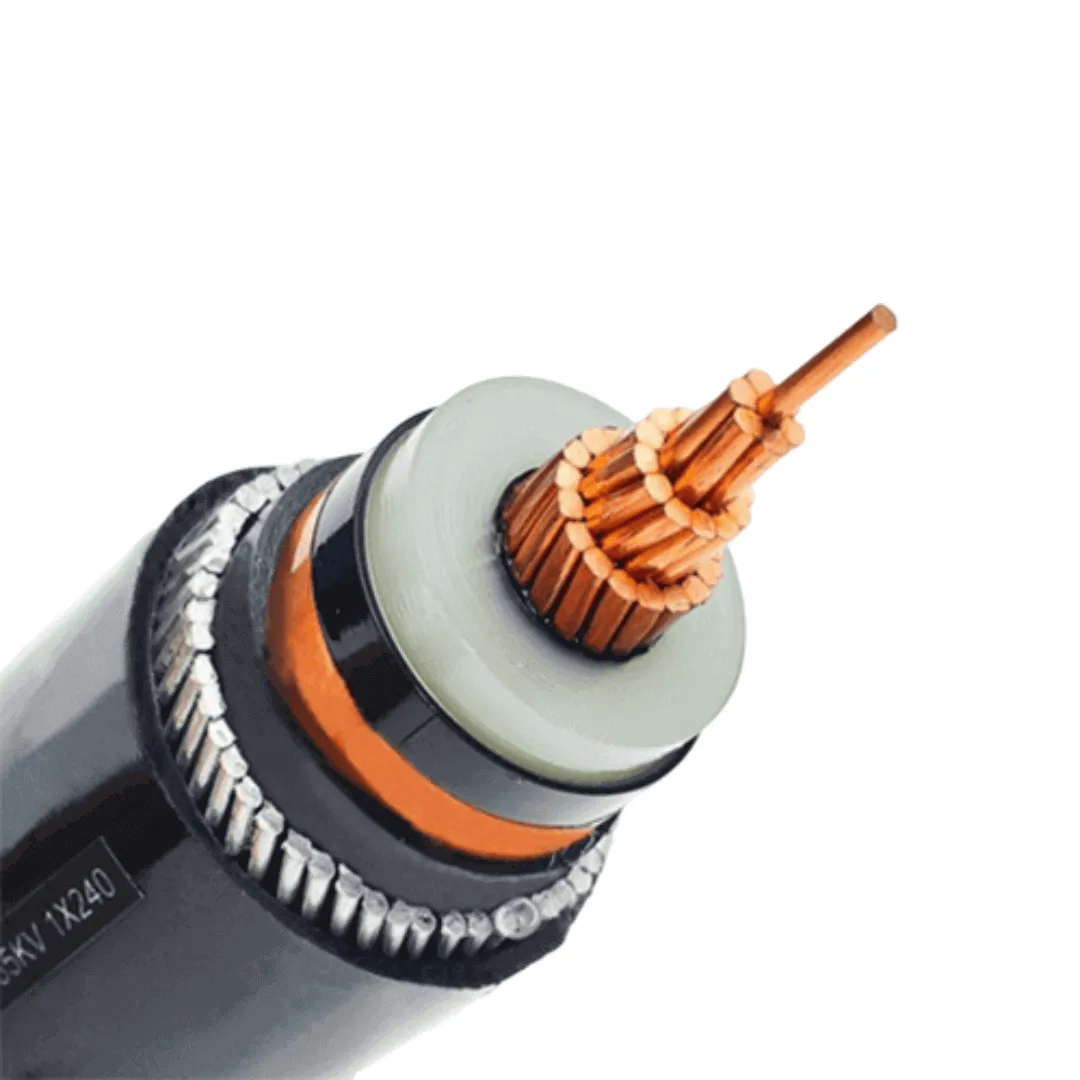
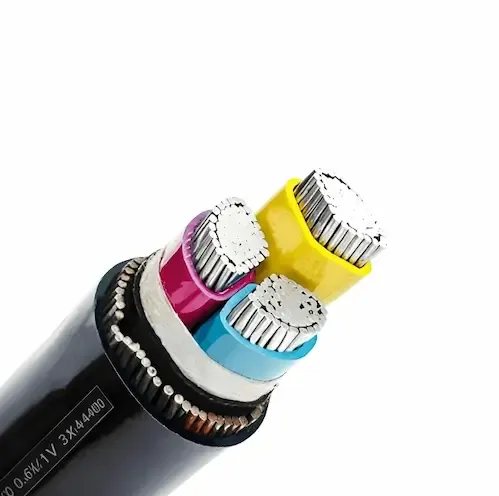
Key Takeaway
IEC 60331 fire resistant cable guide: sub-parts explained, test procedures, pass criteria, and how to specify compliant cables.
IEC 60331 is the international standard that determines whether a cable can maintain circuit integrity during a fire. If you are specifying fire resistant cables for emergency circuits — fire alarms, emergency lighting, smoke extraction fans, sprinkler pumps, elevator recall — IEC 60331 is the standard your cables must pass.
But IEC 60331 is not a single test. It is a family of standards with multiple sub-parts, each covering different cable types, voltage ratings, and test conditions. Specifying "IEC 60331 compliant" without understanding which sub-part applies to your cable leads to procurement errors, failed inspections, and project delays.
This guide breaks down every sub-part of IEC 60331, explains exactly what happens during testing, what constitutes a pass or fail, and how to write a cable specification that ensures you receive genuinely fire resistant cables — not just cables with a certificate.
Who this page is for. It assumes the decision to use fire resistant cable has already been made and the remaining work is technical verification: picking the correct sub-part for the cable geometry you are buying, reading a type test report without being misled by a legacy temperature figure, and checking that the certificate in front of you describes the cable in your schedule. Typical readers are the engineer answering a consultant's technical query on a submittal, and the buyer who has a supplier's certificate on screen and needs to judge whether it evidences what the specification asked for.
If you are at the earlier stage — still weighing fire resistance against flame retardance, comparing mica tape, mineral insulated, silicone and enhanced constructions, or lining IEC 60331 up against IEC 60332, IEC 61034, IEC 60754, BS 6387 and EN 50200 before deciding what to specify — start from the broader standards comparison and selection guide listed under Related Guides & Comparisons at the end of this page, then come back here to verify what is offered.
What IEC 60331 Measures — Circuit Integrity Under Fire
IEC 60331 answers one question: Can this cable continue to carry current while it is burning?
This is fundamentally different from IEC 60332 (flame retardancy), which only asks whether fire spreads along a cable. A cable can pass IEC 60332 (fire does not propagate) but completely fail IEC 60331 (circuit fails within minutes of fire exposure).
The Critical Distinction
- IEC 60332 (Flame Retardant): Cable self-extinguishes when fire source is removed. Circuit is destroyed — cable no longer functions. Purpose: prevent fire spread.
- IEC 60331 (Fire Resistant): Cable maintains electrical function throughout the fire. Circuit continues working while burning. Purpose: maintain life-safety circuits during evacuation.
This means every IEC 60331 cable must also inherently possess construction features that prevent short-circuit between conductors at extreme temperatures — the insulation cannot simply melt away or it would short-circuit and fail the test.
IEC 60331 Sub-Parts Explained
The standard is divided into sub-parts that cover different applications. The current structure (post-2009 consolidation) groups test methods into IEC 60331-1, IEC 60331-2 and IEC 60331-3 — all three include fire and mechanical shock:
Current Test Method Standards
| Standard | Scope | Applies To | Test Conditions |
|---|---|---|---|
| IEC 60331-1:2018 | Fire with shock — cables with overall diameter exceeding 20 mm | Cables ≤0.6/1kV, OD >20 mm, including data, telecom and optical fibre cables | 830°C ± 40°C for ≥90 min + mechanical shock at intervals |
| IEC 60331-2:2018 | Fire with shock — cables with overall diameter not exceeding 20 mm | Power and control cables ≤0.6/1kV, OD ≤20 mm | 830°C ± 40°C for ≥90 min + mechanical shock at intervals |
| IEC 60331-3:2018 | Fire with shock — cable tested in a metal enclosure | Power, control, data and optical fibre cables ≤0.6/1kV installed in conduit or trunking | 830°C ± 40°C for ≥90 min + mechanical shock, sample inside a metal enclosure |
Note: IEC 60331-1 states that by agreement between manufacturer and purchaser, the test procedure may also be used for cables rated up to 3.3 kV with suitable fuses.
Legacy Sub-Parts (Consolidated into IEC 60331-1/2)
The following sub-parts existed under the 1999 edition of the standard. They have since been withdrawn, with their content consolidated into IEC 60331-1 and IEC 60331-2. You will still see these referenced in existing certificates, specifications, and building codes:
| Standard | Original Title | Original Scope |
|---|---|---|
| IEC 60331-11 | Apparatus — fire alone at a flame temperature of at least 750°C | Defined burner, test frame, thermocouple placement |
| IEC 60331-21 | Procedures and requirements for power cables ≤0.6/1kV | Low voltage power cables (NYY, N2XH, NH-YJV equivalents) |
| IEC 60331-23 | Procedures and requirements for electric data cables | Data cables with no rated voltage, extra low voltage circuits |
| IEC 60331-25 | Procedures and requirements for optical fibre cables | Fibre optic cables in fire-critical routes |
Cables tested to IEC 60331-21 or IEC 60331-23 under the previous framework remain valid for what they evidence — but the test conditions did change, and this is widely misread. The legacy 21/23/25 series tested fire alone at a flame temperature of at least 750°C. The current 60331-1/-2/-3 series tests fire with mechanical shock at at least 830°C. A datasheet quoting "90 min @ 750°C" is therefore citing the legacy fire-only series correctly, not misquoting the current one. The question to ask is which series the report belongs to, and whether mechanical shock is evidenced. IEC lists 60331-11 and 60331-21 as withdrawn with effect from 31 December 2024.
Which Sub-Part Do You Need?
For most building projects:
- Power cables with overall diameter >20 mm (large multi-core, armoured): IEC 60331-1
- Smaller cables ≤20 mm diameter (fire alarm, emergency lighting, control cables): IEC 60331-2
- Cables rated above 0.6/1kV (up to 3.3 kV): IEC 60331-1 by agreement between manufacturer and purchaser
- Cables installed inside metal conduit or trunking, and data or fibre cables on fire-critical routes: IEC 60331-3, tested in a metal enclosure
All three current parts include mechanical shock as part of the test — there is no current IEC 60331 sub-part that tests fire resistance without shock. This reflects the reality that falling debris accompanies real building fires.
The IEC 60331 Test Procedure — Step by Step
Understanding the test procedure helps you evaluate whether a supplier's test certificate is meaningful or just paper.
Test Setup
- Cable sample length: Minimum 1200 mm of cable mounted horizontally on a steel ladder support
- Electrical circuit: Cable is energized at its rated voltage throughout the test. A monitoring device continuously checks for circuit failure (short-circuit between conductors, or open-circuit due to conductor break)
- Burner: A ribbon-type propane burner providing uniform flame across a 600 mm length of the cable
- Temperature monitoring: Thermocouples positioned on the cable surface confirm the required temperature is maintained throughout the test duration
Test Execution (IEC 60331-1, -2 and -3 — All Include Mechanical Shock)
- Cable is energized at rated voltage with monitoring circuit active
- Burner is ignited — cable surface temperature must reach 830°C ± 40°C within the first 5 minutes
- Temperature is maintained at 830°C ± 40°C for the specified duration (minimum 90 minutes for most requirements)
- During the fire exposure, a mechanical shock device strikes the cable at specified intervals — simulating debris impact during a real fire
- Throughout the entire test, the monitoring circuit checks for any interruption or short-circuit
The difference between IEC 60331-1 and IEC 60331-2 is not the test severity — it is the test apparatus size. IEC 60331-1 uses apparatus designed for larger cables (>20 mm OD), while IEC 60331-2 uses apparatus scaled for smaller cables (≤20 mm OD). The fire temperature, duration, and shock requirements are the same.
Pass Criteria
The cable passes IEC 60331 if:
- The circuit remains intact for the entire specified duration (typically 90 or 120 minutes)
- No short-circuit occurs between any conductors
- No open-circuit occurs (conductor does not break)
- The cable continues to carry its test current without interruption
The cable fails if at any point during the test:
- The monitoring circuit detects a break in continuity (open-circuit)
- A short-circuit occurs between any two conductors
- A short-circuit occurs between any conductor and the metallic sheath or armour
What This Means for Buyers
A cable that passes IEC 60331 at 830°C for 90 minutes maintains circuit function through the severe phase of a standard building fire. For context, the ISO 834 standard fire curve passes 840°C at around 30 minutes and reaches roughly 1000°C at 90 minutes — so 830°C is comparable to a fully developed compartment fire, and the IEC 60331 test holds the cable at that temperature for the full rated duration rather than ramping up to it. That is the safety margin the specification exists to buy for evacuation and firefighting operations.
IEC 60331 Cable Types by Construction
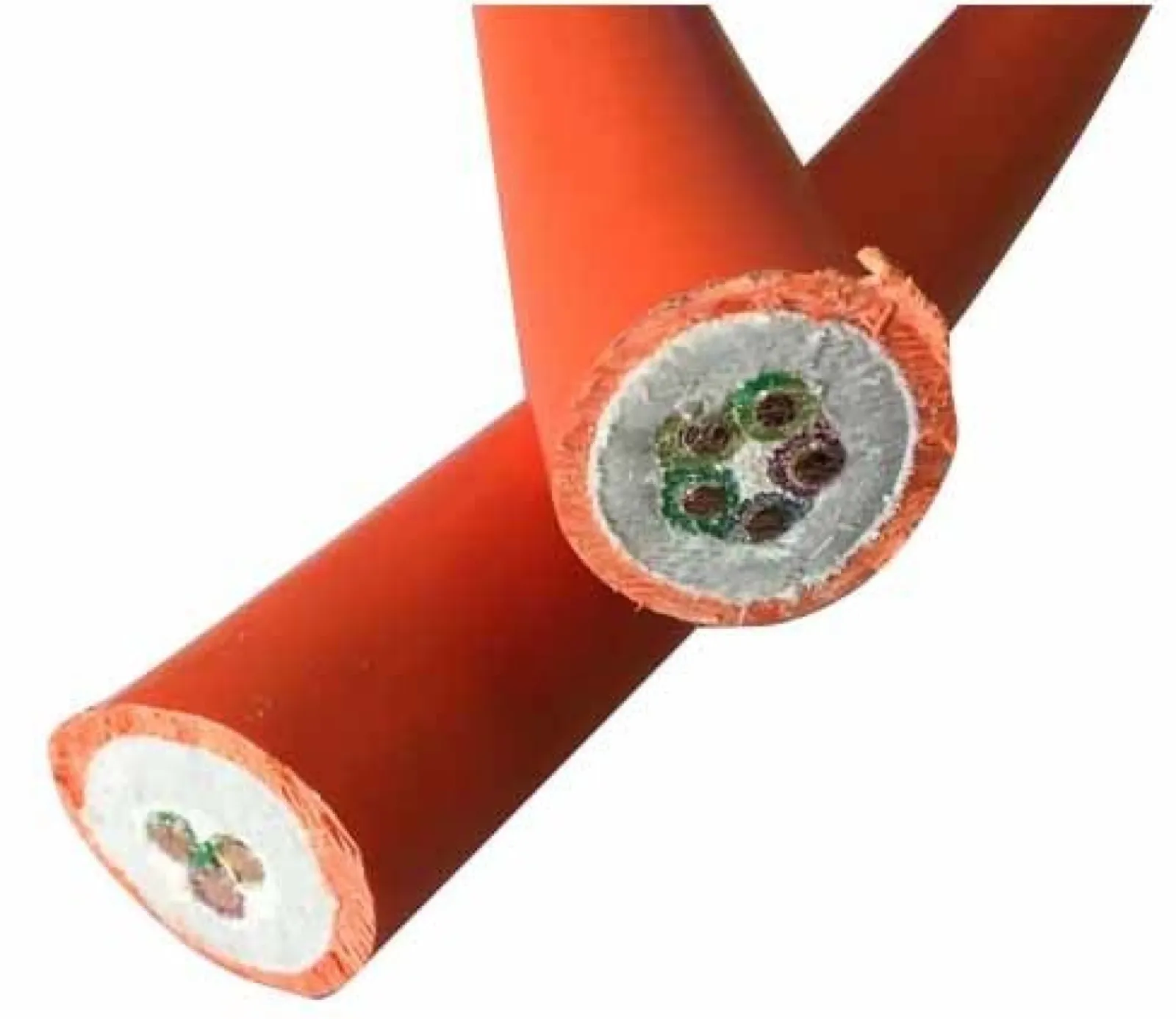
Not every cable construction can pass IEC 60331. The standard does not specify construction — it only specifies performance. But decades of testing have established which constructions reliably pass:
1. Mica Tape + XLPE/EPR Insulation (Most Common)
Construction: Copper conductor → mica glass tape wrap (1-2 layers) → XLPE or EPR primary insulation → bedding → armour (optional) → LSZH or PVC outer sheath
How it works: When fire destroys the XLPE/EPR insulation, the mica tape layer remains intact. Mica (a natural mineral silicate) has a decomposition temperature above 900°C and maintains its dielectric properties throughout the fire test. The mica tape becomes the sole insulation barrier between conductors.
Typical designations:
- NH-YJV (China, GB/T 19666)
- WDZN-YJY (China, low smoke zero halogen + fire resistant)
- N2XH-FE180 (Germany/IEC, E30/E60/E90 rated)
- NHXH-FE180/E90 (IEC, halogen-free fire resistant)
2. Mineral Insulated (BTTZ/MICC) — Highest Performance
Construction: Copper conductor → compressed MgO powder → seamless copper sheath
How it works: No organic material exists to burn. The cable cannot fail IEC 60331 because nothing degrades at fire temperatures. MgO melting point (2,852°C) far exceeds any building fire.
Limitation: Rigid construction, specialized termination, higher cost. Covered in detail in our BTTZ Mineral Insulated Cable Guide.
3. Silicone Rubber + Mica Tape
Construction: Copper conductor → mica tape → silicone rubber insulation → glass braid or mica barrier → silicone or LSZH sheath
How it works: Silicone rubber, when burned, forms a rigid ceramic-like ash (silicon dioxide) that provides additional mechanical protection to the mica layer. This construction offers better flexibility than standard mica-tape XLPE cables.
What Construction NOT to Specify
- PVC-insulated cables cannot pass IEC 60331 — PVC decomposes at 200-300°C and becomes conductive
- XLPE-only cables (without mica tape) cannot pass — XLPE melts at approximately 120°C and burns away completely
- Cables marketed as "fire rated" without mica tape or mineral insulation — if the manufacturer cannot explain the fire-barrier mechanism, the cable will not pass IEC 60331
IEC 60331 vs Related Standards — Know the Differences
Engineers and procurement teams frequently confuse these standards. Here is the definitive comparison:
IEC 60331 vs IEC 60332
| IEC 60331 (Fire Resistant) | IEC 60332 (Flame Retardant) | |
|---|---|---|
| Tests for | Circuit integrity DURING fire | Fire propagation AFTER ignition |
| Cable function during fire | Must continue working | Not required — cable is destroyed |
| Typical test temperature | 830°C for 90 min | 600-800°C — only checks if fire spreads |
| Pass criteria | No circuit interruption | Fire self-extinguishes within limits |
| Application | Emergency circuits that must operate in fire | All cables — prevents fire spreading via cable routes |
| Construction requirement | Mica tape or mineral insulation mandatory | Any self-extinguishing material (PVC, LSZH) |
IEC 60331 vs BS 6387
| IEC 60331 | BS 6387 | |
|---|---|---|
| Origin | International (IEC) | British (BSI) |
| Temperature | 830°C standard | Multiple categories: 650°C (A), 750°C (B), 950°C (C) |
| Water spray test | Not included | Category W: fire + water spray |
| Mechanical shock | Both IEC 60331-1 and -2 include shock | Category Z: fire + mechanical shock |
| How specified | "IEC 60331-1, 90 min" | "BS 6387 CWZ" (C=fire, W=water, Z=shock) |
| Preference | International projects, IEC-based codes | UK, Middle East, former British colonies |
IEC 60331 vs EN 50200
| IEC 60331 | EN 50200 | |
|---|---|---|
| Scope | Cables of all sizes | Small cables ≤20mm diameter (fire alarm, emergency comms) |
| Origin | International | European (CENELEC) |
| Duration options | Per requirements standard | PH15, PH30, PH60, PH120 (15/30/60/120 minutes) |
For international procurement: IEC 60331 is the safest specification. It is recognized worldwide, and any cable tested to IEC 60331 can also typically demonstrate compliance with regional equivalents.
How to Specify IEC 60331 Cables — Avoid These Common Mistakes
Writing the Specification Correctly
A properly written fire resistant cable specification must include:
- Which sub-part: "Cable shall comply with IEC 60331-1" or "IEC 60331-2" (not just "IEC 60331")
- Duration: "Circuit integrity maintained for minimum 120 minutes" (90 min is standard minimum, but many projects require 120 min)
- Cable diameter context: IEC 60331-1 covers cables with OD >20 mm; IEC 60331-2 covers OD ≤20 mm — specify accordingly
- Voltage rating: "Rated 0.6/1kV" (for higher voltages up to 3.3 kV, IEC 60331-1 applies by agreement)
- Sheath type: LSZH required for indoor installations in most modern codes
- Armour requirement: SWA or non-armoured, depending on mechanical protection needs
Example specification line:
"All fire alarm loop cables shall be 2-core 1.5mm² Cu/Mica/XLPE/LSZH, compliant with IEC 60331-2 (circuit integrity with fire and mechanical shock, 830°C for 120 minutes, cable OD ≤20 mm). Test certificate from accredited laboratory (ILAC/MRA recognized) required with submission."
"Main fire pump supply cable shall be 4-core 35mm² Cu/Mica/XLPE/SWA/LSZH, compliant with IEC 60331-1 (circuit integrity with fire and mechanical shock, 830°C for 120 minutes, cable OD >20 mm). Test certificate from accredited laboratory required."
Common Specification Mistakes
Mistake 1: Writing "IEC 60331 compliant" without specifying sub-part
This leaves ambiguity about which test apparatus was used. IEC 60331-1 and IEC 60331-2 have different apparatus sizes matched to different cable diameters. Always specify the correct sub-part for your cable size.
Mistake 2: Not requiring an accredited test certificate
Many manufacturers provide "self-declared" conformity or test certificates from non-accredited laboratories. Insist on:
- Test conducted by laboratory accredited under ISO 17025
- Laboratory is ILAC/MRA signatory member
- Certificate references the specific cable construction (not just the manufacturer's range)
- Sample tested matches the exact cross-section and core count you are purchasing
Mistake 3: Confusing fire resistance with enhanced fire resistance
Some projects require fire resistance beyond IEC 60331 minimum. For example:
- Standard IEC 60331: 830°C for 90 minutes
- Enhanced: 830°C for 120 minutes
- BS 6387 CWZ: 950°C with water AND mechanical shock (most severe)
If your fire engineer specifies "enhanced fire resistance," clarify the exact temperature, duration, and whether water/shock tests are needed.
Mistake 4: Accepting IEC 60332 certificates as proof of fire resistance
This happens more often than you would expect. IEC 60332 (flame retardant) is NOT IEC 60331 (fire resistant). A cable passing IEC 60332-1 provides flame-propagation evidence, not circuit-integrity evidence. Conversely, an IEC 60331 report does not replace IEC 60332 evidence when the project requires both properties; check each requirement against its own report.
IEC 60331 Cable Datasheet Checklist
A product datasheet and a fire-test report serve different purposes. The datasheet describes the cable being offered; the test report records the construction that was actually tested. A buyer should compare the two rather than accept either document on its own.
For every line in the cable schedule, ask the supplier's datasheet to state:
- Cable designation, rated voltage, conductor material, core count and conductor cross-section
- Overall cable diameter, so the applicable IEC 60331 sub-part can be checked
- Complete layer sequence, including the fire barrier, insulation, bedding, armour and outer sheath
- The IEC 60331 part and edition claimed, not only the words "IEC 60331 compliant"
- Required circuit-integrity duration and whether the referenced test includes mechanical shock
- Related fire-reaction requirements, such as flame propagation, smoke and halogen performance, where the project requires them
- Type-test report number, laboratory, report date and the exact tested cable construction
- Routine and sample tests that will be supplied with the production batch
Do not accept a generic catalogue line as proof that the offered cable matches a tested design. The core count, conductor size, overall diameter, fire-barrier construction and sheath system on the quotation should be traceable to the documents submitted for approval. If the report covers a different construction, ask the supplier to explain the technical basis for claiming coverage before approving the submittal.
IEC 60331 Cable Installation: What the Standard Does and Does Not Cover
IEC 60331 is a cable fire-test standard. It tells a laboratory how to assess circuit integrity under specified fire and mechanical-shock conditions; it is not an installation code for an entire emergency circuit.
The IEC 60331 marking or report therefore does not by itself decide:
- Cable support spacing or whether fire-resistant supports are required
- Separation from normal power circuits and other services
- Burial depth, duct arrangement or route protection
- Joint, gland and termination fire performance
- Fire stopping at wall and floor penetrations
- The survival classification required for the complete wiring system
Those decisions come from the project fire strategy, the local electrical and building rules, the authority having jurisdiction and any system-level test method named in the specification. A compliant cable can still be part of a non-compliant installation if its supports, joints, route or terminations fail earlier than the cable itself.
For procurement, record the installation method on the cable schedule because it still affects armour, sheath, bending radius and environmental protection. Then keep the IEC 60331 test evidence separate from the installation approval: one proves the cable sample's fire performance, while the other confirms that the complete installed circuit meets the project requirement.
Fire Duration Requirements by Application
Different circuits require different fire endurance durations. These are typically set by the fire engineer or local building code:
| Circuit Type | Typical Required Duration | Justification |
|---|---|---|
| Fire alarm loops | 30-60 minutes | Must function until building is evacuated |
| Emergency lighting | 60-90 minutes | Must illuminate escape routes during full evacuation |
| Smoke extraction fans | 120 minutes | Must operate throughout firefighting operations |
| Sprinkler pump supply | 90-120 minutes | Must maintain water supply for firefighting |
| Firefighter lift (elevator recall) | 120 minutes | Must operate for rescue operations throughout fire |
| Emergency voice communication | 60 minutes | PA system for evacuation instructions |
| Gas suppression system | 30 minutes | Must discharge before fire overwhelms the system |
| Hospital critical supply | 120-180 minutes | Patient life support cannot be interrupted |
| Data centre UPS feeder | 90-120 minutes | Orderly shutdown or continued operation |
Important: These durations are for the cable fire resistance rating. The total system survival time also depends on:
- Cable route (does it pass through the fire zone?)
- Mounting method (cables on open ladder have less protection than cables in fire-rated conduit)
- Fire compartmentation (fire may not reach the cable if compartment barriers hold)
Regional Standard Equivalents — Cross-Reference Table
If your project specification references a regional standard, here is how it maps to IEC 60331:
| Region | Standard | Equivalent IEC 60331 Sub-Part |
|---|---|---|
| International | IEC 60331-1 | — (source standard) |
| UK | BS 6387 Cat. C | Similar to IEC 60331-1 but at 950°C (more severe) |
| UK | BS 8519 | References IEC 60331 for fire performance requirements |
| Germany | DIN VDE 0472-814 | Based on IEC 60331 |
| France | NF C 32-070 | French national implementation referencing IEC 60331 |
| China | GB/T 19216 | Identical to IEC 60331 (adopted standard) |
| Australia | AS/NZS 3013 | References IEC 60331 for fire resistant cable selection |
| Middle East (UAE, Qatar, KSA) | Civil Defence codes | Typically require BS 6387 CWZ or IEC 60331-1 minimum |
| Singapore | SS 299 | References IEC 60331 |
| India | IS 10810 | Based on IEC 60331 methodology |
For export/international projects: Specifying IEC 60331 ensures worldwide recognition. If a regional code requires a local standard, ask the cable supplier to provide cross-reference documentation showing IEC 60331 equivalence.
Verifying IEC 60331 Compliance — What to Check Before Purchase
The four steps below are the verification sequence for a report already in your hands. Run them in order, because each one can stop the review: if the report belongs to the wrong sub-part for your cable's overall diameter, or to the legacy fire-only series when the specification asks for fire with shock, there is no point examining the laboratory's accreditation yet. A practical working order for a submittal review is: confirm which sub-part and which edition the report cites, confirm the fire duration and whether mechanical shock is evidenced, confirm the accreditation, then confirm that the construction on the report matches the line in your cable schedule — conductor size and core count included.
Step 1: Request the Type Test Report
A genuine IEC 60331 type test report should contain:
- Test laboratory name and accreditation number
- Date of testing
- Cable construction details (conductor size, insulation type, number of cores, outer diameter)
- Test conditions (temperature achieved, duration, whether mechanical shock was applied)
- Monitoring circuit details (voltage applied, how continuity was monitored)
- Result: PASS with duration achieved (must equal or exceed the specified requirement)
Step 2: Verify the Test Laboratory
- Check that the laboratory is ISO 17025 accredited
- Confirm the accreditation scope includes fire testing of cables
- For high-value contracts, verify directly with the laboratory that the certificate is genuine (fraudulent certificates exist in the market)
Step 3: Match Certificate to Product
The test certificate applies ONLY to the exact cable construction tested. Changes in:
- Mica tape brand or type
- Number of mica tape layers
- Conductor size (a 4mm² test does not cover 16mm²)
- Number of cores (a 2-core test does not cover 4-core)
- Sheath material
...may require separate testing. Ask the supplier: "Does your type test cover the exact cable size and core count I am ordering?"
Step 4: Factory Audit (For Large Orders)
For projects exceeding $50,000 in fire resistant cable value, consider:
- Verifying mica tape inventory matches the brand on the type test
- Checking that mica tape wrapping equipment applies consistent tension and overlap
- Reviewing production quality control records for fire resistant cable batches
- Requesting routine test samples from your production batch for independent verification
Why Specification Matters — Real Project Consequences
Incorrectly specified or counterfeit fire resistant cables create genuine life-safety risks:
During fire events:
- Circuits fail within minutes instead of maintaining 90+ minute integrity
- Emergency lighting goes dark during evacuation
- Sprinkler pumps lose power — fire suppression fails
- Fire alarm system goes silent — occupants in remote areas do not evacuate
During inspections:
- Fire authority rejects installation — cables must be ripped out and replaced
- Project completion delayed by months while replacement cables are manufactured and shipped
- Contractor faces liability for installing non-compliant materials
- Insurance implications for building owner if fire rating is compromised
The cost difference between a genuine IEC 60331 cable and a non-compliant cable is typically 15-30% per meter. The cost of replacing installed cable is 10-50× the material cost (demolition, re-routing, re-testing, project delay, lost occupancy revenue).
After the Technical Specification Is Fixed
This page is the technical reference for choosing the IEC 60331 sub-part, checking the test method and reviewing a datasheet or type-test report. Supplier comparison is a separate procurement task: production capability, document traceability, commercial terms and the information required for a firm quotation are covered in the fire resistant cable manufacturer and factory procurement guide.
Before moving to quotation, freeze the cable schedule and record the core count, conductor size, rated voltage, fire-resistance requirement, sheath, armour, quantity and destination. Keeping that commercial handoff separate prevents a supplier shortlist from changing the technical requirement after the fire consultant has approved it.
Related Guides & Comparisons
- LSZH vs PVC Cable: Which to Specify — insulation choice for fire performance
- Cable Insulation Types: PVC vs XLPE vs LSZH
- Fire Resistant Cable Specifications & Standards Guide
- Fire Resistant Cable Manufacturer China — Factory Price
Frequently Asked Questions
What is the difference between IEC 60331-1 and IEC 60331-2?
Both standards test circuit integrity under fire with mechanical shock at 830°C. The difference is cable size: IEC 60331-1 applies to cables with an overall diameter exceeding 20 mm (typically multi-core power cables with armour), while IEC 60331-2 applies to cables with OD of 20 mm or less (typically fire alarm cables, small control cables, emergency lighting circuits). The test apparatus is scaled differently, but fire temperature, duration, and shock severity are the same.
Can a PVC cable pass IEC 60331?
No. PVC decomposes at 200-300°C and becomes electrically conductive when charred. It is physically impossible for PVC insulation alone to maintain circuit integrity at 830°C. A fire resistant cable must contain mica tape or mineral insulation as the fire barrier.
Does IEC 60331 guarantee the cable will work for exactly 90 minutes in a real fire?
The 90-minute rating is the minimum the cable demonstrated in a controlled laboratory test at 830°C. In a real fire, performance depends on actual fire temperature, cable loading, installation method, and whether the cable is mechanically damaged before the fire. The laboratory test provides a standardized benchmark — actual performance in a specific fire may be longer or shorter than the rated duration.
Is IEC 60331 the same as E90?
E90 is a European classification (per EN 13501-6) indicating 90 minutes of circuit integrity. It is based on testing per IEC 60331 methodology. So E90 = IEC 60331 tested for 90 minutes. Similarly, E30 = 30 minutes, E60 = 60 minutes, E120 = 120 minutes.
How do I know whether an IEC 60331 certificate is genuine?
Check three things: (1) the test laboratory is ISO 17025 accredited and appears in the ILAC database, (2) the certificate number can be verified directly with the laboratory, (3) the cable construction on the certificate exactly matches what you are purchasing. For additional confidence, request that the supplier send a sample to an independent laboratory for verification testing before placing a large order.
What is GB/T 19216 and how does it relate to IEC 60331?
GB/T 19216 is the Chinese national standard for fire resistant cable testing. It is a direct adoption of IEC 60331 — the test procedures, apparatus, and pass/fail criteria are identical. A cable passing GB/T 19216 is technically equivalent to passing IEC 60331. However, for international projects, request testing specifically referenced to IEC 60331 for clearer recognition by consultants and authorities.
Should I specify IEC 60331 or BS 6387 for my project?
If your project follows IEC-based codes (most of the world), specify IEC 60331. If your project is in the UK, UAE, Qatar, or follows British standards, BS 6387 CWZ is often required and is actually more demanding than IEC 60331 (higher temperature: 950°C vs 830°C, plus water spray test). Some Middle East projects accept either standard — confirm with the fire consultant.