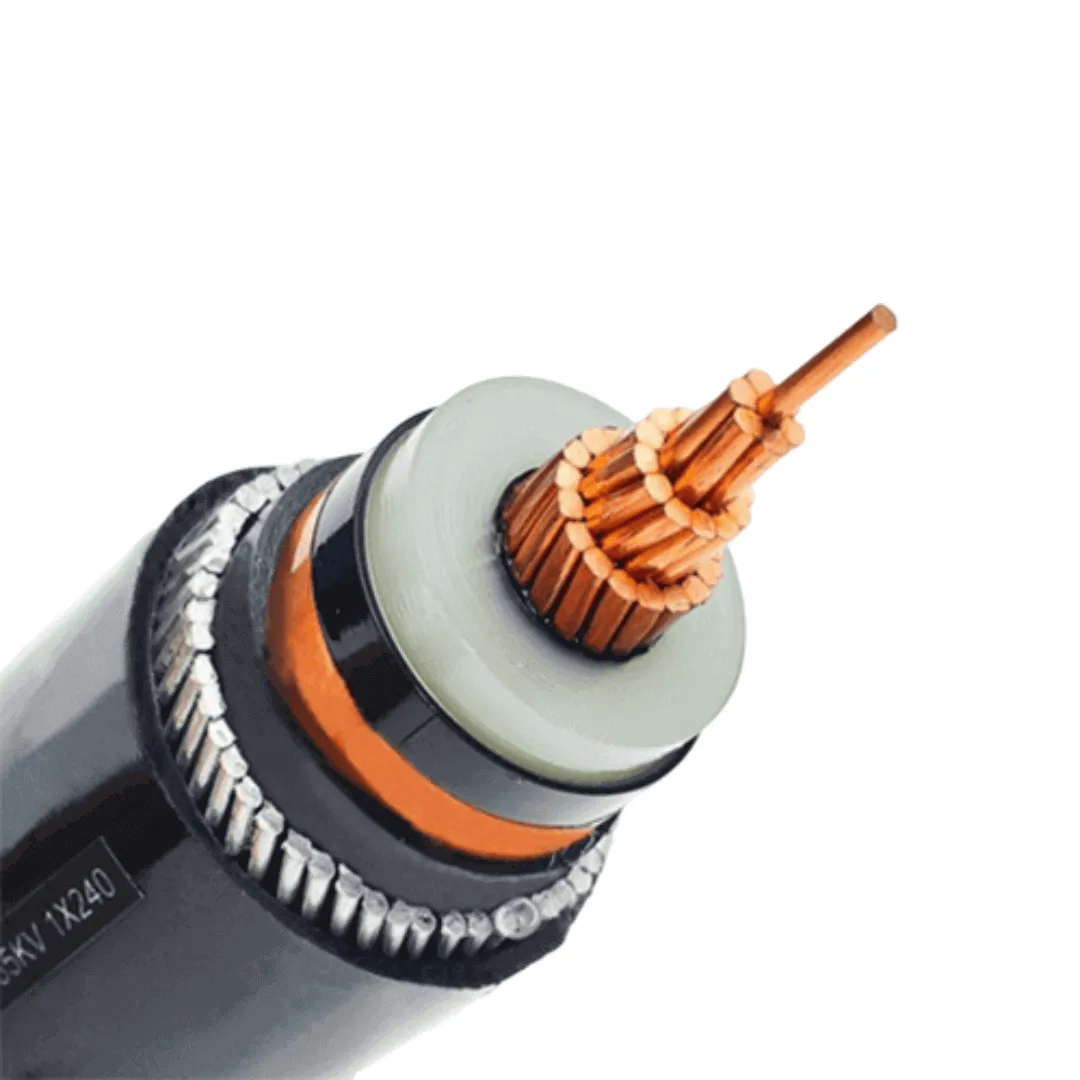
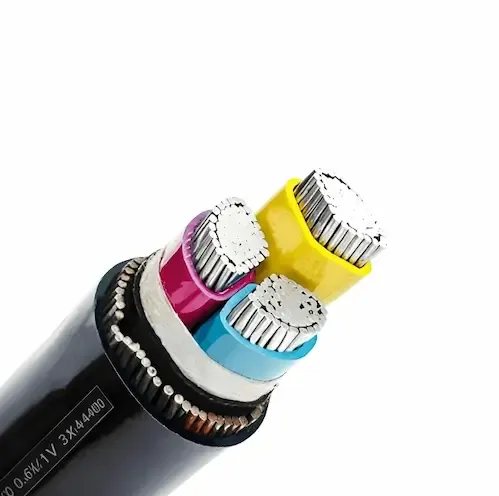
Key Takeaway
Compare fire resistant and flame retardant cable by circuit duty, construction, smoke performance and project application. A selection guide for EPC specifications.
When a fire breaks out in a building, tunnel, or industrial plant, the performance of your cable system determines whether emergency circuits stay operational or fail catastrophically. Fire resistant cables maintain circuit integrity during fire exposure, keeping emergency lighting, fire alarms, smoke extraction fans, and sprinkler pumps running when they are needed most.
This guide covers everything procurement engineers and EPC contractors need to know about fire resistant cable specifications, the IEC standards that govern them, construction types, testing protocols, and how to select the right cable for your project.
What this page decides, and what it deliberately leaves to the test guide. This is the comparison and selection layer. It sets fire resistance against flame retardance, places the standards that sit either side of that line next to each other (IEC 60331, IEC 60332, plus the smoke and halogen tests IEC 61034 and IEC 60754 and the BS and EN equivalents), compares the four construction types that achieve fire resistance, and matches those choices to a high-rise, a metro tunnel, a petrochemical plant, a power station or a data centre. Read it while the specification is still open and the question is what should we be asking for.
Once the standard is fixed and the remaining questions are about the test itself — which IEC 60331 sub-part your cable falls under, what the laboratory actually does to the sample, and what has to be on a type test report before you accept it — use the dedicated test method and specification guide linked in the standards-selection section below. The two pages are written to be read in that order: this one narrows the specification, that one verifies what arrives against it.
Fire Resistant vs Flame Retardant: The Critical Difference
These two terms are frequently confused in tender documents and purchase orders, but they describe fundamentally different performance characteristics.
Fire Resistant Cable (IEC 60331)
A fire resistant cable maintains circuit integrity during fire exposure. The cable continues to transmit power or signals while it is burning. After the fire, the cable is destroyed — but during the fire, it keeps working.
Key standard: IEC 60331 (Tests for electric cables under fire conditions — Circuit integrity)
Typical applications:
- Emergency lighting circuits
- Fire alarm systems
- Smoke extraction fan power supply
- Sprinkler pump circuits
- Emergency elevator power
- PA/voice alarm systems
- Fire door release mechanisms
Flame Retardant Cable (IEC 60332)
A flame retardant cable limits flame propagation. When the external fire source is removed, the cable self-extinguishes and does not spread the fire along the cable route. However, it does NOT guarantee circuit integrity during the fire — the cable may stop working as soon as fire reaches it.
Key standard: IEC 60332 (Tests for electric cables under fire conditions — Flame propagation)
Typical applications:
- General building wiring
- Cable trays in commercial buildings
- Data center cabling
- Any installation where preventing fire spread is the priority
Comparison Table
| Feature | Fire Resistant (IEC 60331) | Flame Retardant (IEC 60332) |
|---|---|---|
| Circuit integrity during fire | ✅ Yes (minimum 90-120 min) | ❌ No guarantee |
| Self-extinguishing | Separate flame-propagation evidence required | Test purpose |
| Flame spread prevention | Separate IEC 60332 evidence required | Yes (primary function) |
| Cost | Higher | Lower |
| Typical voltage | 0.6/1kV | All voltages |
| Construction complexity | Higher (mica tape barrier) | Standard with FR compounds |
Rule of thumb for specification:
- If the circuit must keep working during a fire → Fire Resistant (IEC 60331)
- If the cable must not spread fire along its route → Flame Retardant (IEC 60332)
- Many projects require both: fire resistant cables that are also flame retardant and low-smoke zero-halogen (LSZH)
Where Fire-Resistance Standards Fit in the Selection Process
At the selection stage, the first job is not to choose an IEC 60331 sub-part. It is to define what the circuit must do during a fire. A buyer may need the circuit to keep operating, the cable to limit flame spread, the materials to produce less smoke and corrosive gas, or a combination of all four. Those are separate performance questions and they require separate evidence.
| Project question | Performance family | Decision made on this page |
|---|---|---|
| Must the circuit remain operational during fire? | Circuit integrity / fire resistance | Select a fire-resistant construction and state the required survival duty |
| Must the cable limit flame propagation? | Flame retardance | Select the appropriate single-cable or bundled-cable requirement |
| Is smoke visibility critical for evacuation? | Smoke emission | Add the project smoke requirement to the specification |
| Are corrosive halogen gases restricted? | Halogen gas emission | Choose an LSZH construction and state the required evidence |
| Must supports, joints and the complete route survive? | Wiring-system performance | Follow the project fire strategy and local installation rules, not a cable report alone |
IEC 60331 is the international cable-test family used when circuit integrity must be demonstrated. The current IEC 60331-1:2018, IEC 60331-2:2018 and IEC 60331-3:2018 scopes all describe fire with mechanical shock under specified conditions; the parts are separated by cable geometry and whether the sample is tested in a metal enclosure. That distinction matters when a test report is reviewed, but it should not replace the earlier project decision about circuit duty.
This comparison guide deliberately stops at that boundary. It does not reproduce the sub-part map, laboratory setup, pass criteria or report-review sequence. Once the project has selected fire resistance, use the dedicated IEC 60331 test method, datasheet and specification guide to choose the applicable part and verify the evidence supplied with the cable.
A Practical Fire-Cable Selection Workflow
1. Classify the circuit. Separate life-safety and emergency circuits from ordinary distribution. A fire alarm loop, smoke-extraction fan, sprinkler-pump supply and normal lighting feeder do not automatically need the same survival duty.
2. Define the required outcome. Write down whether the circuit must remain operational, whether flame spread must be limited, whether low smoke and zero halogen are required, and whether the complete wiring system needs a separate survival classification. Avoid using the vague phrase "fire rated" as the only requirement.
3. Select the construction family. Mica-tape XLPE or LSZH cable, mineral-insulated cable and ceramic-forming constructions have different installation, termination and commercial implications. Choose between them from the project environment and system duty before comparing supplier quotations.
4. Check the route and environment. Indoor escape routes, tunnels, petrochemical areas, outdoor runs and buried sections on infrastructure projects place different demands on smoke performance, sheath material, armour, flexibility and corrosion protection. Fire performance does not remove the need to specify normal environmental protection.
5. Separate cable evidence from system approval. A cable test report proves the tested cable sample met the named method. It does not automatically qualify supports, joints, glands, fire stops or the complete route. Keep those approvals visible as separate lines in the submittal register.
6. Freeze the decision before requesting prices. Give every bidder the same cable schedule, performance requirements and document list. Otherwise, the lowest quotation may simply be based on a different construction or a weaker evidence package.
Record the Selection Decision Before Supplier Comparison
The project file should show why each fire-cable construction was selected, not only which product name appeared in the final schedule. Record the circuit function, required survival outcome, smoke and halogen requirements, installation environment, approved construction family and the authority or consultant responsible for acceptance. If an alternative is permitted, state which characteristics must remain unchanged and which may vary.
This short decision record prevents three common procurement failures: a flame-retardant cable being substituted for a fire-resistant one, an ordinary LSZH cable being treated as proof of circuit integrity, or a supplier offering a cable test report while ignoring the supports and joints required by the system design. It also gives the technical reviewer a stable basis for comparing later submittals without reopening the original selection every time a quotation changes.
IEC 60332: Flame Retardant Standards Explained
IEC 60332 tests how cables behave when exposed to fire — specifically whether flame propagates along the cable or self-extinguishes.
IEC 60332 Sub-Parts
| Standard | Test Type | Description |
|---|---|---|
| IEC 60332-1-2 | Single cable vertical flame | Single cable exposed to 1kW flame for 60 seconds, char length ≤540mm |
| IEC 60332-1-3 | Single cable 45° flame | Angled test for smaller cables |
| IEC 60332-2 | Micro-flame test | Small cables and wires |
| IEC 60332-3-10 | Bundled cables — Category AF/R | 7 L/m non-metallic material, vertical tray 3.5m |
| IEC 60332-3-21 | Bundled cables — Category A | 7 L/m non-metallic material |
| IEC 60332-3-22 | Bundled cables — Category B | 3.5 L/m non-metallic material |
| IEC 60332-3-23 | Bundled cables — Category C | 1.5 L/m non-metallic material |
| IEC 60332-3-24 | Bundled cables — Category D | 0.5 L/m non-metallic material |
| IEC 60332-3-25 | Bundled cables — Category E | Small cables, Category E |
Single Cable Test (IEC 60332-1)
- Cable mounted vertically
- 1kW Bunsen burner flame applied for 60 seconds (or 120s for larger cables)
- After flame removal, cable must self-extinguish
- Char length must not exceed 540mm from the lower edge of the burner
Bundled Cable Test (IEC 60332-3)
This is the more demanding test — multiple cables bundled together on a vertical tray:
- Cable ladder 3.5m tall, cables mounted as installed in real conditions
- 20.5kW ribbon burner applies flame for 20 minutes (Category C) or 40 minutes (Category A)
- After burner removal, cables must self-extinguish
- Flame/char must not reach the top of the test ladder
Why bundled testing matters: A single cable might self-extinguish easily, but when 50 cables are packed together on a tray, the radiant heat from adjacent cables can cause flame propagation that wouldn't occur with a single cable. IEC 60332-3 tests this real-world scenario.
Category Selection Guide
| Category | Non-metallic content | Burner time | Typical application |
|---|---|---|---|
| A (most severe) | 7 L/m | 40 min | Tunnels, power plants, high-density trays |
| B | 3.5 L/m | 40 min | Industrial plants, large commercial |
| C (most common) | 1.5 L/m | 20 min | Commercial buildings, standard installations |
| D | 0.5 L/m | 20 min | Light installations |
L/m = liters of non-metallic material per meter of cable tray length
Fire Resistant Cable Construction Types
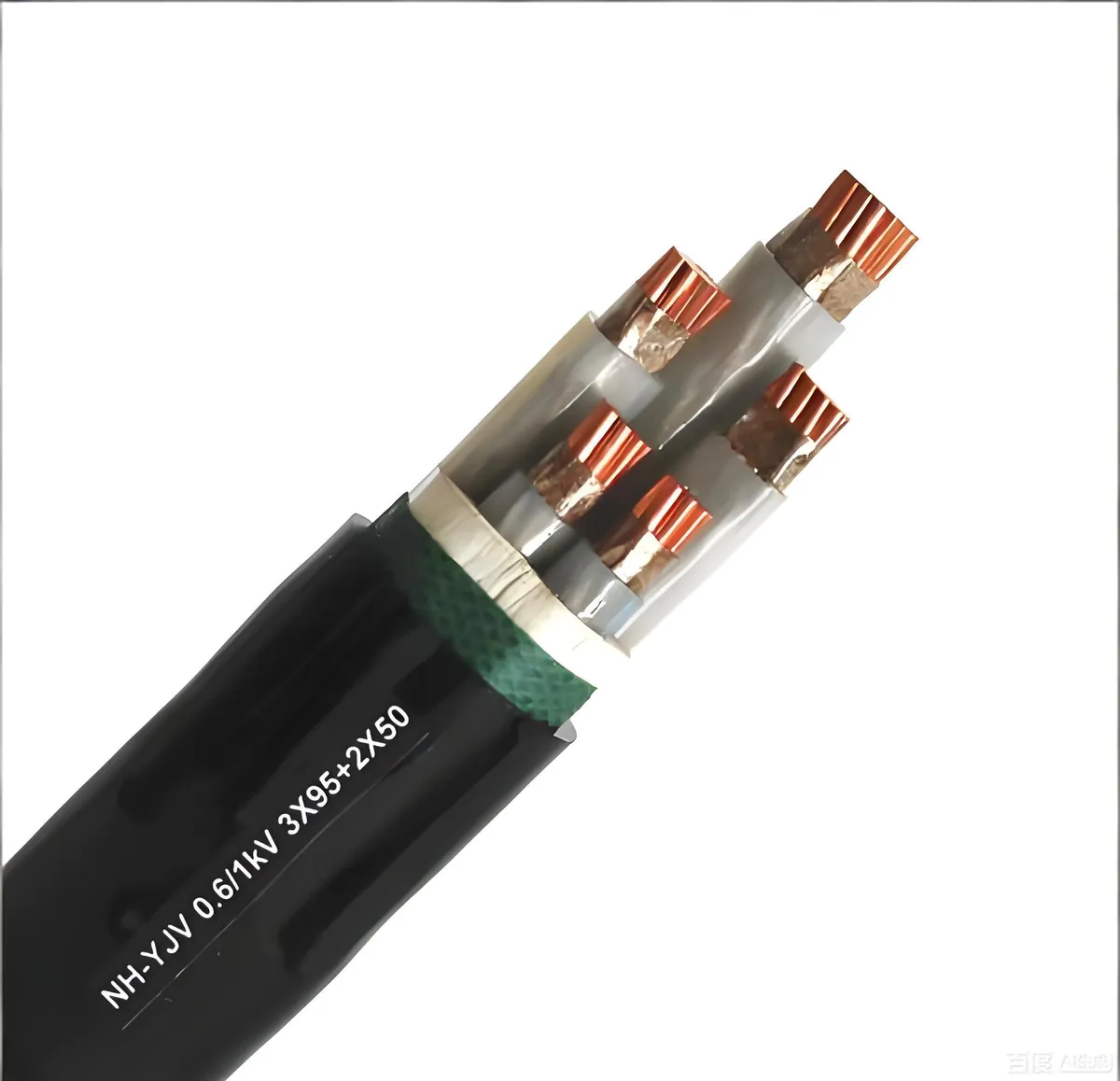
Fire resistant cables achieve their performance through different construction methods. Each type has specific advantages and limitations.
1. Mica Tape Wrapped XLPE/LSZH Cable
Most common type for 0.6/1kV applications
Construction (inside out):
- Copper conductor (solid or stranded)
- Mica tape barrier layer (synthetic mica or natural phlogopite mica)
- XLPE insulation (cross-linked polyethylene)
- Individual core wrap (optional)
- Filling compound
- Mica tape overall wrap (optional, for enhanced fire performance)
- LSZH inner sheath (low-smoke zero-halogen)
- Steel wire armour (SWA) or steel tape armour (STA)
- LSZH outer sheath
How it works: The mica tape provides the fire barrier. When the XLPE insulation burns away at high temperature, the mica tape remains intact as a ceramic-like barrier that maintains electrical insulation between conductors. Mica has a melting point above 1,000°C and excellent dielectric properties.
Performance: Passes IEC 60331 (90 min at 830°C)
Typical designation: WDZAN-YJY (Chinese), FP Plus (UK), NHXH FE180 (Germany)
Advantages:
- Cost-effective for bulk procurement
- Available in all standard sizes (1.5mm² to 400mm²)
- Can be combined with SWA for mechanical protection
- Standard cable accessories and termination methods
Limitations:
- Quality of mica tape wrapping is critical — poor wrapping = test failure
- Not suitable for continuous high-temperature environments (XLPE max 90°C normal operation)
- Some moisture sensitivity in mica tape if storage conditions are poor
2. Mineral Insulated Cable (BTTZ / MI Cable)
The ultimate fire resistant cable — literally fireproof
Construction:
- Solid copper conductor(s)
- Compressed magnesium oxide (MgO) powder insulation
- Seamless copper sheath (drawn together with conductors in manufacturing)
How it works: Magnesium oxide is an inorganic mineral with a melting point of 2,852°C. The copper sheath melts at 1,083°C. The cable can operate continuously at temperatures up to 250°C and survive fire exposure exceeding 1,000°C for extended periods.
Performance: Far exceeds IEC 60331 — can withstand direct flame for hours, not just 90 minutes
Typical designation: BTTZ (China), MI/MICC (UK/International), Pyrotenax (brand name)
Advantages:
- Absolute fire resistance — the gold standard
- No smoke, no toxic gas emission (100% inorganic materials)
- Waterproof (with proper termination)
- Very long service life (50+ years)
- Small outer diameter for given conductor size
- Rodent-proof, oil-resistant, radiation-resistant
Limitations:
- Expensive (3-5x cost vs mica tape cables)
- Rigid — difficult to install in complex routes
- Requires specialized cold-press termination accessories
- Limited conductor sizes (typically up to 25mm² single core, larger available but costly)
- Susceptible to moisture ingress if termination seal is damaged
- Not suitable for frequent movement or vibration
When to specify BTTZ:
- Nuclear power plants
- Underground metro/rail tunnels with highest safety class
- High-rise buildings (critical evacuation circuits, above 100m)
- Explosive atmospheres (petrochemical)
- Any application where 90 minutes is insufficient
3. Ceramic-Forming Cable (Silicon Rubber Based)
Construction:
- Copper conductor
- Silicone rubber insulation (sometimes with mica tape inner layer)
- Glass fiber braid
- LSZH or silicone outer sheath
How it works: Silicone rubber, when burned, forms a ceramic-like residue (silicon dioxide ash) that continues to provide insulation. Combined with mica tape, it achieves IEC 60331 compliance.
Performance: Passes IEC 60331 (90 min at 830°C), some formulations achieve 120 min
Typical designation: BBTRZ (China), SiHF (flexible silicone)
Advantages:
- Flexible — easier installation than BTTZ
- Good for elevated ambient temperature (continuous 180°C operation)
- Suitable for mobile/flexible fire resistant applications
Limitations:
- Larger outer diameter than equivalent XLPE cable
- More expensive than mica tape XLPE (but cheaper than BTTZ)
- Lower mechanical strength — usually needs additional protection
4. Enhanced Fire Resistant Cable (E90/FE180)
European designation system using specific fire resistance durations:
| Designation | Meaning | Fire Duration | Standard |
|---|---|---|---|
| E30 | Circuit integrity 30 minutes | 30 min at 830°C | DIN 4102-12 |
| E60 | Circuit integrity 60 minutes | 60 min at 830°C | DIN 4102-12 |
| E90 | Circuit integrity 90 minutes | 90 min at 830°C | DIN 4102-12 |
| FE180 | Function retention 180 minutes | 180 min at 830°C | DIN 4102-12 |
Note: E90 broadly corresponds to IEC 60331 (90 min test). FE180 exceeds IEC 60331 and is required for critical safety systems in German/EU specifications.
Additional Fire-Related Standards
Beyond IEC 60331 and 60332, complete fire safety cable specification often includes:
IEC 61034: Smoke Density
Measures the amount of smoke produced when cables burn. Critical for tunnels, underground stations, and enclosed spaces where smoke is the primary killer.
- Test method: 3m × 3m × 3m cube, cables burned on tray
- Pass criteria: Light transmittance must remain above 60% (some specs require 70%)
- Why it matters: In tunnel fires, smoke kills more people than heat. Low-smoke cables give evacuees visibility to find exits.
IEC 60754: Halogen Gas Emission
Measures corrosive and toxic gases released during cable combustion.
- IEC 60754-1: Determination of halogen acid gas (HCl equivalent) — must be ≤0.5% for zero-halogen classification
- IEC 60754-2: Determination of acidity (pH and conductivity) — pH must be ≥4.3, conductivity ≤10 μS/mm
Why it matters: Halogen gases (from PVC cables) create hydrochloric acid when combined with water from firefighting. This acid corrodes electronics, structural steel, and damages lungs of building occupants.
BS 8519 / BS 5839 (UK Standards)
- BS 5839-1: Fire alarm system design — specifies "enhanced" fire resistant cable requirements
- BS 8519: Selection and installation of fire resistant cables — comprehensive guide for UK projects
EN 50200 (European Standard)
- Adds mechanical shock (hammer impact) during fire test
- More severe than IEC 60331 for fire alarm circuits
- Required for fire alarm cables in most European countries
Complete Fire Safety Cable Specification Matrix
For maximum safety, specify cables meeting multiple standards simultaneously:
| Property | Standard | Requirement | Cable Marking |
|---|---|---|---|
| Fire resistance | IEC 60331 | 90 min at 830°C | FR |
| Flame retardance | IEC 60332-1 | Single cable self-extinguishing | IEC 60332-1 |
| Flame retardance (bundled) | IEC 60332-3-24 Cat C | Bundled cables self-extinguishing | IEC 60332-3 Cat C |
| Low smoke | IEC 61034 | ≥60% light transmittance | LS |
| Zero halogen | IEC 60754-1 | ≤0.5% HCl | ZH or 0H |
| Low toxicity | IEC 60754-2 | pH ≥4.3 | ZH |
Combined specification example: "Fire resistant cable, 0.6/1kV, 4×25mm² Cu, XLPE/LSZH, SWA, compliant with IEC 60331 (90 min), IEC 60332-3 Category C, IEC 61034, IEC 60754-1/2"
This gives you a cable that:
- Maintains circuit integrity for 90 minutes during fire ✅
- Does not spread fire along cable routes ✅
- Produces minimal smoke ✅
- Releases no corrosive/toxic halogen gases ✅
Fire Resistant Cable Selection Guide by Application
High-Rise Buildings (>50m height)
Required circuits needing fire resistant cables:
- Emergency lighting (all escape routes)
- Fire alarm loops and sounders
- Sprinkler pump power supply
- Smoke extraction fans (pressurization systems)
- Firefighter elevator circuits
- Emergency generator distribution
Recommended specification:
- Mica tape + XLPE/LSZH construction (cost-effective for large quantities)
- IEC 60331 compliant (90 min minimum)
- IEC 60332-3 Category C
- IEC 61034 + IEC 60754 (low smoke zero halogen)
- SWA or conduit protection
For buildings >100m: Consider BTTZ mineral insulated cable for critical life-safety circuits (firefighter elevator, stairwell pressurization).
Tunnels (Road, Rail, Metro)
Special challenges:
- Limited escape routes — smoke management is critical
- High cable density on trays
- Long cable runs without access for repair
- Must operate during fire until evacuation is complete
Recommended specification:
- IEC 60331 compliant (120 min for rail tunnels)
- IEC 60332-3 Category A (most severe bundled test)
- IEC 61034 (minimum 70% light transmittance — higher than standard 60%)
- IEC 60754-1/2 (zero halogen mandatory)
- Enhanced mechanical protection
Standards by region:
| Region | Tunnel cable standard | Key requirement |
|---|---|---|
| Europe | EN 50200 + EN 50362 | 120 min with mechanical shock |
| UK | BS 8519 + BS 7846 | Enhanced fire resistance |
| China | GB/T 19666 | Type A fire resistant |
| India | IS 10810 + Railway spec | 3 hours for metro |
| Middle East | BS/IEC hybrid | Per authority (Civil Defense) |
Petrochemical / Oil & Gas Plants
Special challenges:
- Explosive atmospheres (Ex zones)
- Hydrocarbon fire temperatures exceed standard cable test (hydrocarbon fire curve reaches 1,100°C in minutes)
- Extreme ambient temperatures
- Chemical exposure
Recommended specification:
- BTTZ mineral insulated cable for Ex Zone 0/1 critical circuits
- Mica tape XLPE/LSZH with SWA for general fire resistant runs
- Consider hydrocarbon fire curve testing (not just cellulosic curve used in IEC 60331)
- Chemical-resistant outer sheath
Power Plants (Thermal, Nuclear)
- Nuclear: BTTZ or equivalent, with radiation resistance qualification
- Thermal: Standard IEC 60331 for emergency circuits, with attention to ambient temperature derating
- All: IEEE 383 (US) or IEC 60332-3 Category A for cable spreading rooms
Data Centers
- Primary concern: flame retardance (IEC 60332-3) and low smoke
- Fire resistance (IEC 60331) for UPS feed cables and emergency circuits
- Halogen-free mandatory (halogen gas destroys server hardware within hours)
How to Verify Fire Resistant Cable Quality
When sourcing fire resistant cables, especially from manufacturers you haven't worked with before, verify these critical quality indicators:
1. Third-Party Test Reports
Must have:
- IEC 60331 type test report from accredited laboratory (KEMA, ASTA, SGS, TÜV, BV)
- Test conducted on the specific cable type and size you are ordering
- Report less than 3 years old
Red flags:
- Reports only from in-house laboratory (not independent)
- Report covers a different cable size than what you're buying
- No mechanical shock test (IEC 60331-1 requires this)
2. Mica Tape Quality Inspection
For mica tape wrapped cables, the quality of wrapping determines fire resistance:
- Mica content: Minimum 90% mica (phlogopite or muscovite)
- Tape overlap: Minimum 50% overlap wrapping (15-25% overlap is insufficient)
- Wrapping layers: Minimum 2 layers for standard, 3 layers for enhanced
- Tape integrity: No tears, gaps, or uneven tension during wrapping
Factory inspection point: Ask to observe the mica tape wrapping process. Automated taping machines with tension control produce consistent results. Manual wrapping is a risk factor.
3. Conductor and Insulation Basics
Even for fire resistant cables, basic construction quality matters:
- Copper conductor: minimum 99.9% purity, correct cross-sectional area (tolerance per IEC 60228)
- XLPE insulation: correct thickness per voltage rating (IEC 60502-1 Table 2)
- LSZH sheath: correct formulation (some manufacturers dilute LSZH compounds with calcium carbonate filler to reduce cost, compromising mechanical properties)
4. Marking and Certification
Legitimate fire resistant cables carry:
- Permanent marking showing: manufacturer, cable type, voltage rating, fire standard compliance
- Certificate numbers for relevant national marks (KEMA, ASTA, CCC, SASO, etc.)
- Meter marking for length verification
Fire Resistant Cable Sizing and Current Rating
Fire resistant cables generally have the same current rating as their non-fire-resistant equivalents under normal operating conditions. The fire resistant property (mica tape) does not affect steady-state thermal performance.
However, note these derating considerations:
| Factor | Impact on rating | Notes |
|---|---|---|
| Mica tape thermal resistance | 2-5% reduction | Minor, often within standard tolerance |
| LSZH sheath (vs PVC) | 5-10% lower rating | LSZH has slightly lower thermal conductivity |
| Ambient temperature | Per IEC 60502 correction factors | Same as standard cables |
| Cable grouping | Per IEC 60502 correction factors | Same as standard cables |
| Installation in fire-rated enclosure | May require additional derating | Consult manufacturer |
Common sizes available:
| Application | Typical sizes (mm²) | Cores |
|---|---|---|
| Fire alarm | 1.5, 2.5 | 2-core, 4-core |
| Emergency lighting | 1.5, 2.5, 4 | 2-core, 3-core |
| Sprinkler pump | 16, 25, 35, 50 | 4-core |
| Smoke extraction fan | 25, 35, 50, 70, 95 | 4-core |
| Emergency elevator | 35, 50, 70, 95, 120 | 4-core |
| Emergency generator feed | 95, 120, 150, 185, 240 | Single-core or 4-core |
Regional Standards Cross-Reference
Different markets use different standard systems, but all address the same performance requirements:
| Region | Fire Resistance | Flame Retardance | Low Smoke | Zero Halogen |
|---|---|---|---|---|
| International | IEC 60331 | IEC 60332-1/3 | IEC 61034 | IEC 60754 |
| UK | BS 6387 Cat. CWZ | BS EN 60332-3 | BS EN 61034 | BS EN 60754 |
| Germany | DIN 4102-12 (E90/FE180) | DIN EN 60332-3 | DIN EN 61034 | DIN EN 60754 |
| China | GB/T 19666 Type A/B | GB/T 18380 | GB/T 17651 | GB/T 17650 |
| India | IS 10810 Part 58/59 | IS 10810 Part 53 | IS 10810 Part 62 | IS 10810 Part 61 |
| Australia | AS/NZS 3013 | AS/NZS 3013 | AS/NZS 3013 | AS/NZS 3013 |
| Middle East | IEC/BS hybrid per authority | IEC/BS | IEC/BS | IEC/BS |
| USA/Canada | UL 2196 (2 hours) | UL 1685 (FT4) | UL 1685 | — (less common) |
BS 6387: The UK Enhanced Fire Test
BS 6387 uses letter ratings to indicate fire performance levels:
| Category | Test | Condition |
|---|---|---|
| A | Fire alone | 650°C for 3 hours |
| B | Fire alone | 750°C for 3 hours |
| C | Fire alone | 950°C for 3 hours |
| W | Fire + water spray | 650°C with water spray for 15 min |
| X | Fire + mechanical shock | 650°C with impact every 30 min for 15 min |
| Y | Fire + mechanical shock | 750°C with impact |
| Z | Fire + mechanical shock | 950°C with impact every 30 min for 15 min |
Most demanding combination: CWZ (950°C fire + water spray + mechanical shock)
Only BTTZ mineral insulated cable reliably passes BS 6387 CWZ.
Frequently Asked Questions
What is the difference between fire resistant cable and normal cable?
Normal cables (standard XLPE or PVC insulated) lose circuit integrity almost immediately when exposed to fire. The insulation melts or burns, causing short circuits between conductors or to earth. Fire resistant cables incorporate a mica tape barrier that maintains electrical insulation even after the organic insulation has burned away. This allows the cable to continue carrying current for a minimum of 90 minutes during direct fire exposure at 830°C, as tested per IEC 60331.
How long does fire resistant cable last in a fire?
Standard fire resistant cables (IEC 60331 compliant) maintain circuit integrity for a minimum of 90 minutes at 830°C. Some specifications require 120 minutes (European tunnel applications per EN 50200) or 180 minutes (FE180 rating per DIN 4102-12). Mineral insulated cables (BTTZ) can survive direct fire for several hours — far exceeding any organic-insulated fire resistant cable. The actual performance in a real fire depends on fire temperature, cable loading, installation method, and whether mechanical damage occurs.
Can fire resistant cable be used outdoors?
Yes. Fire resistant cables with appropriate outer sheath (LSZH or PE) and armour (SWA) can be installed outdoors, underground, or in any standard cable installation environment. The fire resistant property (mica tape) is an additional feature — it does not change the cable's suitability for normal environmental conditions. However, ensure the outer sheath material is rated for UV exposure if installed in direct sunlight (PE sheath preferred over LSZH for outdoor exposed runs, or use UV-stabilized LSZH).
Is LSZH cable the same as fire resistant cable?
No. LSZH (Low Smoke Zero Halogen) refers to the sheath material — it means the cable produces minimal smoke and no corrosive halogen gases when burned. This is a fire reaction property (how the cable behaves when it catches fire), NOT a fire resistance property. A cable can be LSZH but not fire resistant (it still loses circuit integrity during fire). For complete fire safety, specify cables that are both fire resistant (IEC 60331) AND LSZH (IEC 60754 + IEC 61034). Many fire resistant cables use LSZH sheath as standard.
What is the temperature rating of fire resistant cable during normal operation?
Fire resistant cables with XLPE insulation have the same maximum continuous operating temperature as standard XLPE cables: 90°C conductor temperature. The fire resistance (mica tape) only activates during fire conditions. For normal operation, the cable behaves identically to its non-fire-resistant equivalent. If you need higher continuous operating temperatures, specify silicone-insulated fire resistant cable (rated 180°C continuous) or mineral insulated cable (rated 250°C continuous for copper-sheathed BTTZ).
From Cable Selection to Supplier Qualification
Once the project team has selected the required fire performance and construction, the next task is to compare suppliers against the same approved requirement. Do not let each bidder redefine the cable around its own catalogue. Issue one controlled cable schedule and require every quotation to identify any deviation.
Carry these decisions from the selection stage into the enquiry:
- Circuit duty and required fire-survival performance
- Conductor material, core count, cross-section and rated voltage
- Mica-tape, mineral-insulated or other approved construction family
- LSZH, PVC or other sheath requirement, plus armour where needed
- Installation environment and any route-specific mechanical or chemical exposure
- Quantity by cable line, required drum plan and destination
- Type-test, routine-test and production-document requirements
The supplier review should then focus on whether the offered construction matches the schedule, whether its test evidence is traceable to that construction, whether the factory can control the fire-barrier process consistently, and whether the quotation includes the documents required for project approval. Price comparison only becomes meaningful after those points are aligned.
Factory capability, commercial checks, quotation inputs and the supplier-verification sequence belong in the China fire resistant cable manufacturer and factory procurement guide. Keeping that work on the procurement page allows this guide to remain the selection layer instead of competing for manufacturer and factory searches.
Related Fire Resistant Cable Resources
Compare insulation & material choices:
Source your fire resistant cable:
- Fire Resistant Cable Manufacturer China — Factory Price
- Fire Resistant Cable for High-Rise & Tunnel Projects
- Cable import process for project buyers
Conclusion
Fire resistant cable specification requires understanding the distinction between fire resistance (circuit integrity during fire — IEC 60331) and flame retardance (preventing fire spread — IEC 60332). For emergency circuits that must operate during building evacuation, IEC 60331 compliance is mandatory.
Choose your construction type based on project requirements:
- Mica tape XLPE/LSZH: Most cost-effective for standard 90-minute fire resistance, suitable for most building and industrial applications
- BTTZ mineral insulated: For the most demanding applications (nuclear, petrochemical, extreme fire scenarios, BS 6387 CWZ compliance)
- Silicone/ceramic-forming: For flexible fire resistant applications or high ambient temperature environments
Always verify fire performance through third-party test reports from accredited laboratories, and inspect mica tape quality during factory audits.
For project-specific fire resistant cable specifications, technical datasheets, or competitive pricing for bulk orders, contact our engineering team for a response within 24 hours.
Related articles: