Key Takeaway
Find trusted 11kV cable manufacturers in China. Complete specifications, IEC 60502-2 standards, size charts, current ratings, and a step-by-step buyer's guide for importers in Asia, Africa & the Middle East.
11kV Cable Manufacturers in China [2026]: Specifications, IEC Standards & Buyer's Guide
If you are sourcing 11kV medium-voltage cable for a power distribution project in South Asia, Southeast Asia, the Middle East, or Africa, China is almost certainly on your shortlist. Chinese factories run large-scale medium-voltage XLPE production lines, and buying factory-direct typically costs meaningfully less than sourcing through a regional distributor or trading intermediary.
But lower cost means nothing if the cable fails a utility acceptance test or arrives with the wrong conductor size. This guide gives you everything you need in one place: the full technical specifications of 11kV XLPE cable, the IEC and national standards your project must meet, a practical framework for evaluating Chinese manufacturers, and a clear import process from inquiry to delivery.
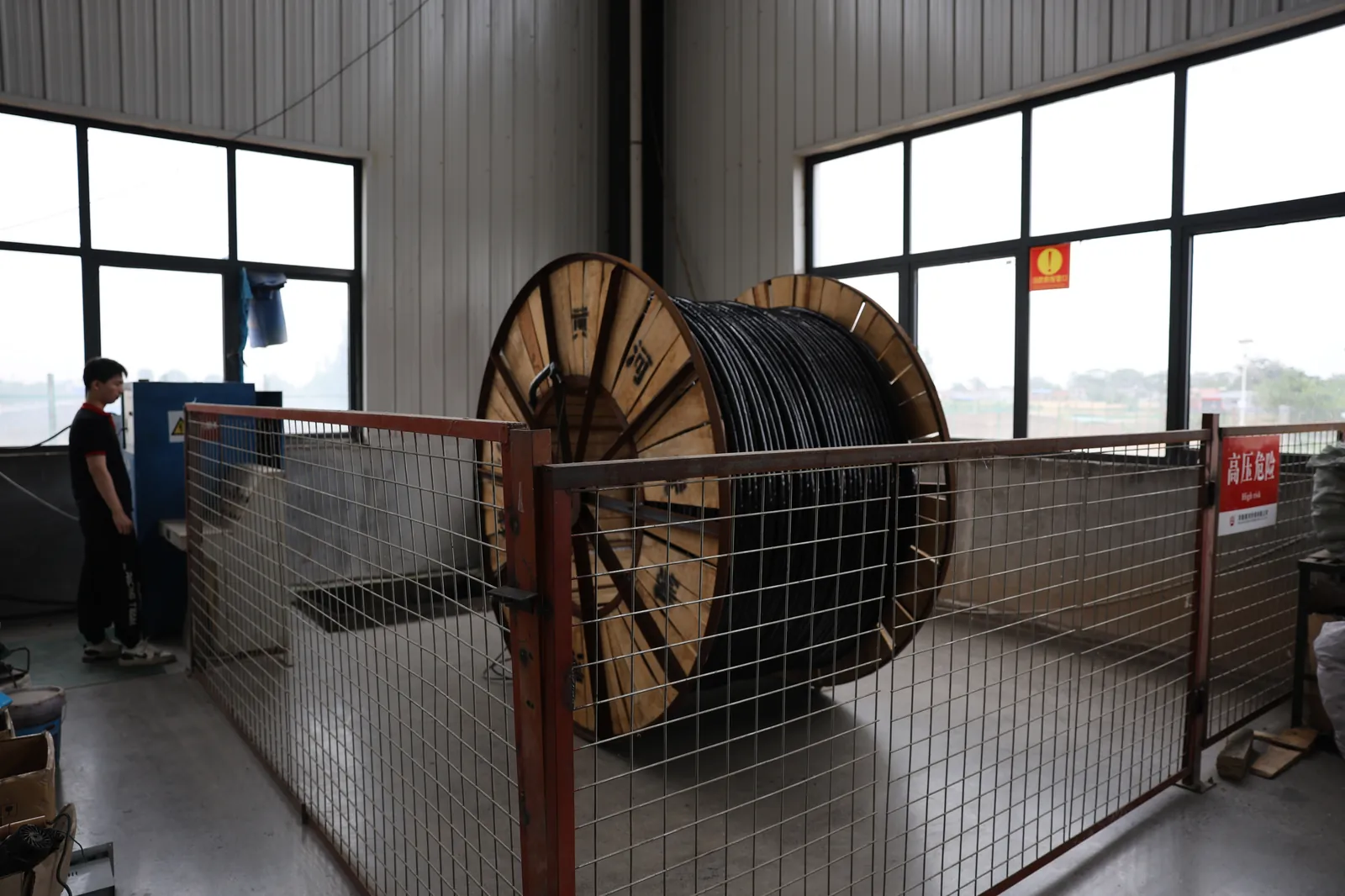
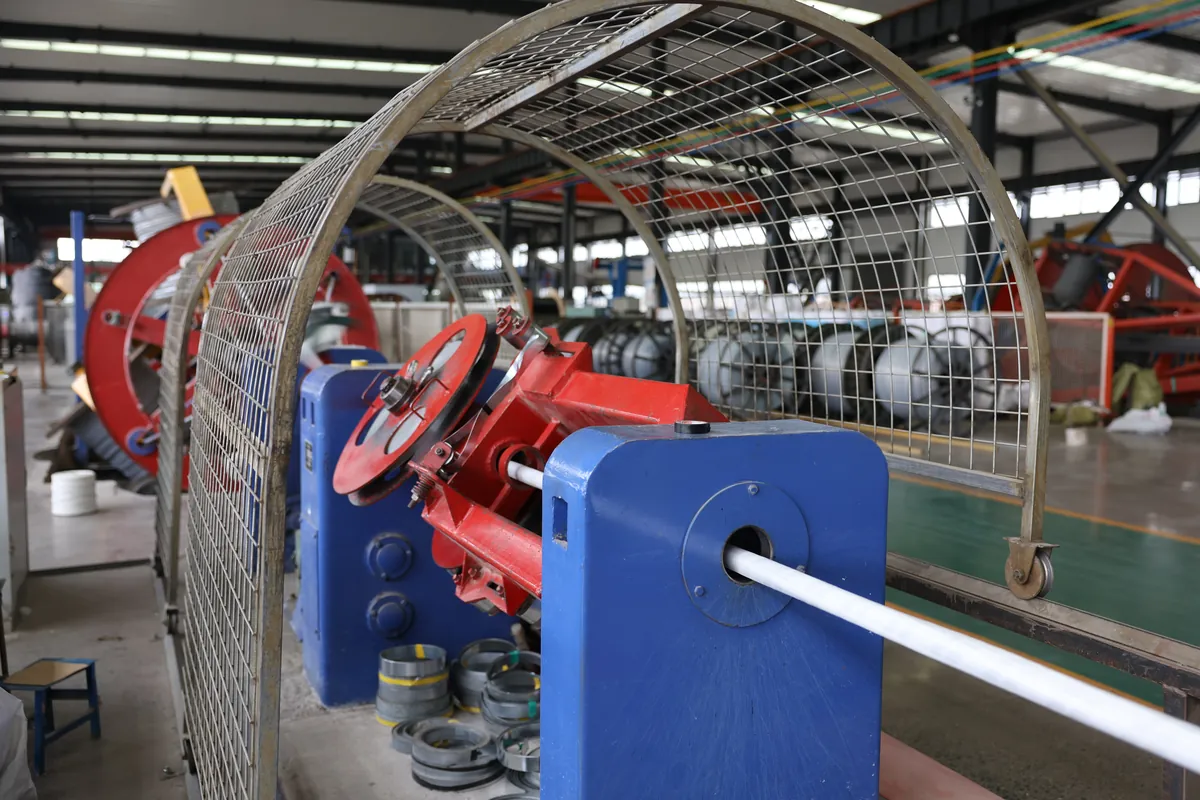
We wrote this as a cable factory — not a trading company, not a consultant. We are Henan Huanghe Cable Co., Ltd. (河南黄河线缆有限公司), an established medium-voltage cable manufacturer at our factory in Xinxiang, Henan, with 45+ years of production history, 60 production lines, and 45 dedicated testing machines for full in-house quality control. We manufacture to IEC 60502-2 and hold ISO 9001, ISO 14001, CCC and IEC CB Scheme certification, and we export to 30+ countries across Asia, Africa and the Middle East. The specification tables below are reference values derived from the IEC 60502-2 design we manufacture to — we state the basis of every table explicitly, and we confirm binding dimensions and ratings on the product datasheet issued with your quotation. Where we reference our own capabilities, we say so explicitly.
Factory-Direct vs. Regional Distributor: What Changes for an 11kV Order
China has one of the world's largest concentrations of medium-voltage cable manufacturing capacity. For buyers in India, Nigeria, the UAE, Malaysia, Pakistan, Saudi Arabia, Kenya, and dozens of other markets across South Asia, Southeast Asia, the Middle East, and Africa, that scale translates into three practical advantages:
1. Factory-direct pricing. Chinese 11kV cable manufacturers operate at a scale that most regional producers cannot match, which generally translates into lower factory-direct pricing than buying through a distributor or trading company — even after freight and import duties are added. Request a quote with your exact specification and we will show you the delivered cost comparison.
2. Full-range availability. Need single-core 630 mm² aluminium with MDPE oversheath for direct burial, and three-core 95 mm² copper with PVC for indoor switchgear? Our factory carries the tooling for every standard conductor size from 25 mm² to 630 mm², in both copper and aluminium, with XLPE or EPR insulation, and SWA or STA armouring — part of a range spanning 20+ product categories and nearly 100 cable types. One factory, one PO, one shipment.
3. IEC-native production. The vast majority of Chinese medium-voltage cable lines are built around IEC 60502-2 from day one. If your project spec calls for IEC, you are buying cable made on equipment that was designed for that standard — not adapted from a UL or JIS line. For markets that also require BS 6622 or NFC 33-226 compliance, most established Chinese manufacturers hold those certifications as well.
11kV Specifications You Must Lock Before Placing an Order
This section covers the core technical data you need to write a purchase specification or evaluate a supplier quote. Every number below is referenced to IEC 60502-2:2014 unless otherwise noted.
Construction & Materials
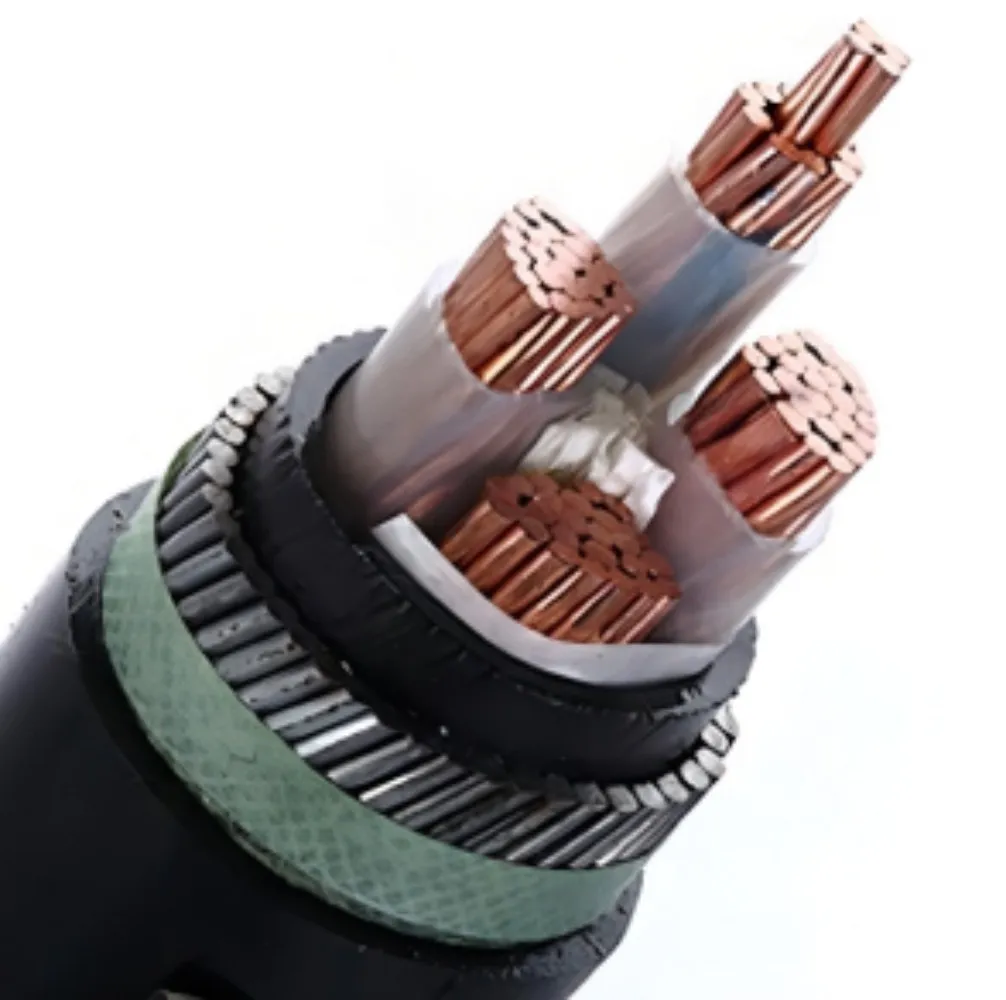
A standard 11kV (6.35/11 kV rated) XLPE cable consists of five layers, from core outward:
- Conductor — Class 2 stranded copper (Cu) or aluminium (Al) per IEC 60228. Copper gives higher current capacity in a smaller diameter; aluminium is significantly lighter and lower-cost per unit of current-carrying capacity, which is why it dominates utility distribution networks worldwide.
- Conductor screen — Extruded semi-conductive compound, minimum 0.5 mm thick, bonded to the insulation.
- Insulation — Cross-linked polyethylene (XLPE), nominal thickness per IEC 60502-2 Table 2 (3.4 mm for 6.35/11 kV rated voltage). See our full XLPE power cable range for the conductor and sheath combinations we extrude.
- Insulation screen — Extruded semi-conductive layer, strippable or bonded, plus copper tape or wire screen (typically 16 mm² equivalent) for earth-fault current.
- Armouring & oversheath:
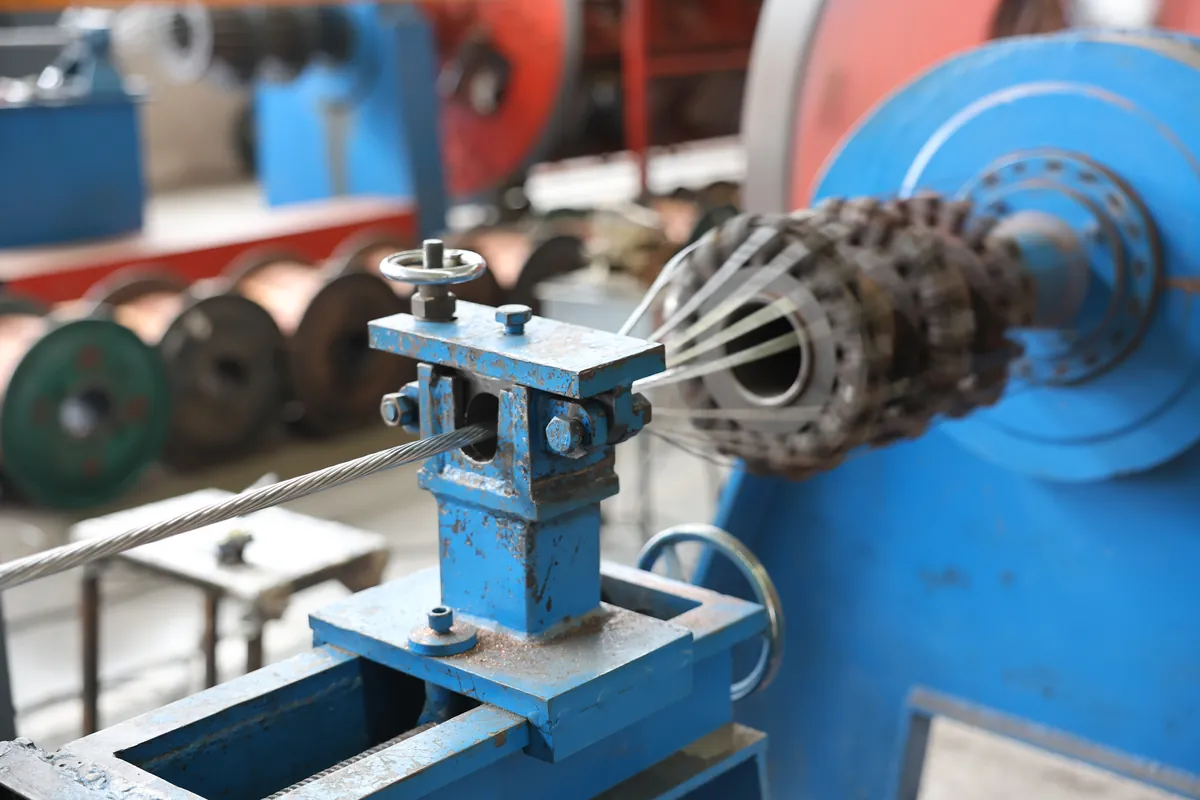
- SWA (Steel Wire Armoured) — galvanised steel wires, standard for multi-core cables and most underground applications.
- STA (Steel Tape Armoured) — double helical steel tapes, lighter, used where longitudinal water blocking is not critical.
- Unarmoured — for indoor installations, cable trays, or where external mechanical protection is provided.
- Oversheath — PVC (standard) or MDPE / HDPE (for direct burial or where hydrocarbon resistance is needed).
Size Chart — Cross-Section, Diameter & Weight
The table below covers the most commonly ordered 11kV 3-core XLPE/SWA cable sizes. These are reference values calculated from the IEC 60502-2 design (conductor per IEC 60228 Class 2, 3.4 mm XLPE insulation, semi-conductive screens, copper tape screen, galvanised steel wire armour, PVC oversheath). Overall diameter and weight are not fixed by the standard — they depend on each manufacturer's stranding, armour and sheath design, so treat them as design references for planning drum sizes, duct fill and shipping weight, not as acceptance values.
| Conductor (mm²) | Material | Core Dia. (mm) | Overall Dia. (mm) | Weight (kg/km) | Min. Bend Radius (mm) |
|---|---|---|---|---|---|
| 3 × 25 | Cu | 11.2 | 52 | 3,200 | 624 |
| 3 × 35 | Cu | 12.4 | 55 | 3,750 | 660 |
| 3 × 50 | Cu | 13.6 | 58 | 4,450 | 696 |
| 3 × 70 | Cu | 15.2 | 62 | 5,500 | 744 |
| 3 × 95 | Cu | 16.8 | 66 | 6,700 | 792 |
| 3 × 120 | Cu | 18.2 | 70 | 7,950 | 840 |
| 3 × 150 | Cu | 19.6 | 74 | 9,200 | 888 |
| 3 × 185 | Cu | 21.4 | 79 | 10,900 | 948 |
| 3 × 240 | Cu | 23.8 | 85 | 13,200 | 1,020 |
| 3 × 300 | Cu | 25.8 | 90 | 15,600 | 1,080 |
| 3 × 35 | Al | 13.2 | 56 | 2,650 | 672 |
| 3 × 50 | Al | 14.6 | 59 | 3,100 | 708 |
| 3 × 70 | Al | 16.0 | 63 | 3,700 | 756 |
| 3 × 95 | Al | 17.8 | 67 | 4,450 | 804 |
| 3 × 120 | Al | 19.0 | 71 | 5,200 | 852 |
| 3 × 150 | Al | 20.6 | 75 | 5,950 | 900 |
| 3 × 185 | Al | 22.2 | 80 | 7,000 | 960 |
| 3 × 240 | Al | 25.0 | 86 | 8,500 | 1,032 |
| 3 × 300 | Al | 27.0 | 91 | 10,000 | 1,092 |
Basis: calculated to the IEC 60502-2:2014 construction for 6.35/11 (12) kV. Diameter and weight are design reference values, not measured factory data — binding values are confirmed on the product datasheet we issue with your quotation. Ask us for the datasheet for your exact specification.
For a deeper breakdown including single-core sizes, screen configurations, and MDPE-sheathed variants, see our detailed 11kV cable size chart with all conductor options.
Current Carrying Capacity
Current ratings depend on installation method, ambient temperature, and soil thermal resistivity. The table below gives ratings for 11kV 3-core XLPE/SWA cable laid direct in ground at 20 °C ambient, 1.0 K·m/W soil resistivity, depth 0.8 m — the IEC 60502-2 reference conditions.
| Conductor (mm²) | Copper (A) | Aluminium (A) |
|---|---|---|
| 25 | 140 | 110 |
| 35 | 170 | 130 |
| 50 | 200 | 155 |
| 70 | 245 | 190 |
| 95 | 295 | 230 |
| 120 | 340 | 265 |
| 150 | 380 | 295 |
| 185 | 430 | 335 |
| 240 | 500 | 390 |
| 300 | 560 | 440 |
Basis: calculated per the IEC 60287 rating method at the stated reference conditions — single circuit, no grouping derating. For trefoil/flat formation, in-air, duct, or high-ambient installations, apply the correction factors in IEC 60287-2 / IEC 60502-2 Annex B. Send us your actual installation conditions and we will confirm the rating for your design.
Request the 11kV datasheet and a rating check for your installation conditions
Voltage Rating & Insulation Thickness
11kV cable is designated 6.35/11 (12) kV under IEC 60502-2:
- U₀ (phase-to-earth): 6.35 kV
- U (phase-to-phase): 11 kV
- Um (maximum system voltage): 12 kV
- XLPE insulation thickness: 3.4 mm (IEC 60502-2 Table 2)
- Lightning impulse withstand (BIL): 75 kV
- Power frequency withstand (5 min): 28 kV
These values are fixed by the standard. Any 11kV cable manufacturer quoting different insulation thickness or test voltages for a 6.35/11 kV rating is either using a non-IEC standard or cutting corners — either way, ask for the type-test certificate.
IEC & International Standards for 11kV Cable
Not every country writes "IEC 60502-2" on its tender documents, but the vast majority of our target markets accept it — often alongside a national or regional variant. Here is what you need to know:
IEC 60502-2:2014 — Power cables with extruded insulation and their accessories for rated voltages from 1 kV up to 30 kV. This is the baseline. It defines construction, dimensions, testing (routine, sample, and type tests), and marking. If your spec simply says "IEC compliant," this is the document.
BS 6622:2014 — The British standard for single-core and three-core 6.35/11 kV to 19/33 kV cables. Widely referenced in Nigeria, Ghana, Kenya, Uganda, and other Commonwealth African markets, as well as parts of the Middle East (UAE, Oman, Qatar). In practice, BS 6622 is closely aligned with IEC 60502-2; the main additions are tighter requirements on water-tree resistance and some differences in screen construction. Our factory holds BS 6622 type-test reports from an accredited laboratory, and we have manufactured BS 6622 cable for utility supply in several African markets — including a 120+ km transmission-cable supply for Kenya's national grid interconnection (33kV and 11kV XLPE, to IEC 60502-2 and KEBS KS 2467).
IS 7098 (Part 2) — India's national standard for XLPE-insulated cables above 1.1 kV. Mandatory for all Indian utility and government projects. IS 7098 tracks IEC 60502-2 with some India-specific additions: mandatory BIS certification mark, specific conductor-class requirements, and distinct marking codes. We supply IS 7098 cable with BIS licence for Indian distribution utilities.
NFC 33-226 — French standard, used in Francophone Africa (Senegal, Côte d'Ivoire, Cameroon, Algeria, Morocco). Construction is essentially IEC 60502-2 with French-language marking and some cable-accessory interface requirements.
SANS 1507 — South African standard for MV XLPE cable, required for Eskom and municipal tenders. Aligned with IEC 60502-2 but includes additional UV-resistance requirements for the oversheath and specific earth-screen minimums.
| Market | Primary Standard | Notes |
|---|---|---|
| India | IS 7098-2 + BIS mark | BIS certification mandatory for utility supply |
| Nigeria / Ghana / Kenya | BS 6622 or IEC 60502-2 | BS preferred by many utilities; IEC accepted |
| UAE / Saudi / Qatar / Oman | IEC 60502-2 | Some utilities also accept BS 6622 |
| Malaysia / Indonesia / Philippines | IEC 60502-2 | MS IEC 60502 for Malaysia |
| South Africa | SANS 1507 | SABS mark required |
| Francophone Africa | NFC 33-226 | French-language marking |
| Pakistan / Bangladesh / Sri Lanka | IEC 60502-2 | Some projects also specify BS 6622 |
For a full walkthrough of cable certifications — including KEMA type testing, CB scheme, and ISO 9001 — see our IEC, KEMA & CB certification guide for power cables.
How to Choose an 11kV Cable Manufacturer in China
Dozens of Chinese factories can produce 11kV XLPE cable. The difference between a reliable supplier and a costly mistake comes down to six checkpoints. We list them as an honest buyer's checklist — and we invite you to hold us to every one of them.
How we measure up. For reference, here is our own profile against these six checkpoints: 45+ years of manufacturing history, 60 production lines, 45 in-house testing machines for full routine and type testing, and certification to ISO 9001, ISO 14001, IEC, CCC and the CB Scheme. Our delivered track record sits squarely in the markets this guide is written for — a 120+ km transmission-cable supply for Kenya's national grid interconnection (33kV & 11kV XLPE), 11kV XLPE/SWA 3×185 mm² for a power-station expansion in Botswana, and a multi-year framework contract supplying 1,000+ tonnes of power cable, ABC and bare conductor to the Bangladesh Power Development Board. Use the checkpoints below to hold us — and any other supplier — accountable.
1. Type-Test Certificates
Ask for the IEC 60502-2 (or BS 6622 / IS 7098) type-test report — not a product brochure, the actual test report from an accredited laboratory (KEMA, CNAS-accredited Chinese lab, or equivalent). A type test covers:
- Partial discharge (≤ 5 pC at 1.73 U₀)
- 4-hour voltage test at 3.5 U₀
- Hot set test for XLPE
- Lightning impulse
- Bending test + partial discharge re-test
If the manufacturer cannot produce a current (less than 5 years old) type-test report for the exact voltage rating you need, walk away.
2. Production Equipment
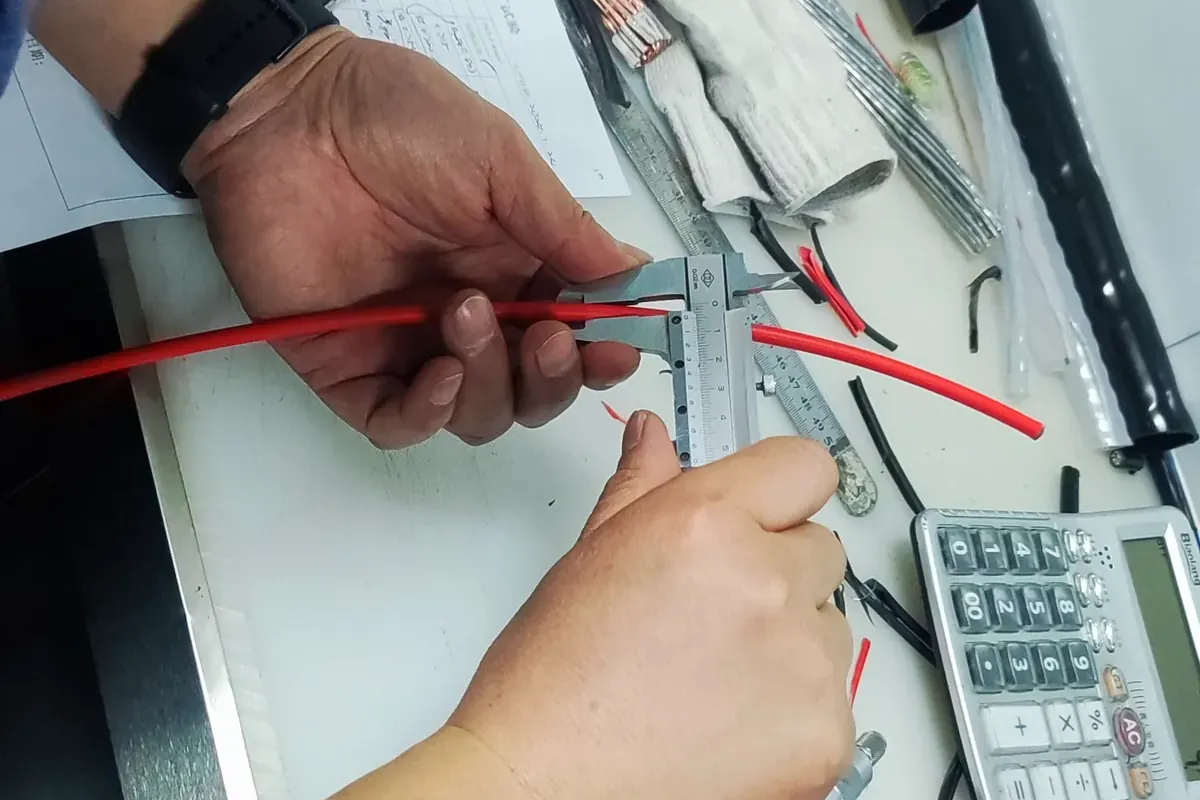
For 11kV XLPE cable, insulation quality is everything. Ask about:
- Extrusion line type: CCV (catenary continuous vulcanisation) or VCV (vertical continuous vulcanisation). Both are acceptable; VCV is generally considered superior for MV cable because gravity keeps the insulation concentric.
- Clean room: XLPE insulation must be extruded in a clean-room environment (Class 10,000 or better) to prevent contaminant-induced partial discharge.
- Triple extrusion head: Conductor screen, insulation, and insulation screen should be applied in a single pass (true triple co-extrusion), not in separate passes.
3. Routine Test Records
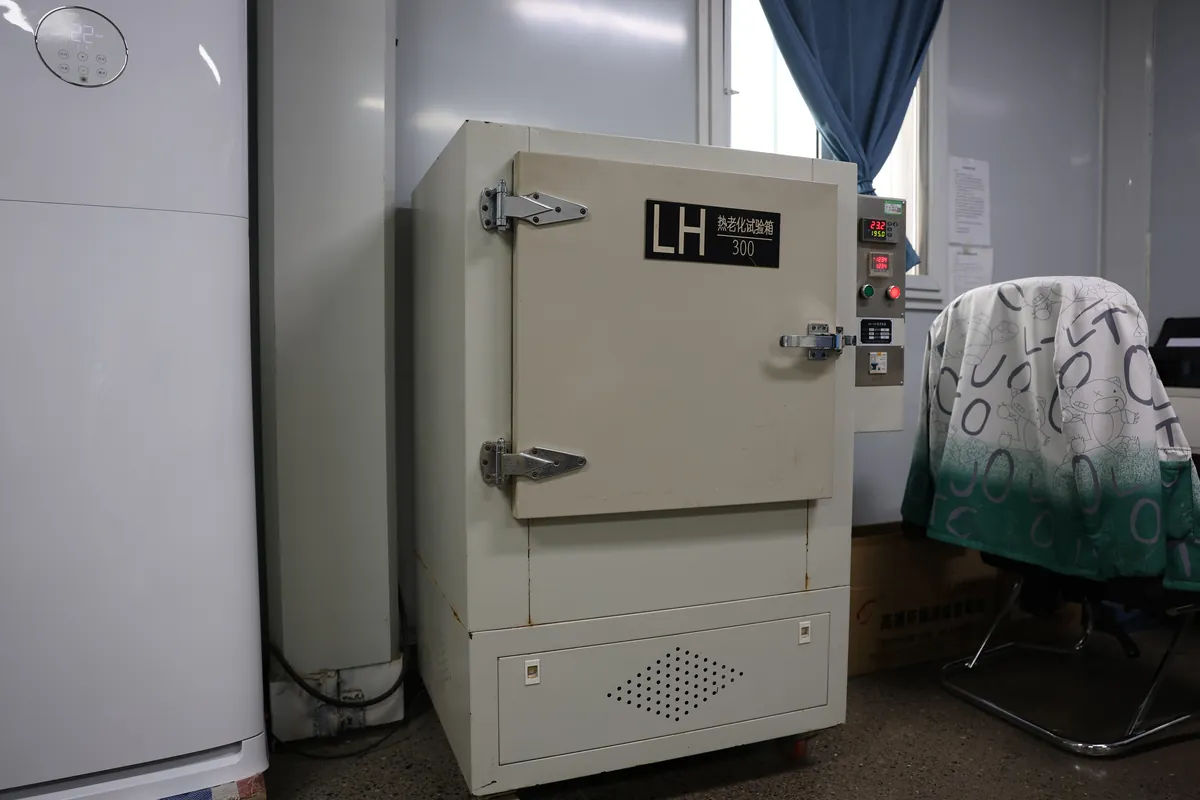
Every reel of MV cable must pass routine tests before shipment (IEC 60502-2 clause 15):
- Partial discharge test (≤ 5 pC at 1.73 U₀)
- Voltage withstand test (5 min at 3.5 U₀ for XLPE)
- Conductor resistance measurement
Ask to see sample routine test reports from recent production. A good manufacturer will offer real-time access to test data for your specific order.
4. Export Track Record
Experience matters. A factory that has exported 11kV cable to your specific market understands:
- The documentation your utility requires (type-test report, routine test report, material certificates, certificate of origin)
- The marking and labelling requirements (metre marking, voltage marking, standard reference)
- The packing and drum requirements for sea freight
- Any specific national-standard deviations (e.g., BIS mark for India, SABS mark for South Africa)
Ask for a reference list with country, project, and quantity. Verify at least one reference.
5. Quality Management System
ISO 9001 is the minimum. For medium-voltage cable specifically, look for:
- ISO 9001:2015 (quality management)
- ISO 14001 (environmental — increasingly required by Gulf and African utilities)
- OHSAS 18001 / ISO 45001 (safety)
- KEMA or ASTA-assessed quality system (indicates third-party factory audits)
6. Commercial Terms
Before you compare prices, align on:
- MOQ: MOQ is set per specification (conductor size, material, armour type), not per order total — a standard specification typically requires 500–1,000 metres, while special/custom constructions typically require 2,000–5,000 metres, reflecting the changeover time on stranding and extrusion lines rather than a tonnage threshold.
- Production lead time: 10–15 days for standard specifications. This is production time only — it does not include sea freight or port handling, which are quoted separately based on your destination.
- Payment terms: T/T, L/C at sight, or D/P — varies by manufacturer and order size.
- Sample policy: Reputable manufacturers offer 1 m free samples for quality evaluation.
Protect yourself: Before sending money to any Chinese cable supplier, read our guide on how to avoid cable scams when importing from China. It covers due diligence steps, red flags, and payment structures that protect the buyer.
Import Process: From Inquiry to Delivery
If you have never imported cable from China before, the process can feel opaque. It does not have to be. Here is the standard sequence, with typical timelines:
Step 1 — Inquiry & Quotation Send your specification: voltage rating, conductor size(s), conductor material, armour type, sheath material, quantity (metres), and delivery location. A good factory replies within 24–48 hours with a formal quotation — priced against your exact specification and the current LME metal cost — including payment terms, lead time, and applicable standards.
Step 2 — Sample & Evaluation (optional) For first-time buyers, request a 1 m sample of the exact cable you intend to order. Test it in your own lab or send it to an independent testing house. This step costs almost nothing and can save you from a six-figure mistake.
Step 3 — Order Confirmation & Production (production: 10–15 days) Upon agreement, sign a sales contract and open an L/C or remit the deposit. The factory schedules production. For standard 11kV 3-core XLPE/SWA in common sizes, our production lead time is 10–15 days. This is production time only — sea freight and port handling are separate and additional (see Step 5).
Step 4 — Inspection & Testing (before shipment) Before shipment, all cable undergoes routine testing per IEC 60502-2. You (or your appointed third-party inspector — SGS, BV, TÜV) witness the tests if required. The factory issues routine test reports, material certificates, and a packing list.
Step 5 — Shipping & Logistics (separate from production)
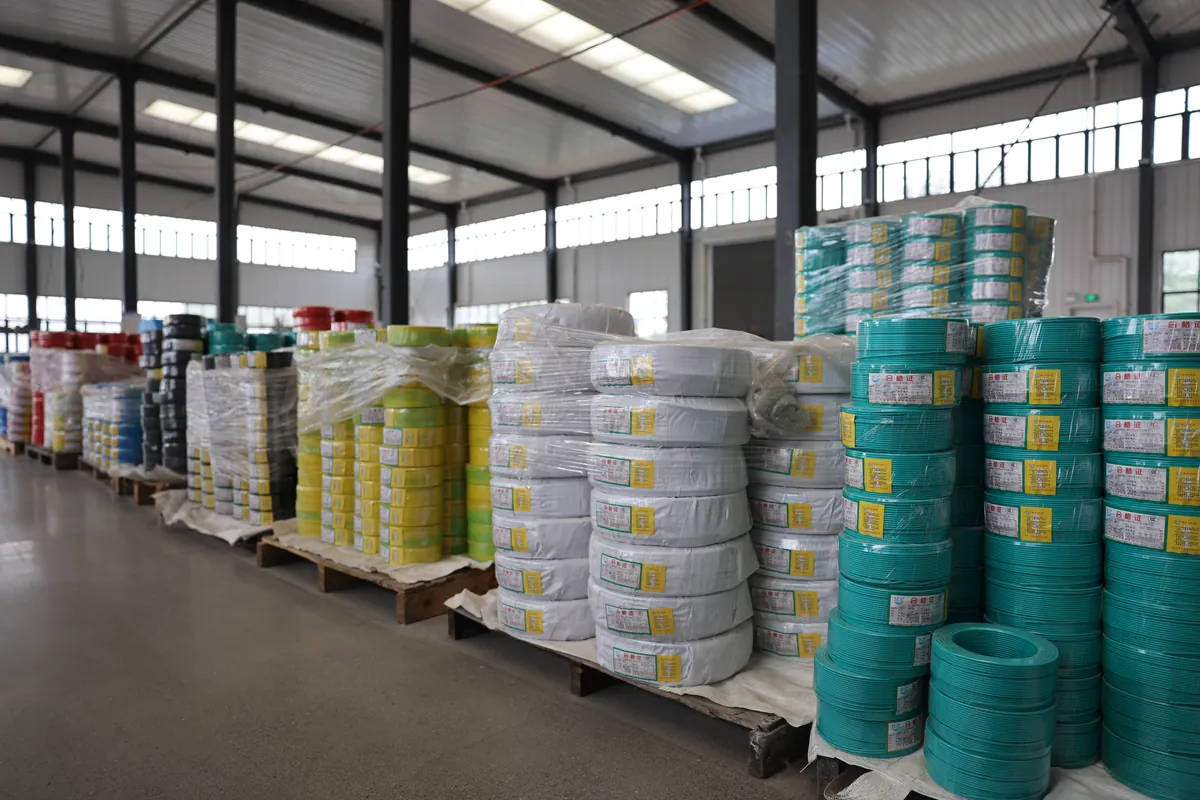
Cable ships on wooden or steel drums, secured in containers (20 ft or 40 ft depending on drum size). Sea freight transit time is separate from — and additional to — the 10–15 day production lead time, and it varies by route, carrier, and season. We confirm the current transit time and CIF cost to your specific destination port at the quotation stage, based on the live schedule from the shipping line rather than a generic estimate.
Step 6 — Customs Clearance & Delivery (at destination) You handle import clearance with your local customs broker. Key documents: commercial invoice, packing list, bill of lading, certificate of origin, test reports, and (where required) BIS/SABS/KEMA certificate. After clearance, cable delivers to your project site or warehouse.
For a deeper dive into each step — including how to structure payments to protect yourself, what to look for during factory inspection, and how to handle shipping damage claims — see our step-by-step guide to importing cable from China.
11kV Cable Applications by Market
11kV is the workhorse voltage of secondary distribution networks worldwide. Here is how our customers across target markets are using 11kV cable:
Power Distribution Networks (all markets) The single largest application. 11kV cable connects primary substations (33/11 kV or 66/11 kV) to distribution transformers that step down to 400 V / 230 V for end users. Three-core 11kV XLPE/SWA cable with aluminium conductors (95–300 mm²) dominates underground distribution in urban areas across India, Nigeria, the UAE, and Southeast Asia.
Industrial Plants & Manufacturing Facilities Large industrial consumers — cement plants, steel mills, petrochemical complexes — often receive power at 11kV and distribute internally at the same voltage. These installations typically use copper-conductor 11kV cable for higher current density and better fault-current performance. Three-core 185 mm² and 240 mm² copper are the most common sizes we ship for industrial plant power supply projects in Saudi Arabia, Pakistan, and Indonesia.
Solar & Renewable Energy Utility-scale solar farms collect power from string inverters at low voltage and step up to 11kV (or 33kV) for transmission to the grid. The collector cables — connecting inverter stations to the project substation — are typically single-core 11kV XLPE with aluminium conductors, 240–630 mm². We have supplied 11kV solar collector cable to utility-scale projects in India, the Middle East, and North Africa.
Mining Underground and open-pit mines use 11kV cable to power draglines, conveyors, crushers, and ventilation fans. Mining cable faces extreme mechanical stress, moisture, and sometimes methane exposure. SWA armouring is mandatory; many mining specs also require fire-retardant (FR) or low-smoke zero-halogen (LSZH) sheathing. We supply 11kV mining cable to operations in South Africa, Zambia, Ghana, and the DRC.
Tell us the application, the burial or ducting method, and the ambient conditions on your site, and we will confirm the conductor size and armour type before you issue the purchase order. Send us your specification and we will come back with a datasheet and quotation.
Frequently Asked Questions
What is the price range for 11kV XLPE cable from China?
Pricing depends primarily on conductor material (copper vs. aluminium) and size, armour type, order quantity, and the LME copper/aluminium price on the day of quotation — cable pricing is not fixed and moves with metal prices. We do not publish per-metre prices because a quote without your exact specification and current metal cost would be misleading. Send us your voltage rating, conductor size and material, armour type, and quantity, and we will reply with a formal quotation within 24 hours.
Send your 11kV cable specification for a project quotation
What is the minimum order quantity (MOQ)?
MOQ applies per specification, not per order total. Standard specifications: 500–1,000 metres per size/configuration. Special or custom constructions (non-standard sizes, screens, or sheath materials): 2,000–5,000 metres per specification. This reflects the changeover time required on our stranding and extrusion lines, not a minimum tonnage requirement — so a multi-size order is evaluated specification by specification, not as a single combined total.
Which certifications should I require from a Chinese 11kV cable manufacturer?
At minimum: IEC 60502-2 type-test report from an accredited laboratory, ISO 9001:2015 quality management certificate, and routine test reports for every reel shipped. Depending on your market, you may also need BS 6622 type test (Nigeria, Kenya, parts of the Middle East), BIS certification (India), SABS mark (South Africa), or KEMA assessment.
How long does production take?
Our production lead time for standard 11kV specifications is 10–15 days from order confirmation. This is production time only — it does not include sea freight or customs clearance, which depend on your destination port and are quoted separately.
Should I choose copper or aluminium conductor for 11kV cable?
It depends on your application. Aluminium is the default choice for utility distribution networks — it is significantly lighter, lower-cost, and adequate for the moderate current demands of distribution feeders. Copper is preferred where space is limited (industrial plants), fault-current requirements are high, or the cable must carry heavy continuous loads in a compact duct. If your utility spec does not mandate copper, aluminium is almost always the better economic choice for 11kV distribution.
Can you produce 11kV cable to both IEC and BS standards?
Yes. Our factory holds current type-test reports for both IEC 60502-2 and BS 6622 for the full 6.35/11 kV range. We can also produce to IS 7098 (India), NFC 33-226 (Francophone Africa), and SANS 1507 (South Africa). Tell us which standard your project requires, and we will confirm compliance and provide the relevant test documentation.
What happens if the cable is damaged during shipping?
All cable ships on properly sized wooden or steel drums, blocked and braced inside containers per our packing standard. We photograph every drum before container loading. In the rare event of shipping damage, the process is: (1) note the damage on the delivery receipt, (2) photograph the damage, (3) file a claim with the shipping line within 3 days, (4) contact us — we will support your claim with our packing records and, if necessary, arrange replacement cable on priority production.
Do you offer third-party inspection before shipment?
Absolutely. We welcome SGS, Bureau Veritas, TÜV, Intertek, or any inspector you appoint. We provide full access to our test laboratory during routine testing and will coordinate the inspection schedule with your appointed agent. Many of our customers also conduct a pre-production factory audit before placing their first order — we encourage this.
Are you a factory or a trading company?
We are the factory. China Cable Factory is the export brand of Henan Huanghe Cable Co., Ltd. (河南黄河线缆有限公司) in Xinxiang, Henan — an established manufacturer with 45+ years of history, 60 production lines and 45 in-house testing machines. You buy direct from the plant that strands the conductor, extrudes the insulation and tests every reel, not from a middleman marking up someone else's cable. You are welcome to visit the factory or arrange a video walk-through of the production line before you order.
Send Us Your 11kV Specification
You now have the specifications, the standards, and the evaluation framework. The next step is simple: tell us what you need.
Whether you are tendering for a 200 km urban distribution project in Nigeria, upgrading an industrial feeder in India, or building a solar farm in the UAE — we manufacture the 11kV XLPE cable to the exact standard your project requires, and we deliver it factory-direct at a price that makes your project budget work.
Get in touch:
Related reading: