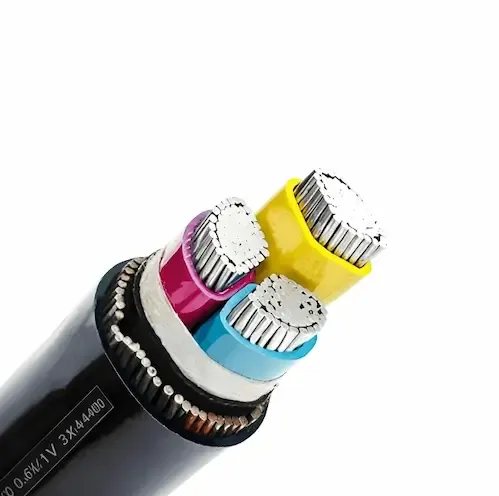
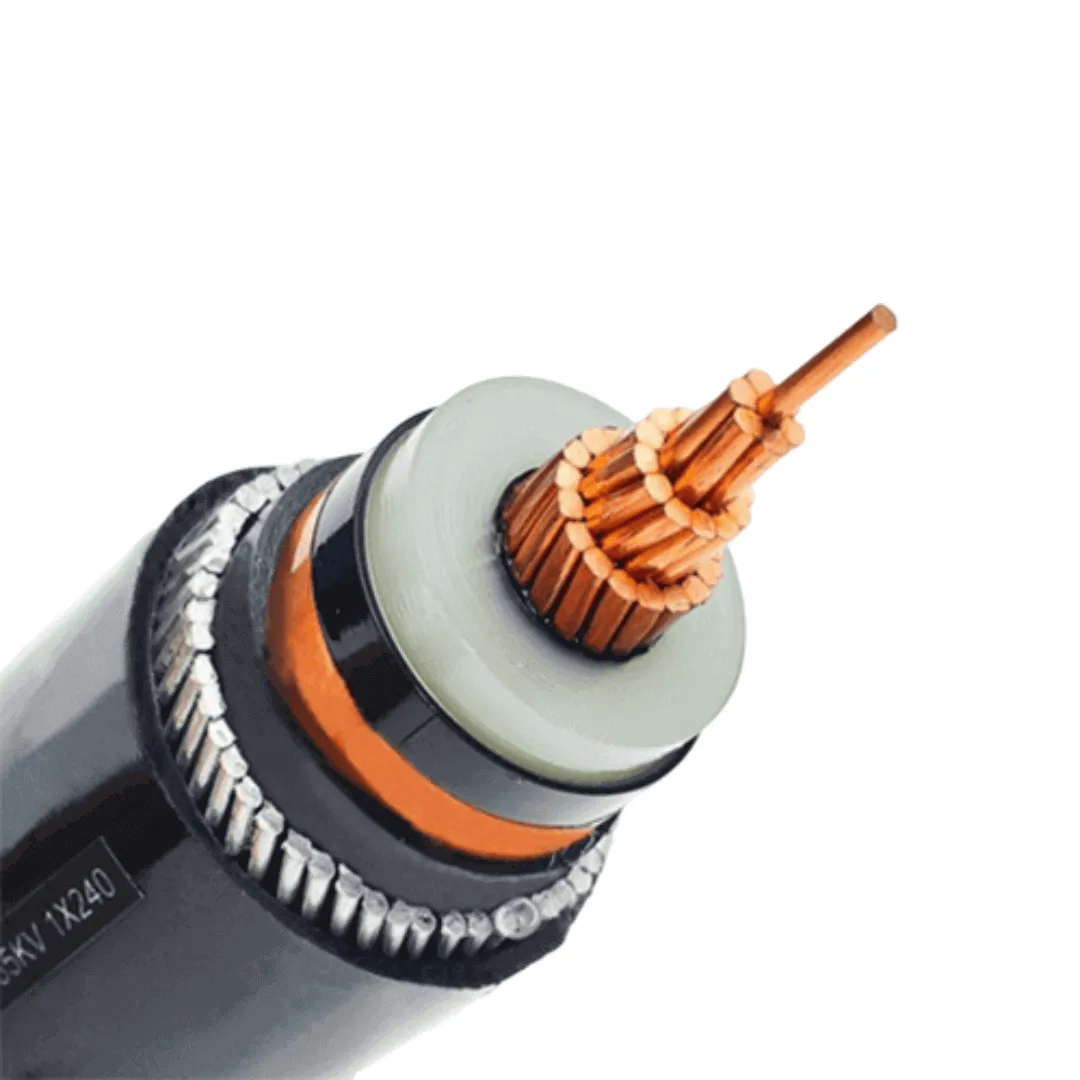
Key Takeaway
Aluminium armoured cable procurement checks for 0.6/1 kV YJLV22 (steel tape) and YJLV32 (steel wire) quotations: conductor, armour, terminations and documents.
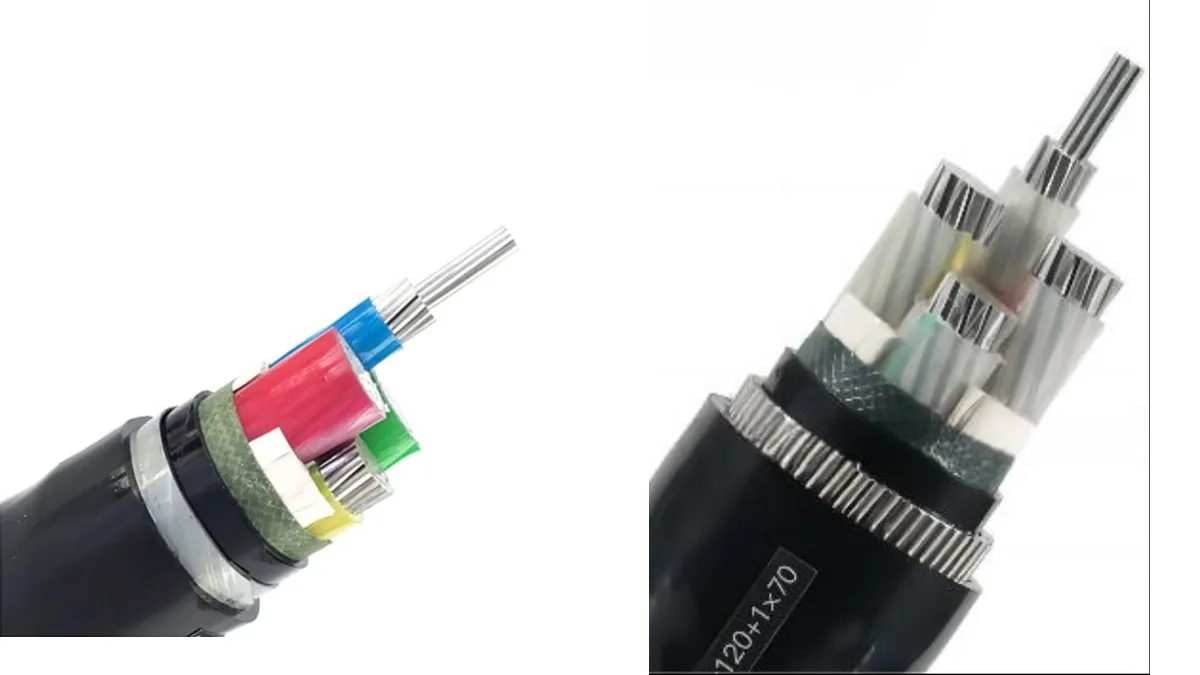
Short answer: before you compare prices for aluminium armoured cable, confirm three things in writing for every line. First, the conductor metal is aluminium and the armour metal is steel, listed as two separate items. Second, the armour type (steel tape for YJLV22, steel wire for YJLV32) is the one your approved design or tender calls for. Third, the conductor construction, core arrangement and engineering requirements match what the designer approved. Only then are two quotations comparable.
A Chinese model code such as YJLV22 or YJLV32 is a family name, not a full purchase specification. It does not tell the supplier the rated voltage, the number of cores, the cross-section, the conductor shape, the standard or the drum lengths. And the "22" and "32" are not interchangeable suffixes: they describe two different armour constructions that a designer chooses for different installation conditions.
This guide is written for contractors, project buyers and import distributors in Africa, the Middle East and Southeast Asia who are buying 0.6/1 kV multi-core aluminium conductor, XLPE insulated, steel armoured, PVC sheathed power cable. It covers six decisions in the order a buyer meets them: reading the code, separating conductor metal from armour metal, checking STA against SWA, submitting a copper-to-aluminium change, buying the terminations correctly, and checking a quotation line by line.
What this guide does not do: it does not size cables, give current ratings, convert copper sizes to aluminium sizes or price anything. Those come from your project engineer and from a quotation for your specification. The scope is also deliberately narrow: 0.6/1 kV, multi-core, aluminium conductor, steel tape or steel wire armour. Medium-voltage cables and aluminium wire armoured (AWA) constructions are different products and are outside this article.
Reading the code: what YJLV22 and YJLV32 actually say
In the Chinese designation system each letter and digit names one layer of the cable. Read from left to right:
| Code element | Layer it describes | Plain-language meaning |
|---|---|---|
| YJ | Insulation | XLPE (cross-linked polyethylene) insulation |
| L | Conductor | Aluminium conductor. No "L" means copper (YJV22, YJV32) |
| V (after L) | Sheath | PVC sheath letter, carried over from the unarmoured YJLV. In 22 and 32 types the outer sheath material is set by the last digit; the inner covering is shown on the approved drawing |
| 2 (in 22) | Armour | Steel tape armour (STA) |
| 3 (in 32) | Armour | Steel wire armour (SWA), fine steel wire |
| 2 (final digit) | Outer sheath | PVC outer sheath. A final 3 (YJLV23, YJLV33) means a PE outer sheath |
So the two products in this guide translate as:
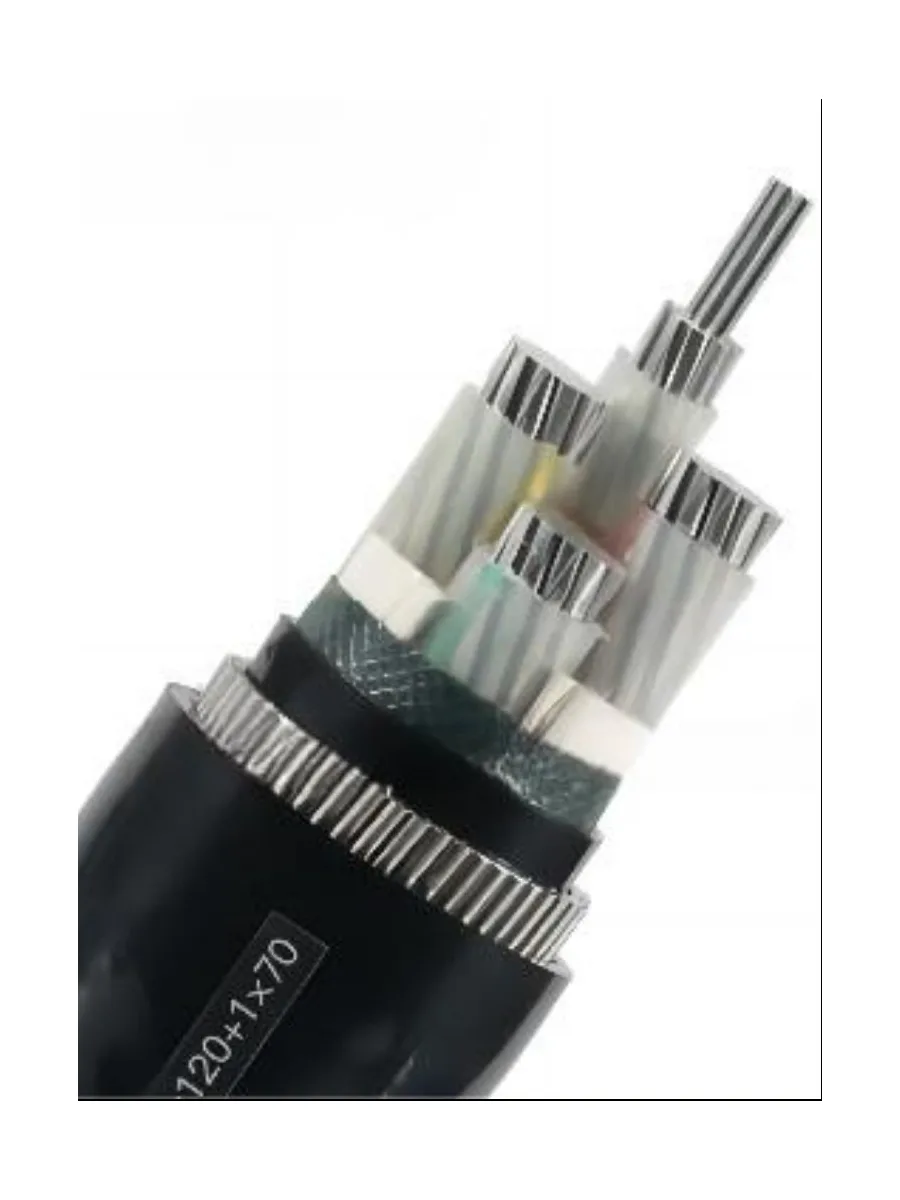
- YJLV22 = Al/XLPE/STA/PVC: aluminium conductor, XLPE insulation, steel tape armour, PVC outer sheath.
- YJLV32 = Al/XLPE/SWA/PVC: aluminium conductor, XLPE insulation, steel wire armour, PVC outer sheath.
A few terms, defined once so the rest of the guide reads cleanly:
- Al: aluminium, the conductor metal. It carries the current.
- XLPE: cross-linked polyethylene insulation around each core.
- STA: steel tape armour. In the factory catalogue construction diagrams, this is a double steel tape layer.
- SWA: steel wire armour, a single layer of round steel wires laid around the cable.
- PVC: polyvinyl chloride, used here for the outer sheath.
These descriptions match the published Huanghe documents. The Huanghe LV/MV catalogue (page 3, "Name and Type of XLPE Cable") names YJLV22 as "XLPE insulated, steel tape armoured, PVC (PE) sheathed power cable" and YJLV32 as "XLPE insulated, fine steel wire armoured, PVC (PE) sheathed power cable". The Huanghe XLPE insulated electric cable page lists YJLV22 as Al/XLPE/DSTA/PVC(PE), with DSTA meaning double steel tape armour, and YJLV32 as Al/XLPE/SWA/PVC(PE).
The layer list in the code is a summary. The catalogue construction diagrams (pages 4 and 5) show additional layers between the cores and the armour: PP filler, a core wrapping tape and a wrapped inner bedding layer, with the details varying by core count. Which bedding or inner covering your order gets, and its material, is fixed on the drawing and datasheet the factory issues for the order, not by the letters in the code. If your specification names a particular inner covering or bedding, say so in the enquiry and check that the drawing shows it.
Aluminium conductor is not aluminium armour: list the two metals separately
The phrase "aluminium armoured cable" can describe two different products:
- A cable with an aluminium conductor and steel armour. This is YJLV22 or YJLV32. The aluminium carries the current; the steel tape or steel wire gives mechanical protection.
- A cable with aluminium wire armour (AWA). Here "aluminium" names the armour metal, not the conductor, and the conductor may be copper or aluminium. AWA constructions are outside the scope of this guide, which covers only aluminium conductors with steel tape or steel wire armour.
Both get described as "aluminium armoured", and both can appear in the same tender. If the enquiry says only "aluminium armoured cable 4 core 95 mm²", the supplier has to guess which metal sits where, and two suppliers can quote two different cables against the same line. The fix is simple: never let one word describe two layers.
On every line of the enquiry and of the quotation, ask for two separate fields:
| Field | What to write | What to reject |
|---|---|---|
| Conductor metal | Aluminium (Al) | "Aluminium" with no layer named |
| Armour metal and form | Galvanised steel tape (STA) or galvanised steel wire (SWA), as your specification states | "Armoured" or "aluminium armoured" with no armour type |
If your specification calls for galvanised armour, say so in the armour field and check the datasheet repeats it. The catalogue descriptions used in this guide name the armour as steel tape or steel wire; the coating and dimensions of the armour are confirmed on the datasheet for the order.
A quick way to catch a mismatch: compare the description string on the quotation with the code. "Al/XLPE/SWA/PVC" against YJLV32 agrees. "Cu/XLPE/AWA/PVC" against a line you meant as YJLV32 does not, however similar the price looks. Also check that a YJLV32 line has not been changed to a copper conductor (YJV32) or to an aluminium wire armoured construction without the change being stated. Either change is a different product and should come back to you as a declared deviation, not a silent edit.
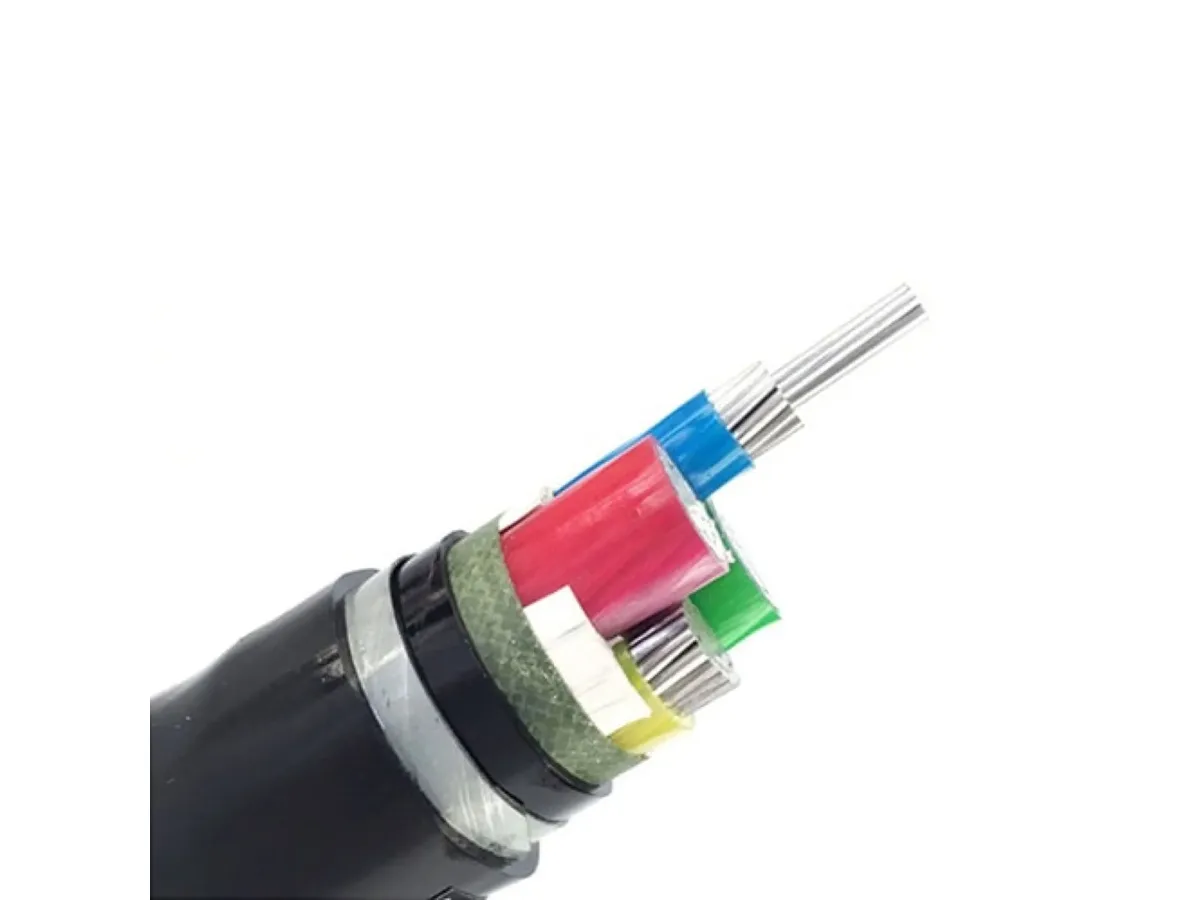
YJLV22 or YJLV32: checking the armour against the approved installation
The difference between the two products is the armour, and the armour is chosen by the designer for the installation method. The buyer's job is not to pick one; it is to check that the cable being quoted matches what the approved design says.
What the factory documents say about each armour type, in the factory's own words:
- Steel tape (22): the Huanghe catalogue type and application table (page 6, "Cable's Main Type and Application") describes the 22 types as for laying indoor, in tunnels, underground and in canals, "able to bear external mechanical forces, but unable to bear large pulling force".
- Fine steel wire (32): the same table describes the 32 types as for laying in shafts, in water, underground and over large differences of level, "able to bear external mechanical pressure and moderate pulling force".
That table covers the whole 1 to 35 kV catalogue family and describes the families in general terms. It is useful for reading a design, but it does not give tension limits, and it is not a site-specific suitability statement. Whether a given route needs steel wire, and what pulling tension or vertical drop is allowed, is set by the design, the cable data for the actual construction and the installation method. This article does not give tension figures, and the factory confirms the data for each ordered construction on its datasheet.
So check the route against the design, not against the catalogue sentence. These are the questions that decide whether the 22 or 32 on a quotation is consistent with what was approved:
| Route question | Where the answer comes from | What to do if the quotation does not match |
|---|---|---|
| Is the cable pulled through ducts, or laid in an open trench or on tray? | Installation method statement, cable schedule | If the design says pulled, ask the designer whether STA is accepted for that pull before accepting a 22 offer |
| Does any section run vertically, in a shaft or riser, or down a slope with a large level difference? | Route drawings, riser details | If yes and the design specifies SWA, do not accept STA as an alternative without written design approval |
| Does any section run in water, wet ground or a canal crossing? | Route survey, design | Check the armour and sheath the design names for that section; it may differ from the dry sections |
| Is the armour intended to act as a protective conductor? | Earthing design | Confirm this as its own design question. If it is, ask the supplier for the armour construction and dimensions on the datasheet so the designer can check them |
| How does the design require the armour to be connected and earthed at each end? | Earthing design, termination drawings | Confirm the required connection and earthing arrangement separately, and check the selected gland provides it for the quoted armour |
| Which armour forms and size ranges does the specified gland model accept? | Gland schedule, gland manufacturer's product data | Check the gland model against the quoted armour type and the confirmed diameters. Some gland models are listed for several armour forms, others are not. If the armour changes, re-check the gland; do not assume the original gland is still compatible |
Three practical rules follow from this:
- Do not treat 22 as a cheaper version of 32. A supplier offering YJLV22 against a YJLV32 line is offering a different armour. Record it as an alternative for the designer to accept or reject, and keep the original line priced so the comparison stays fair.
- Do not assume a mixed route can use one armour type. A route with a riser section and a trench section may have been designed with SWA throughout precisely because of the riser. Ask before splitting it.
- Stay within multi-core LV. Everything in this section is about multi-core 0.6/1 kV cables. Single-core circuits follow different rules: for example, the catalogue notes on page 3 that single-core steel tape armoured cable should only be applied to direct-current lines. Single-core designs are outside this guide.
If your design has not yet chosen the armour, that decision belongs to the project engineer. Our 4 core armoured cable SWA vs STA comparison sets out the general differences between the two armour types; it is background for that discussion, not a substitute for the design.
Proposing aluminium instead of copper: what the design submission needs
When an approved copper design (YJV22 or YJV32) is proposed for change to aluminium (YJLV22 or YJLV32), the change is an engineering decision, not a purchasing substitution. Aluminium has a higher resistance than copper at the same cross-section, which you can see in the factory's own resistance table: catalogue page 3 lists the maximum DC resistance at 20 °C for copper and aluminium conductors side by side at each size. The consequences for conductor size, voltage drop, fault rating, glands and terminations have to be worked out by the designer for the actual circuit.
This guide therefore gives no size conversion, no current rating and no "same size will do" rule. What a buyer can do is make the designer's job fast by collecting the information the change needs, and by asking the supplier for the data that only the supplier has.
What the buyer sends to the designer with the proposal:
- The original approved line for each circuit: model, rated voltage, cores, cross-section, armour, standard.
- The proposed aluminium line, with the cross-section left for the designer to confirm.
- The installation method and route sections (duct, trench, tray, riser), so the designer can re-check the armour choice at the same time.
- The termination equipment at each end: switchgear, distribution boards, transformers or motors, and whether their terminals accept aluminium conductors or need a transition.
- Any client or utility requirement that limits aluminium conductors, such as minimum sizes or rules for particular circuits.
What the buyer asks the supplier for, per proposed size:
- Datasheet for the exact construction: conductor material, conductor shape and construction, insulation thickness, armour type and dimensions, sheath thickness, approximate overall diameter and weight.
- The conductor resistance requirement the cable will be tested against, with the standard named.
- The drum length and drum size the supplier proposes, because a change of size can change the drum.
What the buyer does not do:
- Raise a purchase order for aluminium before the designer has approved the change in writing.
- Accept a supplier's suggested aluminium size as the design. A supplier can tell you what it can make; only the designer can say what the circuit needs.
- Mix copper and aluminium lines for the same circuit without the designer confirming the termination arrangement at every interface.
The economics of copper against aluminium are a separate question, covered in our XLPE cable price factors guide, which looks at how conductor metal and armour affect a quotation. This article stays on the specification side: a change that is cheaper on paper only becomes a valid order once the design has been updated.
Terminations for aluminium conductors: what to confirm before the cable is ordered
Terminations are where an aluminium conductor meets other equipment, so purchasing decisions made separately can conflict there. If lugs and glands are bought from a different schedule, against the old copper design, or against a cable whose diameter has not been confirmed, a mismatch may only appear when the cable is terminated.
Confirm the cable and the accessories from their own sources. Ask the cable supplier for the datasheet of the exact construction being quoted, and ask the manufacturer of the lugs, connectors and glands you select to confirm that its products fit that cable and to state the installation requirements. What the buyer must do is make sure both sides are working from the same cable data. These are the items to confirm, and who confirms each one:
| Item to confirm | Why it matters for aluminium | Who confirms |
|---|---|---|
| Conductor metal at every terminal | Lugs and connectors must be rated for aluminium conductors. Where an aluminium core meets a copper busbar or terminal, a transition designed for the two metals is needed | Designer specifies, accessory manufacturer's product data confirms |
| Conductor shape (round or sector) | The catalogue construction diagrams (pages 4 and 5) show solid or compacted conductors, round and sector-shaped, depending on core count and size. Sector-shaped cores and compression lugs have to be matched, and some lugs need round conductors | Supplier states shape on the datasheet; accessory manufacturer confirms lug compatibility |
| Conductor construction (solid or stranded) and class | Some connectors are rated only for stranded conductors, or only for certain classes. IEC 60228 defines conductor classes | Supplier states on the datasheet; accessory data confirms |
| Overall diameter of the cable | Glands are selected by the outer sheath diameter and the armour diameter; an estimated diameter can lead to the wrong gland size | Supplier confirms on the datasheet for the ordered construction |
| Armour type and size at the gland | Each gland model lists the armour forms and size ranges it accepts. Some models are listed for single wire armour, wire braid and steel tape armour; others are not. Check the specific model against the quoted armour and diameters, and re-check it if the armour changes | Designer specifies; gland manufacturer's product data confirms |
| Crimping tool and die | Compression lugs are installed with the tool and die combinations the lug manufacturer permits for that lug. Confirm the permitted combination for each lug, rather than assuming the tooling used on another lug will suit it | Accessory manufacturer's installation instructions |
| Surface preparation and joint compound | Aluminium forms a surface oxide; whether a contact compound is used and how the conductor is prepared is set by the accessory manufacturer | Accessory manufacturer's installation instructions |
Three limits apply to this guide and to the cable datasheet:
- Do not take torque values, compound types or crimp sequences from this article or from a cable datasheet. They come from the lug or connector manufacturer's instructions for the specific product.
- Do not assume a cable certificate covers the terminations. Ask for the accessory manufacturer's own documents for the connectors and glands you use, and read the scope they declare.
- Copper lugs on aluminium cores are a design question, not a site improvisation. If the termination equipment only accepts copper, the designer decides on the transition arrangement.
For the buyer, the practical step is to send the confirmed cable datasheet (diameter, conductor shape and construction, armour type) to whoever is buying the lugs and glands, before either order is placed.
Checking a YJLV22 or YJLV32 quotation line by line
Before comparing unit prices, read each line against six questions. If any one of them has a different answer between two suppliers, the prices are for different cables or different deliveries and cannot be compared directly.
1. Is the construction stated in full, not just the code? A complete line reads something like "YJLV32 0.6/1 kV 4 × 95 mm², Al/XLPE/SWA/PVC, to [standard and edition]". Check that the line states the rated voltage, the number and arrangement of cores (4 cores, or 3+1 with the reduced neutral size, or 4+1), the cross-section of every core, the conductor metal, the armour type and the sheath. For reduced-neutral arrangements, the catalogue (page 3, "Attached Table") lists the neutral sizes used with each main core size, for example 3 × 95 + 1 × 50 mm². Your design sets the neutral; the quotation must repeat it, not round it to equal cores.
2. Is the overall diameter given, and is it a confirmed figure? The overall diameter decides gland sizes, duct fill and drum size. A quotation without it leaves the termination and installation teams guessing. Ask for the approximate overall diameter and weight for each specification from the supplier's datasheet for the quoted construction, and note whether it is confirmed for this order or taken from a general table.
3. What drum lengths and how many drums? Ask for the length per drum and the number of drums for each specification, and whether lengths are fixed or have a tolerance. A route with fixed run lengths may need cut lengths that match the cable schedule; a stock-length offer may leave you with joints you did not plan or with waste. The drum size and weight also matter for handling at the site.
4. Is the quantity stated for each specification? A minimum production length applies to each specification, meaning each combination of model, voltage, core arrangement and cross-section, not to the order total. Check the quotation states the quantity for each specification separately, and that any minimum length or surplus is declared per specification rather than averaged over the total. For Huanghe orders, the quantity and production arrangements are confirmed per specification in the quotation.
5. Which test documents come with it, and do they apply to this construction? Ask what the supplier will send with the shipment: routine test records for the order, a datasheet for each size and any inspection report required by the contract. For any type-test report or certificate offered, do not assume it applies to the ordered cable. Check what the document itself identifies: the model or construction, conductor metal, armour, rated voltage and size range, plus any product family it declares and the rules it states for covering other constructions. A document can cover other constructions only where it says so; a matching model name alone does not prove coverage, and a different model name alone does not disprove it. The catalogue (page 3) states that each drum of finished 0.6/1 kV cable is subjected to a power-frequency voltage test of 3.5 kV for 5 minutes without breakdown; confirm with the supplier which standard and test values apply to the ordered cable.
6. What delivery point and trade term is the price based on? State the named place and Incoterm in the enquiry, for example a named port of discharge in Nigeria, Mozambique or the UAE, and check every quotation uses the same one. Prices on different terms are not comparable until the freight, insurance and local charges are put on the same basis. This guide does not quote shipping times; transit depends on the route and the date of booking.
The comparison only starts once all six answers are the same across the quotations, or the differences have been written down and priced.
Have a YJLV22 or YJLV32 line to check?
Send the approved model, voltage, cores, cross-section, armour type, length for each specification, destination and document requirements. We confirm the construction, diameter, drum plan and documents for each line in the quotation.
Send your cable listIllustrative procurement specification and quotation response check
The example below shows how one aluminium armoured cable package can be written so that suppliers quote the same cable. It is a filled-in illustration only. It is not a customer order, the sizes and lengths are placeholders chosen to show the format, and none of the values is a design recommendation. Replace every entry with the values from your approved design.
Illustrative procurement specification (example values, not a design)
| Line | Model | Description | Cores × size (mm²) | Armour | Length | Route note from design |
|---|---|---|---|---|---|---|
| 1 | YJLV22 | 0.6/1 kV Al/XLPE/STA/PVC | 4 × 95 | Steel tape | 1,200 m | Direct burial in trench, no pulling |
| 2 | YJLV32 | 0.6/1 kV Al/XLPE/SWA/PVC | 3 × 185 + 1 × 95 | Steel wire | 800 m | Includes riser section; SWA required by design |
| 3 | YJLV32 | 0.6/1 kV Al/XLPE/SWA/PVC | 4 × 50 | Steel wire | 600 m | Duct sections with pulling |
Requirements that apply to all lines in the example:
- Standard: as named in the tender, with edition (for example IEC 60502-1, if that is the tender standard).
- Conductor: aluminium, shape and class as stated on the supplier's datasheet and accepted by the designer.
- Documents with the quotation: datasheet for each specification with approximate overall diameter and weight; drum schedule.
- Documents with shipment: routine test records for the order, packing list and any inspection report named in the contract.
- Delivery: named place and Incoterm as set by the buyer.
Once quotations come back, check each supplier's response against the specification before comparing prices. This table is specific to aluminium conductor 22/32 lines and covers the items that decide whether two responses describe the same cable:
| Check | Response that passes | Response that needs clarification | Response that puts the line on hold |
|---|---|---|---|
| Conductor metal | "Al" stated on the line and on the datasheet | Only the code given, no description | Copper offered, or "aluminium" used for the armour |
| Armour | STA for line 1, SWA for lines 2 and 3, as specified | Armour stated as "armoured" only | STA offered on a line the design specified as SWA, without a declared deviation |
| Aluminium wire armour | Not offered | Offered as an alternative, declared | Offered in place of steel armour without saying so |
| Core arrangement | 3 × 185 + 1 × 95 as specified | Neutral size not stated | Changed to equal cores or a different neutral |
| Conductor shape and class | Stated on the datasheet | Not stated; ask before the lug order | Not compatible with the lugs the designer specified |
| Overall diameter | Given for each specification from the datasheet | Given as a range or "to be advised" | Refused until after order |
| Drum plan | Length per drum and number of drums for each specification | Total length only | Lengths that do not fit the cable schedule, with no option offered |
| Test documents | Routine test records for the order; each type-test report or certificate identifies a model, construction, conductor, armour, voltage and size range, or a declared product family, that includes the ordered cable | Report offered but the construction or scope it identifies is not stated | Report or certificate presented as covering the ordered cable although its stated scope and family rules do not include it |
| Delivery basis | Same named place and Incoterm as the enquiry | Different term, priced separately | No delivery basis stated |
How to use the three columns:
- Pass: every check on the line is in the first column. The price can be compared.
- Clarify: one or more checks are in the middle column. Send the questions back to the supplier and keep the line open. Do not compare the price until the answers are in.
- Hold: any check is in the last column. Do not place an order for that line. Either the supplier corrects the offer, or the deviation goes to the designer for a written decision.
This keeps the decision on the cable, not on the price: a low offer with a hold item is not a lower price for the same product.
What Huanghe publishes for these two types, and what is confirmed per order
Huanghe Cable Group lists both types in its published XLPE range. The LV/MV catalogue scope table (page 2) and type table (page 3) include YJLV22 and YJLV32 alongside their copper equivalents, their PE-sheathed versions (YJLV23, YJLV33) and flame-retardant versions with the ZR- prefix. The catalogue scope table also lists the core arrangements 1, 2, 3, 4, 5, 3+1, 4+1 and 3+2. The power cable range groups these products, and the armoured cable (SWA) page shows the published 0.6/1 kV armoured types, including the copper and aluminium steel tape and steel wire models.
What the published documents do not do is replace the order datasheet. For multi-core aluminium constructions, the overall diameter, weight, conductor shape, armour dimensions and drum plan are confirmed for the exact core arrangement and size in the quotation. The size range and any limits for a particular core count are confirmed at the same time, so check the quotation rather than a general table.
Commercial terms are also confirmed per order. As a general guide, our usual minimum is 500 to 1,000 m per specification for standard constructions and 2,000 to 5,000 m per specification for special constructions. A specification here means one combination of model, voltage, core arrangement and cross-section, and the minimum applies to each one separately; quantities of different specifications are not added together to reach it. The reason is that each specification needs its own stranding and extrusion set-up. Production typically takes 10 to 15 days, not including shipping. All of these are confirmed in the quotation against the specifications, quantities and the production schedule at the time of order.
You can see the production lines and test facilities on the factory page. The factory certificates published on this site show the management-system and product certificates issued to the factory. Read the products and scope each certificate declares and check them against your exact construction; do not assume coverage from the factory name or the catalogue.
What to send for a YJLV22 or YJLV32 quotation
To get a quotation that can go straight into the comparison above, send the following for each line:
- Model as approved in the design: YJLV22 or YJLV32 (or the copper model, if you are asking for an aluminium alternative to be priced alongside).
- Rated voltage: 0.6/1 kV.
- Number of cores and arrangement: for example 4 cores, 3+1 or 4+1, with the neutral or protective conductor size.
- Cross-section of every core, in mm².
- Conductor: aluminium, and the conductor shape or class if your specification sets it.
- Armour: steel tape or steel wire, as the design states.
- Length for each specification, and the drum lengths if the cable schedule fixes them.
- Governing standard with edition, and any client or utility specification.
- Destination: named port or site and the Incoterm.
- Documents required with the quotation and with the shipment, and any third-party inspection.
Send the list through the contact page, or use the WhatsApp and email contacts shown on this page. We reply with a datasheet for each construction and a quotation that confirms the construction, overall diameter, drum plan, quantities and documents line by line.
Ready to send your YJLV22 or YJLV32 list?
Include the model, 0.6/1 kV rating, cores and arrangement, cross-sections, conductor, armour, length for each specification, destination with Incoterm, and the documents you need. Constraints and documents are confirmed for each order.
Request a quotationFAQ
Can YJLV22 be supplied instead of YJLV32?
Only if the project designer accepts it in writing for that route. YJLV22 has steel tape armour and YJLV32 has steel wire armour; the factory catalogue describes the steel tape types as unable to bear large pulling force and the fine steel wire types as able to bear moderate pulling force. A supplier offering 22 against a 32 line is offering a different construction, which should be declared as a deviation, not treated as an equivalent.
Is YJLV32 the same as aluminium wire armoured (AWA) cable?
No. YJLV32 has an aluminium conductor and steel wire armour. In "aluminium wire armour" (AWA) the word aluminium names the armour metal, not the conductor. AWA constructions are outside the scope of this guide. List the conductor metal and the armour metal as separate fields so the two are never confused.
Can aluminium cores be connected to copper lugs or copper terminals?
Not as a site improvisation. Lugs and connectors must be rated for the conductor metal, and where aluminium meets copper a transition designed for the two metals is needed. The designer specifies the arrangement and the accessory manufacturer's instructions set the installation method, including tooling and surface preparation.
What if a quotation does not give the overall diameter?
Ask for it before comparing the offer. The overall diameter decides the gland size, duct fill and drum size, and an estimated figure can lead to the wrong glands. For multi-core aluminium constructions, the diameter is confirmed on the datasheet for the exact core arrangement and size.
How do I match a datasheet or specification sheet to a test report?
Do not assume a report applies. Check what it identifies: the model or construction, conductor metal, armour, rated voltage and size range, and any product family and coverage rules it declares. A report covers another construction only where its own stated scope includes it; the same model name does not prove coverage, and a different one does not rule it out. Routine test records should identify the order and the drums, so they can be traced to the cable delivered.
Can a copper YJV32 design be changed to YJLV32 by keeping the same size?
That is a design question, not a purchasing one. Aluminium has a higher resistance than copper at the same cross-section, as the catalogue resistance table shows, so the designer has to confirm the size, the terminations and the glands for each circuit before an aluminium order is placed.
Does the price include the drums and delivery?
Only if the quotation says so. Ask each supplier to state separately whether packing and cable drums are included in the price or charged separately. The named place and Incoterm then show which transport costs and responsibilities are included, so quotations can be compared on the same basis. The Incoterm alone does not tell you whether drums are charged.
Sources
Page numbers for the Huanghe catalogue below are positions in the 21-page PDF file, counted from 1. They are not the page numbers printed on the catalogue spreads.
- Huanghe Cable Group, Low Voltage Power Cable and 1~35KV XLPE Insulated Power Cable catalogue (factory PDF edition, 21 pages): page 2, XLPE cable scope table (YJLV22, YJLV32 and related types; core arrangements 1, 2, 3, 4, 5, 3+1, 4+1, 3+2); page 3, "Name and Type of XLPE Cable" (type names), "Attached Table" of neutral conductor sizes, DC resistance table for copper and aluminium conductors at 20 °C, voltage test of 3.5 kV for 5 minutes per drum (0.6/1 kV), note on single-core steel tape armoured cable; pages 4 and 5, construction diagrams of multi-core armoured types; page 6, "Cable's Main Type and Application" table for 22, 32 and 42 types.
- Huanghe Cable Group, XLPE Insulated Electric Cable product page (huanghecables.com/xlpe-insulated-electric-cable.html), checked October 2026: YJLV22 listed as Al/XLPE/DSTA/PVC(PE), YJLV32 as Al/XLPE/SWA/PVC(PE).
- Huanghe Cable Group, XLPE Power Cables page (huanghecables.com/xlpe-power-cables.html), checked October 2026: YJV22 / YJLV22 listed as Cu or Al / XLPE / STA / PVC; YJV32 / YJLV32 as Cu or Al / XLPE / SWA / PVC.
- IEC 60502-1:2021, Power cables with extruded insulation and their accessories for rated voltages from 1 kV (Um = 1,2 kV) up to 30 kV (Um = 36 kV), Part 1: Cables for rated voltages of 1 kV and 3 kV. Scope as stated in the IEC Webstore record, checked October 2026. Named here as an example of a tender standard only.
- IEC 60228:2023, Conductors of insulated cables, edition 4.0, published 2023-12-11 (IEC Webstore record webstore.iec.ch/en/publication/71891, checked October 2026). The public abstract lists solid, stranded and Milliken conductors, copper, aluminium and aluminium alloy conductor materials, and resistance requirements. Only the public record and stated scope are cited here; no values are taken from the standard's text.
- Hawke (Hubbell), 153/UNIV Industrial Cable Gland product page, checked October 2026: the manufacturer lists this gland for use with single wire armour, wire braid and steel tape armour cables. Cited only as an example that some gland models accept more than one armour form; it is not a recommendation for any project.
- CMP Products, Armoured Cable Glands range page, checked October 2026: the manufacturer lists its armoured glands by cable type, including single wire armour (SWA) and steel tape armour (STA). Cited only to show that armour compatibility is listed per gland model.
- Cembre, MTA-C family product page, checked October 2026: an aluminium/copper bimetal terminal for aluminium conductors, with an aluminium barrel and a copper palm. Cited only as an example of a terminal designed for an aluminium-to-copper transition; installation tooling and method are as the manufacturer specifies for the specific product.