Key Takeaway
How South African EPCs and importers compare bulk 6mm solar cable quotes: what drives PV1-F 6mm² price, EXW/FOB/CIF landed cost, MOQ and a copy-ready RFQ.
The Short Answer: What Sets the 6mm Solar Cable Price
There is no single honest "6mm solar cable price" for South Africa, and any page that gives you one fixed rand-per-metre figure for bulk supply is either quoting retail stock or leaving something out. For a project or distribution order, the price you actually pay is the sum of four things: the factory price of the cable itself, the packaging and documents you ask for, the freight and insurance basis on the quote (EXW, FOB or CIF), and the South African import charges and inland delivery that sit on your side of the deal.
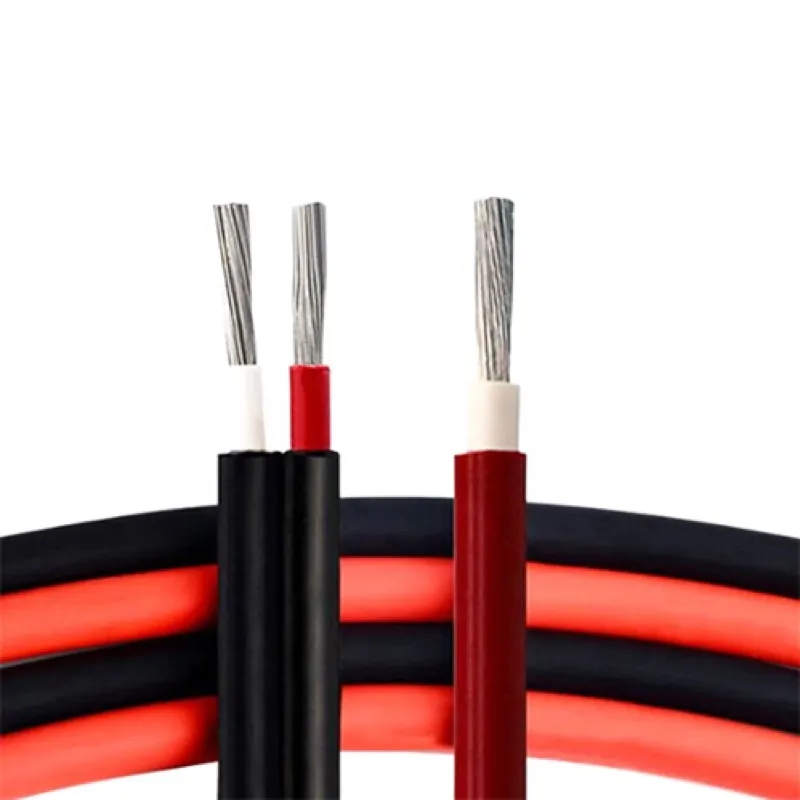
The factory part is driven mostly by copper. A 1×6.0 mm² PV cable is a tinned copper Class 5 conductor under an XLPO insulation and XLPO sheath, so copper weight, tinning, compound and the length per drum explain most of the difference between two quotes. The rest of the gap usually comes from quotes that are not describing the same product or the same delivery point.
So the practical answer for a South African buyer is this:
- Lock the product definition first: 1×6.0 mm², single core, tinned copper Class 5, XLPO insulation and sheath, PV1-F or H1Z2Z2-K as specified. Name the exact designation and the applicable standard together, for example "H1Z2Z2-K to EN 50618" or "an IEC 62930 construction".
- Ask every supplier to quote the same metres per colour, the same packaging and the same Incoterm.
- Convert every quote to one comparable number per metre at the same point, for example CIF Durban, before you look at who is cheapest.
- Add your own import charges and inland transport, confirmed by your clearing agent, to reach landed cost at your warehouse or site.
For the exact-size product page and a direct quote, see our 6 mm² PV1-F solar cable page. The rest of this guide shows how to build a quote you can actually compare, and how to read the numbers when they come back.
Source note: product construction terms above follow the factory's 6 mm² product definition. EN 50618 and IEC 62930 are named here as specifications a buyer can request, not as certification claims for any specific order. Naming one standard does not mean the cable automatically meets the other.
Lock the Product Definition Before You Ask for Price
Most price confusion on 6mm solar cable starts before anyone opens a spreadsheet. Two suppliers can both say "6mm solar cable" and be quoting cable that differs in copper content, insulation compound and service life. If your enquiry does not pin the product down, the lowest price will usually belong to the least specified cable.
Use this definition as the fixed base of your RFQ:
| Item | What to specify | Why it moves price |
|---|---|---|
| Construction | 1×6.0 mm² single core | Twin-core and other sizes are different products with different copper weight |
| Conductor | Tinned copper, Class 5 flexible | Bare copper or non-flexible stranding is cheaper and not the same cable |
| Insulation and sheath | XLPO (cross-linked polyolefin) insulation and XLPO sheath | PVC-insulated "solar" cable is cheaper and not PV1-F type |
| Type designation | PV1-F or H1Z2Z2-K, as specified | These are different designations; the quote must match the one you name |
| Applicable standard | The one standard your project requires, e.g. H1Z2Z2-K to EN 50618, or an IEC 62930 construction | Sets the construction and test basis the factory builds to; one standard does not imply the other |
| Rated voltage | As required by your design, confirmed on datasheet | Different ratings can mean different builds |
| Colours | Red and black, or as specified | Split by colour changes production runs and drums |
What this table deliberately leaves out is the detailed construction data: strand count and diameter, conductor diameter, overall diameter, maximum conductor resistance and current rating. Those values decide whether the cable fits your connectors and glands and whether it meets the specification, so they matter. But they must come from the order-specific stamped datasheet for the build you are being quoted, not from a generic table on a website, including ours. Different datasets for "6 mm²" PV cable do not always agree, and the only figure that protects you is the one the factory signs for your order.
Practical rule: ask each supplier to attach the datasheet they are quoting against, and make that datasheet part of the purchase order. If a supplier will not tie the price to a specific datasheet, you cannot tell what the price is for.
This guide does not cover whether 6 mm² is the right size for your strings or which configuration to use. That is a design decision for your engineer, made on current, temperature, grouping and voltage drop. Here we assume the size and configuration are already fixed and the job is to buy it well.
Retail Price vs Factory Bulk Quote: Why the Numbers Never Match
When buyers search "solar cable 6mm price" in South Africa, the first results are usually retail listings: a 100 m roll, a price per metre including VAT, delivered from a local shelf. That is a real price, and for a small installer buying a few rolls it may be the right one. It is not a useful benchmark for a container-scale or project order, because it bundles a different set of costs and risks.
| Factor | Local retail or stockist price | Factory bulk quote |
|---|---|---|
| Typical unit | Roll or cut length, priced per metre or per roll | Metres per colour per specification, priced per metre or per km |
| What is included | Cable, local stock holding, importer and distributor margin, local VAT, often delivery | Cable and agreed packaging at the stated Incoterm point only |
| Import charges | Already paid by the importer and built into price | Paid by you or your clearing agent, on top of the quote |
| Availability | Off the shelf, subject to stock | Made to order, production time plus shipping |
| Product definition | Whatever the stockist carries | Built to the specification and marking you put in the RFQ |
| Documents | Whatever came with the stock | Order-specific datasheet and test documents as agreed before production |
| Minimum quantity | One roll | Factory MOQ per specification |
| Price risk | Fixed on the day | Linked to copper at the quote date and validity period |
The comparison buyers often make is to take a retail rand-per-metre figure, divide by an exchange rate and conclude that a factory quote is "X% cheaper". That shortcut fails in both directions. It leaves out freight, insurance, clearing, import charges and inland delivery, which makes the factory price look better than it is. It also treats the stockist's margin as pure markup, when part of it pays for holding stock, splitting rolls and carrying the import risk, work you take on yourself when you buy direct.
The only clean comparison is landed cost against landed cost: what one metre of the same specified cable costs at your door, through each route, including the money tied up while it is in transit.
When does buying from stock still make sense? When the quantity is below a factory MOQ, when the project cannot wait for production and sea freight, or when you need a few hundred metres to cover a shortfall. Many South African distributors run both routes: factory orders for planned volume and local stock for urgent top-ups. Knowing your true factory landed cost is what lets you judge whether the local premium is worth paying on a given day.
What Drives a Bulk 6mm Solar Cable Quote
Once the product is locked, the factory price for PV1-F 6mm cable moves with a short list of drivers. Knowing them helps you ask the right follow-up question when two quotes differ.
Copper content and copper price
Copper is the largest single cost in a 6 mm² PV cable. The quote is only as stable as the copper price behind it, which is why most factory quotes for copper cable carry a short validity period or reference a copper basis. If a quote arrives without a validity date, ask for one. If two quotes were issued weeks apart, part of the difference may simply be the copper market rather than the supplier.
Copper content is also where specification shortcuts hide. Conductor resistance is the practical check: a conductor that does not meet the maximum resistance of the requested specification is carrying less effective copper than it should. That is why the resistance value belongs on the stamped datasheet and why you should ask for routine test results for the order.
Tinning
PV1-F or H1Z2Z2-K type cable, as specified, uses tinned copper strands. Tinning adds process cost compared with bare copper. A quote that is noticeably cheaper with no explanation is worth checking on this point.
XLPO insulation and sheath compound
The insulation and sheath are cross-linked polyolefin (XLPO), the material family PV1-F and H1Z2Z2-K type cables are built around. The compound and the cross-linking step are a real cost line, and they are not the same as a PVC build. Cheaper quotes sometimes use a different compound while still calling the product "solar cable". Ask the supplier to state the insulation and sheath material in writing on the quote.
Colour split and run length
Red and black are usually produced as separate runs. A request for 5,000 m split evenly into two colours is two production quantities, not one. Extra colours, special print or unusual marking add setup and can push a small quantity above the custom-order threshold.
Packaging
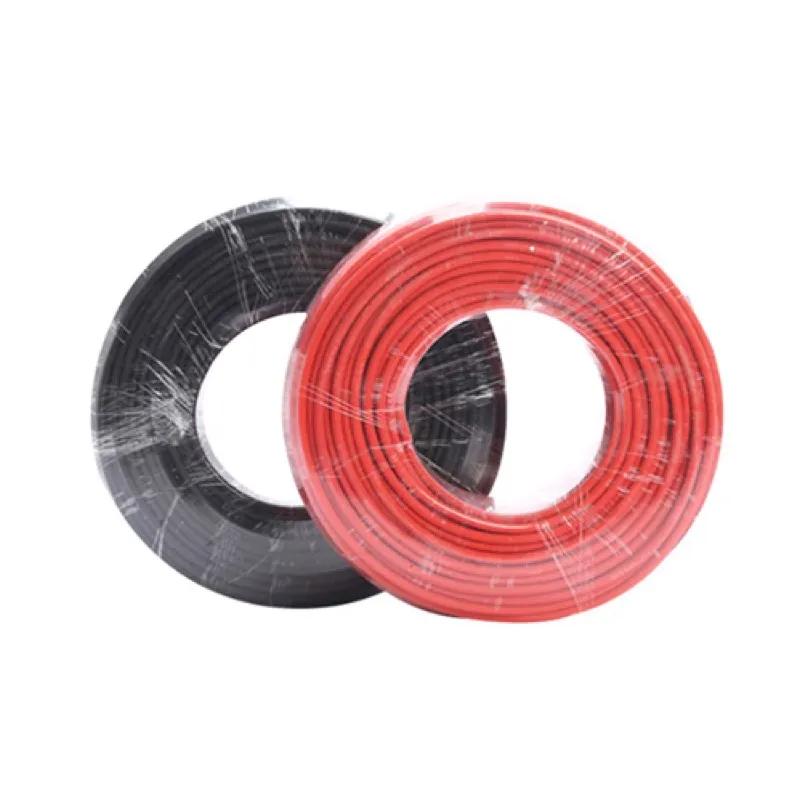
Coils, cartons, wooden drums and steel drums all cost differently, and drum length affects both cable waste on site and how many metres fit in a container. A quote for 100 m coils in cartons and a quote for 500 m drums are not the same price basis. State the packaging you want and ask each supplier to quote it.
Marking and documents
Custom print legends, project or distributor branding, and extra document packs (third-party inspection, witnessed testing) add cost. These are reasonable requests, but they belong in the RFQ so every supplier prices them, rather than being added after you have picked a winner.
Quantity and MOQ
Volume helps up to a point, mainly by spreading setup and changeover cost across more metres. Below the factory MOQ for a specification, the cost of changing over the stranding and extrusion lines lands on a short run, which is why factories set minimums per specification rather than per order. The MOQ section below gives our figures.
Payment terms and currency
The payment schedule and the currency of the quote affect your real cost. A dollar quote leaves you carrying exchange-rate risk from order to payment. Agree the currency and payment milestones before you compare totals.
Quote Normalization: How to Compare Two 6mm PV Cable Quotes
This is the step that saves the most money and gets skipped the most. Before ranking suppliers, rewrite every quote onto the same grid. If a cell is blank, the quote is incomplete and you go back and ask, rather than guessing in the supplier's favour or against it.
| Line | Supplier A | Supplier B | Supplier C | What to check |
|---|---|---|---|---|
| Product as quoted | 1×6.0 mm², tinned Cu Class 5, XLPO/XLPO, PV1-F or H1Z2Z2-K as specified | |||
| Designation and standard named | Exactly as requested, e.g. H1Z2Z2-K to EN 50618, written on the quote | |||
| Datasheet attached | Order-specific, stamped, matches the quoted build | |||
| Metres per colour | Same red and black quantities as your RFQ | |||
| Packaging | Coil or drum, length per unit, drum type | |||
| Marking | Print legend as requested | |||
| Incoterm and named place | EXW factory, FOB named Chinese port, or CIF Durban / Cape Town / other | |||
| Unit price per metre | Currency stated | |||
| Total cable value | Unit price × metres, per colour | |||
| Freight and insurance | Included or excluded, and to which point | |||
| Documents included | Datasheet, routine test report, packing list, commercial invoice, certificate of origin if requested | |||
| Inspection | Factory routine tests; any third-party inspection and who pays | |||
| Production time | Production only, separate from shipping | |||
| Payment terms | Deposit and balance milestones | |||
| Quote validity | Date, and whether linked to copper | |||
| Normalized price per metre at one point | Your calculation, all quotes to the same point |
The last row is your number. Pick one comparison point, ideally the same point you will actually take ownership, and move every quote to it. If one supplier quotes FOB Shanghai and another quotes CIF Durban, you add a freight and insurance estimate to the FOB quote, using the same freight assumption for every FOB quote, before comparing. Do the conversion in writing so your finance team can follow it.
Two patterns show up often when buyers fill in this grid for the first time:
- The cheapest headline price drops to the middle once packaging, documents and freight are filled in, because the original quote excluded them.
- A quote that looked expensive turns out to include drums, a full document pack and CIF delivery, and becomes the most competitive at the comparison point.
This is not a claim about any specific supplier. It is simply what happens when quotes are compared on different bases, and it is why the grid comes before the decision.
Landed Cost: Where EXW, FOB and CIF Stop
An Incoterm tells you where the supplier's costs and risk end and yours begin. For South African buyers, the practical question is which of the costs between the Chinese factory and your warehouse are already inside the quoted price.
Source note: the cost boundaries below follow the general structure of the ICC Incoterms® 2020 rules for EXW, FOB and CIF. Confirm the exact Incoterm wording with your supplier and freight forwarder for each order.
| Cost element | EXW (factory) | FOB (named Chinese port) | CIF (named South African port) |
|---|---|---|---|
| Cable and agreed packaging | Supplier | Supplier | Supplier |
| Loading at factory | Buyer under strict EXW; often agreed separately | Supplier | Supplier |
| Inland transport in China to port | Buyer | Supplier | Supplier |
| Chinese export clearance | Buyer | Supplier | Supplier |
| Ocean freight to South Africa | Buyer | Buyer | Supplier |
| Marine insurance | Buyer | Buyer | Supplier, minimum cover under the rule |
| Risk transfer | At the factory | Once loaded on board at the Chinese port | Once loaded on board at the Chinese port, even though the supplier pays freight |
| Destination port and terminal charges | Buyer | Buyer | Check the carrier contract: unloading/terminal charges may be included in the seller's freight or charged to the buyer at destination |
| South African import clearance, duty and VAT | Buyer | Buyer | Buyer |
| Inland delivery to warehouse or site | Buyer | Buyer | Buyer |
For containerised cargo, ask your forwarder whether FCA is a better fit than FOB for your shipment.
Two points catch buyers out with CIF. First, risk passes when the goods are on board at the origin port, not when they arrive in Durban or Cape Town. For transit damage after risk transfer, the buyer normally claims under the cargo insurance, subject to the sales contract and policy. Second, CIF insurance under the rule is minimum cover. If you want broader cover, ask for it on the quote or arrange your own.
Building your landed cost per metre
A simple, auditable landed cost for 6mm solar cable looks like this:
- Cable value at your chosen Incoterm (from the quote).
- Plus freight and insurance not already included (from your forwarder).
- Plus destination port, terminal and handling charges (from your forwarder or clearing agent).
- Plus clearing agent fees.
- Plus import duty and import VAT as assessed on the goods (from your clearing agent, against the current tariff).
- Plus inland transport to your warehouse or site.
- Plus finance cost of the money tied up between deposit and delivery, if you track it.
- Divide the total by the metres received, per colour, to get landed cost per metre.
Keep the steps separate in your spreadsheet. When the next quote arrives, you only change the lines that actually change.
South African duty and VAT: confirm, do not assume
We do not publish a duty rate or VAT calculation for PV cable into South Africa in this guide. Tariff classification of cable depends on the exact product description, and rates, rebates and the customs value basis are set by the South African authorities and can change. Getting the classification wrong affects both your cost and your clearance.
Ask your clearing agent or customs broker to confirm, in writing, before you commit:
- The tariff heading they will use for 1×6.0 mm² PV1-F or H1Z2Z2-K type cable, as described on your commercial invoice.
- The current duty rate and any applicable rebate or trade-agreement treatment for goods of Chinese origin.
- How import VAT is calculated on your shipment and on what value.
- Any permit, letter of authority or inspection requirement they expect for this product line.
Source note: South African customs tariffs and import VAT are administered by the South African Revenue Service (SARS). Use the current SARS tariff book and your licensed clearing agent as the reference, not a figure from a supplier website.
South Africa Compliance and Document Checklist
Price only means something if the cable is accepted on site. For a South African project, acceptance is decided by the project specification, the EPC's engineer, the client or lender's technical adviser, and any regulatory requirement that applies to the product. Those requirements are set locally, and they vary by project.
We are not claiming here that our cable carries any particular South African approval. If your project specification calls for a SANS-referenced standard, a local approval, or a specific third-party certificate, put that requirement in the RFQ by name and ask the supplier to state in writing whether they can meet it for your order, and with which document. Then ask your clearing agent and your client's engineer to confirm that the document offered is what they will accept. A supplier saying "yes" in a chat message is not the same as a document that passes your client's review.
What you can ask any 6 mm² PV cable supplier for, and should, is a clear document set tied to your order:
| Document | What it should show | Who usually asks for it |
|---|---|---|
| Order-specific datasheet, stamped | Construction, conductor and overall diameter, maximum conductor resistance, rated voltage, materials, marking | Engineer, EPC procurement |
| Requested designation and standard | The exact designation and standard you specified, e.g. H1Z2Z2-K to EN 50618 | Project specification |
| Routine test report for the order | Conductor resistance and the routine electrical tests the specification calls for, on the produced batch | Engineer, QA |
| Type test or certificate, if you require one | Holder name, product, standard, scope and validity, so you can verify it with the issuer | Client, lender's adviser |
| Packing list | Drum or coil numbers, lengths per colour, gross and net weights | Warehouse, clearing agent |
| Commercial invoice | Product description that matches the datasheet and the tariff classification your agent will use | Clearing agent |
| Bill of lading | Shipment details and consignee | Clearing agent, bank |
| Certificate of origin, if requested | Country of origin in the format your agent or trade treatment requires | Clearing agent |
| Third-party inspection report, if ordered | Who inspected, what was checked, sampling basis | Buyer QA |
A few practical rules make this work:
- Write the document list into the RFQ and the purchase order, so it is part of the price, not a favour.
- Ask that the cable print legend, the datasheet and the commercial invoice all describe the same product in the same words.
- For any certificate, check that the holder name, product description and scope match the cable you are buying. A certificate that belongs to a different company or a different product does not cover your order.
- Keep one copy of every document with the drum numbers, so a site inspector can trace a drum back to its test report.
Our certificates shows which documents we can currently provide. Treat it as the starting point for the document discussion on your order, and confirm the final set against your project specification before production starts.
MOQ and Production Time for 6mm PV1-F Cable
Factory minimums for solar cable are set per specification, not per order. The reason is changeover. Every new specification, and often every colour, means setting up the stranding and extrusion lines, running material through until the line is stable, and then cleaning down for the next job. On a very short run, that setup cost is a large share of the total, which is why short runs cost more per metre or are not accepted at all.
Our working figures for solar cable:
| Order type | Minimum per specification | What counts as this type |
|---|---|---|
| Regular | 500–1,000 m | Our standard 1×6.0 mm² construction, standard colours and standard marking |
| Custom | 2,000–5,000 m | Non-standard construction, special colours, custom print or other changes that need a dedicated setup |
Production time is 10–15 days. That is production only. It does not include booking, inland transport in China, sea freight to South Africa, customs clearance or delivery to your site. Your forwarder should give you the shipping leg for your port and route, and your clearing agent the expected clearance time. Plan your project date from the sum, not from the production figure alone.
If your quantity is close to a threshold, for example 400 m of one colour or a custom request just under 2,000 m, ask. Combining colours, adjusting the split, or adding another size to the same order may make it workable, and we would rather look at the actual quantities than turn an enquiry away on a number.
Source note: MOQ and production figures are this factory's stated commercial terms for solar cable. Other suppliers set their own.
For a broader look at how to assess a solar cable supplier before you place volume orders, see our guide to sourcing solar cable from a China manufacturer.
Copy-Ready RFQ for a Bulk 6mm Solar Cable Quote
Send the same RFQ to every supplier. Copy the block below, fill in the brackets and delete lines that do not apply. A complete RFQ gets you comparable quotes faster, because the supplier does not have to come back with questions.
Subject: RFQ – 1×6.0 mm² PV solar cable – [project or order reference] – [destination]

1. Product
   - Construction: 1×6.0 mm² single core
   - Conductor: tinned copper, Class 5 flexible
   - Insulation / sheath: XLPO / XLPO
   - Designation: [PV1-F or H1Z2Z2-K], exactly as specified for this project
   - Applicable standard: [e.g. H1Z2Z2-K to EN 50618 / an IEC 62930 construction]
     (state one; do not assume one standard covers the other)
   - Rated voltage: [as per project design]
   - Please attach the datasheet for the exact build you are quoting.

2. Quantity
   - Red: [metres]
   - Black: [metres]
   - Other colour: [metres, colour]
   - Delivery split, if any: [one shipment / staged]

3. Packaging and marking
   - Unit: [coil in carton / wooden drum / other]
   - Length per unit: [e.g. 100 m / 500 m / other]
   - Print legend: [standard / custom text]
   - Drum or carton labels: [requirements]

4. Commercial terms
   - Incoterm: [EXW / FOB named Chinese port / CIF named South African port]
   - Destination port: [Durban / Cape Town / Port Elizabeth (Gqeberha) / other]
   - Currency: [USD / other]
   - Payment terms proposed: [terms]
   - Quote validity required: [days], please state copper basis if price is linked

5. Documents required
   - Order-specific stamped datasheet
   - Routine test report for the produced batch
   - Packing list, commercial invoice, bill of lading
   - Certificate of origin: [yes / no, format]
   - Any project-specific certificate or approval: [name it]
   - Third-party inspection: [yes / no, inspector, who pays]

6. Timing
   - Required on site / in warehouse by: [date]
   - Please state production time separately from shipping time.

7. Please also state
   - Any deviation from the product description above
   - MOQ per specification and colour, if our quantity is below it
   - Net and gross weight and packed volume, for freight quotes
Two lines in this template do most of the work. "Please attach the datasheet for the exact build you are quoting" turns a price into a price for something specific. "Any deviation from the product description above" makes the supplier tell you, in writing, where their product differs, instead of you finding out on site.
If you want to send this straight to us, use the quote request form and paste the completed template, or attach it as a file.
Red Flags in 6mm Solar Cable Quotes
Most of these are not proof of a bad supplier. They are signs that the quote is incomplete or that the product is not what you specified, and each one deserves a written question before you go further.
| Red flag | Why it matters | What to ask |
|---|---|---|
| Price is far below every other quote with no explanation | Usually less copper, different compound, or excluded costs | "Please confirm conductor resistance, tinning and XLPO insulation and sheath for this price." |
| No datasheet, or a generic one with no order reference | You cannot tell what the price buys | "Please send the datasheet for the exact build quoted, stamped." |
| Insulation or sheath material not stated | PVC-insulated cable is sometimes sold as "solar cable" | "Please state insulation and sheath compound in writing." |
| "Certified" with no certificate details | A claim without holder, product and scope cannot be verified | "Please send the certificate showing holder name, product, standard and scope." |
| Certificate holder name differs from the seller | The paperwork may not cover the cable you receive | "Who manufactures this cable, and who holds the certificate?" |
| Incoterm missing or vague, e.g. "price to South Africa" | You cannot tell what freight, insurance or charges are included | "Please quote EXW, FOB [port] or CIF [port] explicitly." |
| Lead time quoted as one figure with no split | Production and shipping are often blended into an optimistic number | "Please state production time and shipping time separately." |
| Very long quote validity on a copper product | May signal a hidden price-adjustment clause later | "Is this price fixed for the validity period, or linked to copper?" |
| Supplier quotes a duty or VAT figure for you | Duty and VAT are assessed in South Africa on your declaration | Confirm with your clearing agent instead. |
| Metres per drum not stated, or "approx." lengths | Short drums mean less cable received for the same invoice | "Please confirm length per drum and tolerance, and list on the packing list." |
| Reluctance to allow inspection or batch test reports | You lose the ability to verify before shipment | "Can we receive routine test results for the batch before balance payment?" |
The cheapest path to a good 6mm solar cable price is not pushing one supplier down. It is making sure every supplier quotes the same thing, so the comparison is fair and the winner is the one that is actually cheaper at your door.
FAQ
How much is 6mm solar cable per metre in South Africa?
There is no fixed bulk price. A factory quote for 1×6.0 mm² PV1-F or H1Z2Z2-K type cable, as specified, depends on copper price at the quote date, quantity per colour, packaging, documents and the Incoterm. To compare suppliers, normalize every quote to the same delivery point and then add your own import charges and inland transport to reach landed cost per metre.
Why is a factory quote lower than a South African retail price per metre?
Retail prices already include the importer's freight, clearing, import charges, stock holding and margin, plus local VAT. A factory quote covers only the cable and agreed packaging to the named Incoterm point. The fair comparison is landed cost against retail price, not the factory unit price against retail price.
Should I ask for EXW, FOB or CIF when buying 6mm solar cable for South Africa?
Ask for the term that matches how you ship. If you have a forwarder with good rates from China, FOB is often the cleanest basis. If you want one number to a South African port, ask for CIF Durban or CIF Cape Town. Under CIF, risk still passes to you at the Chinese port once goods are loaded on board, so check the insurance cover.
What import duty and VAT apply to PV cable imported into South Africa?
This guide does not state a rate. Duty and import VAT depend on the tariff classification of the exact product and on current South African rules. Ask your clearing agent or customs broker to confirm the tariff heading, duty, any rebate and the VAT basis in writing before you commit.
What is the minimum order for 6mm solar cable from your factory?
For regular specifications, 500–1,000 m per specification. For custom constructions, colours or marking, 2,000–5,000 m per specification. Minimums are per specification because of stranding and extrusion changeover. If you are close to a threshold, send your quantities and we will check what is workable.
How long does production take for a bulk 6mm PV cable order?
Production is 10–15 days. Shipping to South Africa, customs clearance and inland delivery are additional and should be confirmed with your forwarder and clearing agent.
Do you publish the 6 mm² cable diameter, resistance and current rating?
Construction and electrical values for your order are confirmed on the order-specific stamped datasheet before production. We ask buyers to use that datasheet, not a generic web table, for connector, gland and specification checks.
Getting a 6mm Solar Cable Quote You Can Actually Use
A useful bulk quote for 6mm solar cable in South Africa is one you can put next to other quotes and compare line by line, then carry through to landed cost without guessing. That comes from three things: a locked product definition, one Incoterm for every supplier, and a document list written into the RFQ before anyone quotes.
If your order includes other cross-sections, the PV1-F solar cable range covers the wider size family. Twin-core solar cable is listed with the rest of our solar cable product range. If you want to see how the cable is made before ordering, the factory shows our production and testing setup.
When your quantities are ready, send the completed RFQ for 6 mm² PV1-F solar cable, or go straight to our contact form with your metres per colour, packaging, Incoterm and destination port. We will come back with a quote tied to an order-specific datasheet, so you know exactly what the price is for.