Key Takeaway
A procurement guide to 11kV/415V underground cable BOQs, RFQ clauses, supply boundaries, testing, commissioning and handover documents.
On an 11kV/415V underground cable package, the interfaces between design, supply, installation and commissioning need as much attention as the cable type. The BOQ lists "11kV cable" without a rated-voltage designation. The RFQ does not say who supplies the terminations. The drums arrive in lengths that do not match the joint bays. Or the site test is run before anyone has agreed which standard sets the acceptance criteria. When these interfaces are left unclear, the result can be clarification rounds, rework or delay, even when the cable itself is made correctly.
This guide is for EPC procurement teams, electrical contractors, industrial project owners and utility-side buyers in Southeast Asia, Africa, the Middle East and South Asia who are buying the cable for an 11kV feeder and the 415V low-voltage circuits that come off the transformer. It covers how to structure the BOQ, what to put in the RFQ, where the cable supplier's scope should stop, how the cable connects to joints and terminations, what testing happens in the factory versus on site, and which documents you should hold at handover.
Two things this page deliberately does not do. It does not repeat conductor size, dimension or current-carrying tables. If you are still calculating the feeder, use our 11kV size chart and current rating tables first and come back with a size. It also does not explain trench design, burial depth or laying methods. For that, see the underground cable types and installation methods by soil condition. This page starts where those stop: you know roughly what you need, and now you have to buy it, receive it, get it tested and hand it over.
What an 11kV/415V underground supply package usually contains
"11kV/415V" describes a distribution arrangement, not a single cable. Typically an 11kV feeder comes in underground to a ring main unit or switchgear, feeds a distribution transformer, and the transformer's 415V side feeds a low-voltage main board and outgoing circuits. The cable scope follows that path, so a complete package can contain more lines than a first-draft BOQ shows.
| Package element | What it is | Governing cable standard (typical) | Who normally supplies |
|---|---|---|---|
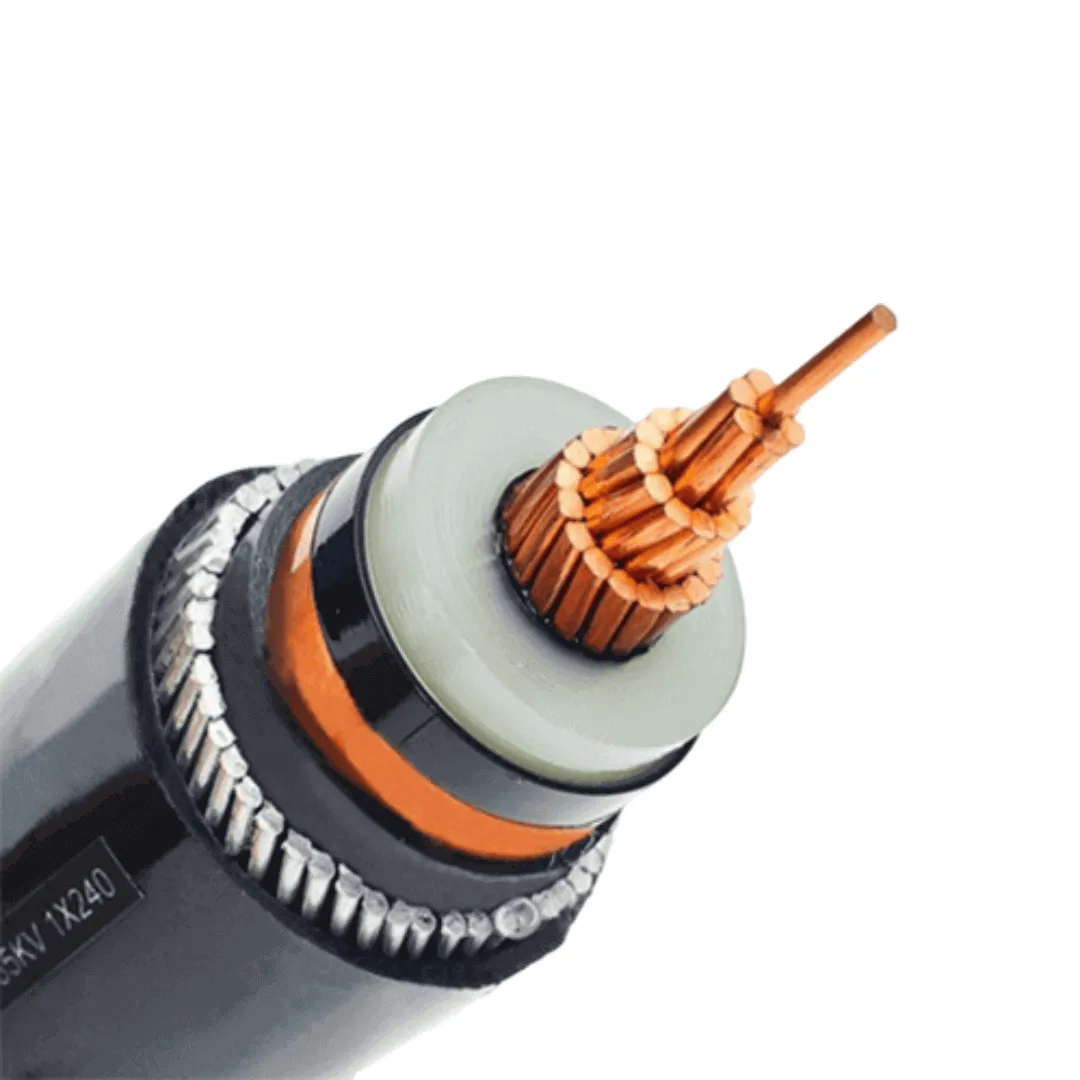
| 11kV feeder cable | Medium-voltage XLPE cable, single-core or three-core, armoured or unarmoured per design | IEC 60502-2 (6 kV to 30 kV) or the national standard named by the utility | Cable manufacturer |
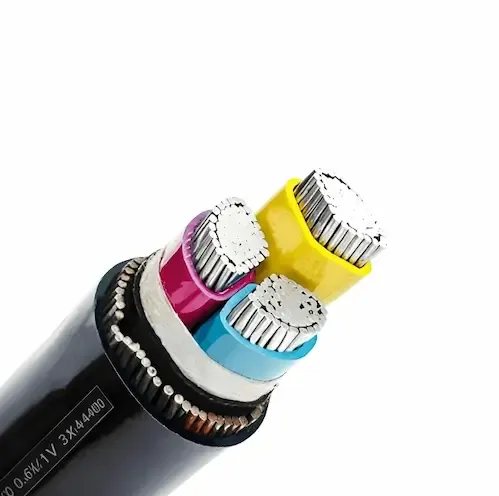
| 415V transformer-to-board cable | Low-voltage cable from transformer LV bushings to the main LV board | IEC 60502-1 (1 kV and 3 kV) | Cable manufacturer |
| 415V outgoing feeders | LV armoured or unarmoured cable to sub-boards, motors or buildings | IEC 60502-1 | Cable manufacturer |
| Earthing conductors | Earth continuity or bonding conductors, if listed in the cable BOQ | Per project specification | Cable manufacturer or electrical contractor |
| 11kV terminations and joints | Heat-shrink, cold-shrink or plug-in accessories | Accessory type-tested to IEC 60502-4 | Accessory manufacturer, often via the installer |
| LV terminations | Glands, lugs, shrouds | Per project specification | Installer or accessory supplier |
| Laying materials | Sand, tiles, warning tape, ducts, route markers | Per civil specification | Civil or installation contractor |
| Site testing and commissioning | After-laying tests and energisation | Per project specification and utility rules | Installer, witnessed by owner's engineer or utility |
The 415V side uses 0.6/1 kV cable because IEC 60502-1 covers extruded-insulation power cables rated 1 kV (Um = 1.2 kV) and 3 kV (Um = 3.6 kV). The 11kV side falls under IEC 60502-2, which covers extruded-insulation cables from 6 kV (Um = 7.2 kV) up to 30 kV (Um = 36 kV) for fixed installations such as distribution networks or industrial installations. Putting both halves in one package is normal. Treating them as one specification is not, because they are tested to different parts of the standard and quoted from different production routes.
Five decisions to close before the BOQ goes out
The five points below are common sources of tender clarifications. Closing them before the BOQ is issued helps reduce clarifications and lets bidders price on a more consistent basis, so offers can be compared on price, delivery and documents.
1. The rated-voltage designation, not just "11kV". Cable standards describe voltage as U0/U (Um). An 11kV system can be served by more than one designation, and the right one depends on how the network is earthed and how long an earth fault may be allowed to persist. That is the design engineer's decision, not the supplier's. Write the full designation into the BOQ. For reference, the classes in our catalogue are 0.6/1, 3.6/6, 6/10, 8.7/15, 12/20, 18/30, 21/35 and 26/35 kV, and our catalogue supplies 11 kV systems from the 8.7/15 kV class. 11 kV is not a separate designation in that catalogue, so a BOQ line that says only "11kV" forces the supplier to pick for you.
2. Conductor metal. Copper or aluminium changes the conductor size for the same duty, the lug and connector type at every termination, and the joint kit. Do not leave "Cu or Al" open in a tender unless you are ready to evaluate two different technical designs.
3. Core arrangement. Three single-core cables or one three-core cable for the 11kV run. For the 415V circuits, the number of cores and whether a separate or reduced neutral or earth core is required. The core arrangement drives the drum count, the accessory type and the laying method.
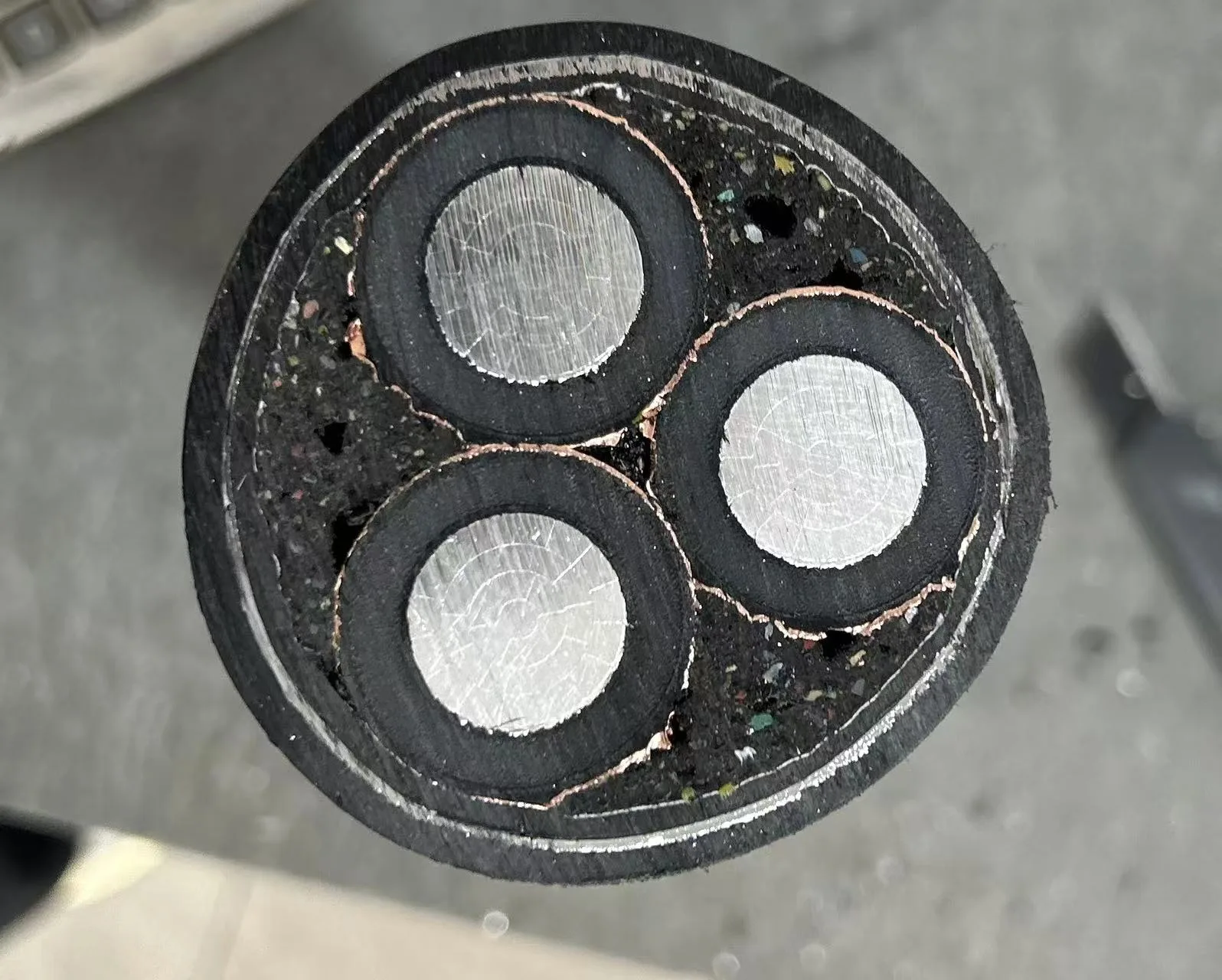
4. Screen, armour and sheath. For 11kV cable: the metallic screen type and any short-circuit duty it has to carry, whether armour is required and which type, and the oversheath material. For 415V cable: armoured or unarmoured and the sheath. If the route has a water table or flooded sections, say whether a longitudinal water barrier is required. IEC 60502-2 recommends that the possible risk of radial water ingress is considered when determining applications, and it includes cable designs with barriers claimed to prevent longitudinal water penetration and an associated test. The standard gives you the test; your specification has to say whether you need it.
5. The governing standard and edition. Name the standard, the edition and any utility or national specification that overrides it. "IEC 60502" alone is not enough, because Part 1 and Part 2 cover different voltage ranges and have their own editions (see the standards table below).
If any of these five points is still open when the RFQ is issued, say so in the RFQ and ask bidders to state the assumption they priced. An assumption written into the offer is visible and can be corrected before award.
How to structure the BOQ
A cable BOQ is a purchasing document, not a design summary. Each line should describe one thing that can be manufactured, tested, packed and invoiced on its own. The template below keeps the 11kV and 415V halves separate and holds the information the factory needs to quote without a clarification round.
| Item | Description (write in full) | Voltage designation | Cores × size | Conductor | Screen / armour / sheath | Standard + edition | Route length (m) | Allowance (%) | Order length (m) | Drum length limit (m) |
|---|---|---|---|---|---|---|---|---|---|---|
| 1.1 | 11kV incoming feeder, RMU to transformer | From design | From design | Cu or Al | From design | IEC 60502-2 + edition | From route survey | Agreed by contractor | Route + allowance | From joint plan |
| 1.2 | 11kV ring or spur feeder | From design | From design | Cu or Al | From design | IEC 60502-2 + edition | From route survey | Agreed by contractor | Route + allowance | From joint plan |
| 2.1 | 415V transformer to main LV board | 0.6/1 kV | From design | Cu or Al | From design | IEC 60502-1 + edition | From layout | Agreed by contractor | Route + allowance | From pull plan |
| 2.2 | 415V outgoing feeders (one line per size) | 0.6/1 kV | From design | Cu or Al | From design | IEC 60502-1 + edition | From layout | Agreed by contractor | Route + allowance | From pull plan |
| 3.1 | Earth continuity conductor (if in cable scope) | Per spec | From design | Per spec | Per spec | Per spec | From layout | Agreed by contractor | Route + allowance | n/a |
"From design" is deliberate. This page does not give conductor sizes or allowances, because they depend on your load, fault level, route and installation method. The point of the template is that every cell is filled from a named source before bidders see it.
BOQ mistakes that cause re-quotes
- One line for "11kV cable, total 4,200 m". If the route needs three different drum lengths because of joint positions, one total gives the factory no way to plan drums. Split the line by circuit, or add a drum schedule.
- Mixing 11kV and 415V in one line. They are produced and tested to different parts of IEC 60502. Keep them on separate lines so that each has its own test records and invoice value.
- "Armoured cable" without the armour type. Steel wire, steel tape and non-magnetic armour are different constructions. For single-core AC cables the armour choice is an engineering decision, so it has to come from the designer.
- Accessories hidden inside the cable line. "Cable including terminations" makes the cable supplier responsible for a product it may not manufacture and for an interface it cannot control. List accessories as separate lines with their own supplier.
- No edition on the standard. Bidders will quote against whichever edition their type test report covers. That may not be the one your consultant expects.
- Sheath marking left out. If the utility or owner requires project-specific embossing or printing, say so in the BOQ. Marking has to be agreed before production starts.
Order length is a joint-plan decision, not a percentage
Buyers may ask the supplier what allowance to add to the route length. The supplier cannot set it from the BOQ alone. The allowance depends on termination tails, route bends, cable pits, snaking in the trench, test cut-offs and how many joints you are willing to accept. Those are site and design decisions.
A better sequence:
- The contractor marks joint bays and termination points on the route drawing.
- The distance between them sets the maximum continuous length for each 11kV section.
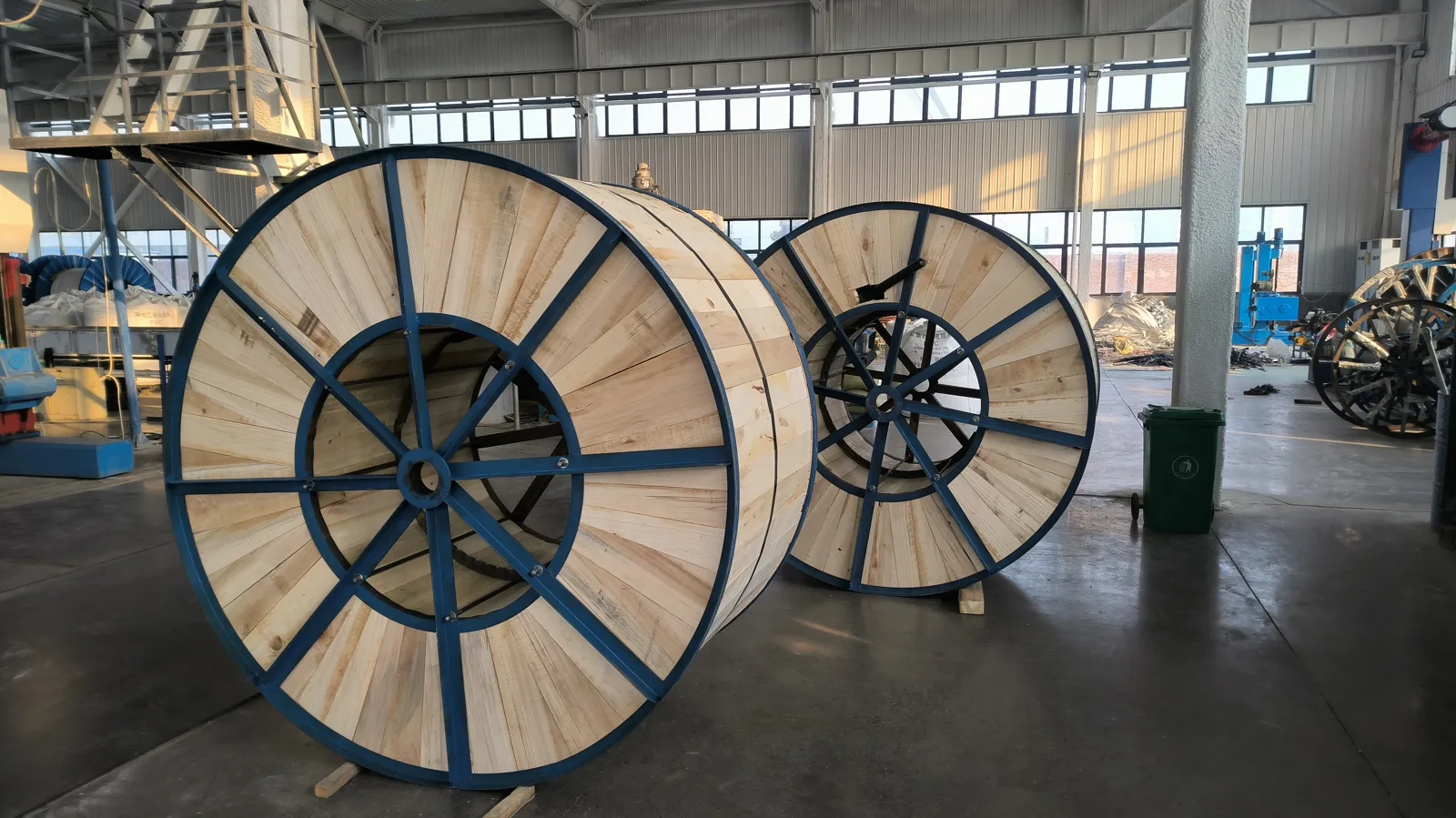
- The factory confirms the maximum length it can put on one drum for that construction, given the drum size and your site handling limits.
- The drum schedule is agreed and attached to the purchase order. Each drum is tagged with the circuit and section it belongs to.
For 11kV circuits this matters more than for 415V, because every extra joint is an extra accessory, extra jointer time and an extra point in the circuit that has to pass the after-laying test. On 415V circuits the question is usually pulling length and the weight of the drum at the laydown area.
Standards to name in the specification
The table lists IEC publications commonly named for an 11kV/415V underground cable package, with the edition taken from the IEC Webstore catalogue records in September 2026. National or utility standards can override them. Where they do, name both, and state which one governs when they conflict.
| Publication (as listed by IEC) | Edition / date | What it covers | Where it applies in this package |
|---|---|---|---|
| IEC 60502-1:2021 | Edition 3.0 | Construction, dimensions and test requirements of extruded-insulation power cables rated 1 kV (Um = 1.2 kV) and 3 kV (Um = 3.6 kV) for fixed installations | 415V cables, specified as 0.6/1 kV |
| IEC 60502-2:2014 | Edition 3.0 | Construction, dimensions and test requirements of extruded-insulation power cables from 6 kV (Um = 7.2 kV) up to 30 kV (Um = 36 kV) for fixed installations | 11kV cables |
| IEC 60502-2:2014/AMD1:2024 | Amendment 1 (2024) | Amendment to the 2014 edition of Part 2 | 11kV cables. IEC also publishes a consolidated version, IEC 60502-2:2014+AMD1:2024 CSV, listed as Edition 3.1, published 2024-05-30 and marked by IEC Webstore as "Corrected Version 2026-07" |
| IEC 60502-4:2023 | Edition 4.0 | Test requirements for type testing of accessories for cables rated 3.6/6 (7.2) kV up to 18/30 (36) kV complying with IEC 60502-2 or other relevant cable standards | 11kV joints and terminations |
| IEC 61442:2023 | Edition 3.0 | Test methods for type testing accessories for cables rated 3.6/6 (7.2) kV up to 18/30 (36) kV | Referenced by IEC 60502-4 for the test methods themselves |
Two points to note from the IEC abstracts. First, IEC 60502-4 states that accessories for special applications, such as aerial cables, submarine or ship cables, and hazardous situations including explosive environments, fire-resistant cables or seismic conditions, are not included in its scope. If your 11kV route has one of these conditions, the accessory specification needs something more than IEC 60502-4. Second, the same publication says type tests do not need to be repeated once passed, unless materials, design or manufacturing process change in a way that can affect performance. That is why the accessory supplier's type test report has to match the accessory you are actually buying, not a similar one.
If the specification calls for IEC 60502-2 without saying whether Amendment 1 applies, ask the consultant before the RFQ goes out. Then write the answer into the RFQ so that all bidders price the same edition.
Supply boundary: where the cable supplier's scope should stop
Scope questions can arise even when the cable passes its factory tests, for example when a termination fails its site test or a drum arrives with a damaged end cap. Who is responsible depends on what the contract said about the boundary. Write it down.
A clean boundary for a factory-direct cable supply usually looks like this:
- Inside the cable supplier's scope: manufacture to the named standard and edition; routine and sample tests as that standard requires; factory test records traceable to each drum; drum marking and sealed cable ends; export packing; loading and delivery to the agreed Incoterm point; the cable datasheet with layer dimensions for accessory selection.
- Outside the cable supplier's scope unless separately agreed: joints and terminations; trenching, laying and backfill; cable pulling equipment; after-laying tests; energisation; route drawings and as-built records.
- Shared, needs an explicit rule: the accessory interface (the cable datasheet feeds accessory selection), drum return, witness inspection at the factory, and any repeat test when site results are disputed.
Responsibility matrix
Copy this into the tender and fill in the last column for your project. R means responsible for doing it; A means approves or accepts; S means supplies input; W means witnesses.
| Activity | Cable supplier | Accessory supplier | Installation contractor | Owner's engineer or utility | Named party in your contract |
|---|---|---|---|---|---|
| Rated-voltage designation, conductor, screen and armour selection | S | S | R / A | ||
| Cable datasheet and drawing | R | S (checks fit) | S | A | |
| Accessory selection against the cable datasheet | S | R | S | A | |
| Accessory type test evidence (IEC 60502-4 or specified standard) | R | A | |||
| Factory routine and sample tests | R | W (if specified) | |||
| Third-party pre-shipment inspection | S (access, records) | R (appoints) | |||
| Drum schedule matching joint plan | R (drum limits) | R (joint plan) | A | ||
| Transport to site and drum handling on site | Per Incoterm | R after handover point | |||
| Visual receipt inspection and damage report | S | R | W | ||
| Laying and backfill | R | W | |||
| Jointing and terminating | S (instructions, training if agreed) | R | W | ||
| After-laying tests | R | W / A | |||
| Energisation | S | R | |||
| As-built drawings and handover file | S (cable records) | S (accessory records) | R (compiles) | A |
If one party ends up with both R and A on the same line, check that you meant it. The common example is a contractor who selects the accessory and then also approves it.
Incoterm and damage in transit
Name the Incoterm, the named place and the version of Incoterms you are using in the RFQ, and make sure the delivery point matches the insurance arrangement. Damage found at receipt, such as broken drum battens, missing end caps or crushed cable on the outer layer, has to be photographed and reported before the drum is moved. The receipt clause below gives a time limit for that report; the actual number of days is for you and the supplier to agree.
RFQ clauses that save a clarification round
The BOQ says what to make. The RFQ says what you need back from the bidder and on what terms. The clauses below are written so they can be pasted into a tender and edited. None of them sets a number for you. Where a figure is needed, the clause asks for it to be agreed.
- Governing documents. "The cable shall be manufactured and tested to [standard, edition, amendment] and [utility or project specification, revision]. Where they conflict, [named document] governs. The bidder shall list any deviation in a separate deviation schedule; no deviation is accepted unless it appears in that schedule."
- Technical offer. "For each BOQ line the bidder shall provide a datasheet showing construction, the nominal thickness and diameter of each layer, the overall diameter, the approximate weight per metre and the minimum bending radius as stated by the manufacturer, together with a cross-section drawing."
- Type test evidence. "The bidder shall submit type test reports for the offered constructions, stating the laboratory, report number, date, the standard and edition tested to, and the range of constructions covered. Where a report does not cover the exact construction offered, the bidder shall say so and state its proposal."
- Routine and sample tests. "Routine tests and sample tests shall be carried out as required by the governing standard. Test records shall identify the drum number and cable length they apply to and shall be supplied with the shipping documents."
- Inspection. "The purchaser may witness factory tests or appoint a third-party inspector. The bidder shall give [agreed number] days' notice of the test date and provide access to the relevant test records."
- Drum schedule. "The bidder shall confirm the maximum length per drum for each construction and shall supply to the drum schedule attached to the order. Each drum shall carry the project name, purchase order number, BOQ item, circuit reference, cable description, length, drum number, gross and net weight, and an arrow showing the direction of rolling."
- Cable ends. "Both cable ends on each drum shall be sealed against moisture before dispatch, and the inner end shall be accessible for testing without unwinding the drum."
- Sheath marking. "The oversheath shall be marked as required by the governing standard and with [project-specific text, if any], at intervals as specified in that standard or the project specification, together with sequential length marking where required."
- Delivery. "Price on [Incoterm, named place, Incoterms version]. The bidder shall state the production lead time from approval of drawings and the transit time separately."
- Receipt and claims. "The purchaser shall inspect drums at receipt and report visible damage with photographs within [agreed number] days. Claims for hidden defects shall be supported by test results and handled according to [warranty clause]."
- Documents at handover. "The bidder shall supply the documents listed in the handover schedule. Final payment is linked to receipt of complete documents."
How to compare the offers
Put every compliant offer in the same grid before you look at price.
| Check | What to look for | Red flag |
|---|---|---|
| Voltage designation | Same U0/U (Um) as the BOQ on every 11kV line | Offer says only "11kV" or shows a different class without a deviation entry |
| Construction | Screen, armour and sheath as specified; layer thicknesses stated | "As per standard" with no datasheet |
| Standard and edition | Matches the RFQ, including amendment status | Older edition or no edition |
| Type test evidence | Report covers the offered construction; laboratory and date stated | Report for a different voltage class or conductor metal, not declared |
| Deviations | All listed in one schedule | Deviations mentioned only in cover letter or small print |
| Drum lengths | Confirmed against the drum schedule | Bidder shortens lengths without saying so |
| Lead time | Production and transit stated separately | One combined figure with no start date |
| Documents | Handover list accepted | Documents "on request" |
A lower price that comes with a deviation you did not ask for is not a lower price for the same cable.
The joint and termination interface
On the 11kV side, the cable and its accessories only work as a system. The cable manufacturer controls the cable; the accessory manufacturer controls the joint or termination; the jointer on site controls how the two meet. Three things keep that interface from failing.
Share the cable datasheet before the accessory is ordered. An 11kV joint or termination is selected by voltage class, conductor size and metal, and by the diameters over the insulation and over the sheath. Those numbers come from the cable datasheet, not from the BOQ. If the accessory is ordered from a nominal size only, it may not fit the cable that actually arrives.
Match the conductor metal at the connector. Aluminium conductors need connectors and lugs rated for aluminium. Where an aluminium cable meets a copper busbar or bushing, a suitable bimetallic connection is needed. This is an accessory and installer decision, but it starts with the conductor metal fixed in the BOQ.
Ask for accessory type test evidence against the standard you name. For 11kV accessories, IEC 60502-4:2023 gives the type test requirements for accessories used with cables rated 3.6/6 (7.2) kV up to 18/30 (36) kV complying with IEC 60502-2. The test methods themselves are in IEC 61442. The accessory supplier's report should cover the accessory family and the cable range you are using.
On the 415V side the interface is simpler, but the same logic applies to glands and lugs. The gland must suit the armour type and the overall diameter from the datasheet. Lugs must suit the conductor metal and class.
Before bids close, ask each supplier to state in writing whether its offer includes joints and terminations, and whether it provides any accessory compatibility approval. If the accessories are bought separately, send the final cable datasheet to the accessory supplier and ask it to confirm the fit in writing.
Factory testing versus site testing
Factory testing and site testing answer different questions, so one does not simply replace or repeat the other.
| Stage | Question it answers | Who does it | Typical evidence |
|---|---|---|---|
| Type test | Does this cable design meet the standard? | Manufacturer, often in a third-party laboratory | Type test report for the construction range |
| Routine test | Does every production length pass the required electrical checks? | Manufacturer, on each length | Routine test record per drum |
| Sample test | Do samples from the production batch meet dimensional and material requirements? | Manufacturer, at the frequency the standard sets | Sample test record per batch |
| Witness or third-party inspection | Did the tests happen as recorded, on the cable being shipped? | Owner's engineer or appointed inspector | Inspection report |
| After-laying test | Was the cable damaged during transport, laying or backfill, and are the joints and terminations sound? | Installation contractor, witnessed | Site test report |
For medium-voltage cable, IEC 60502-2 sets routine tests that include measurement of conductor electrical resistance, a partial discharge test for cables with a conductor screen and an insulation screen, and a voltage test. It also contains a section on electrical tests after installation, where the test method and level are set by the standard and by agreement for the project. Do not copy test voltages or durations from a web page into a contract. Take them from the edition of the standard you are buying to, or from the utility's rules, and write them into the specification.
For 415V cable, IEC 60502-1 sets the routine and sample tests for 0.6/1 kV cable. Site tests on LV circuits are set by the project specification or the wiring rules of the country.
Third-party inspection
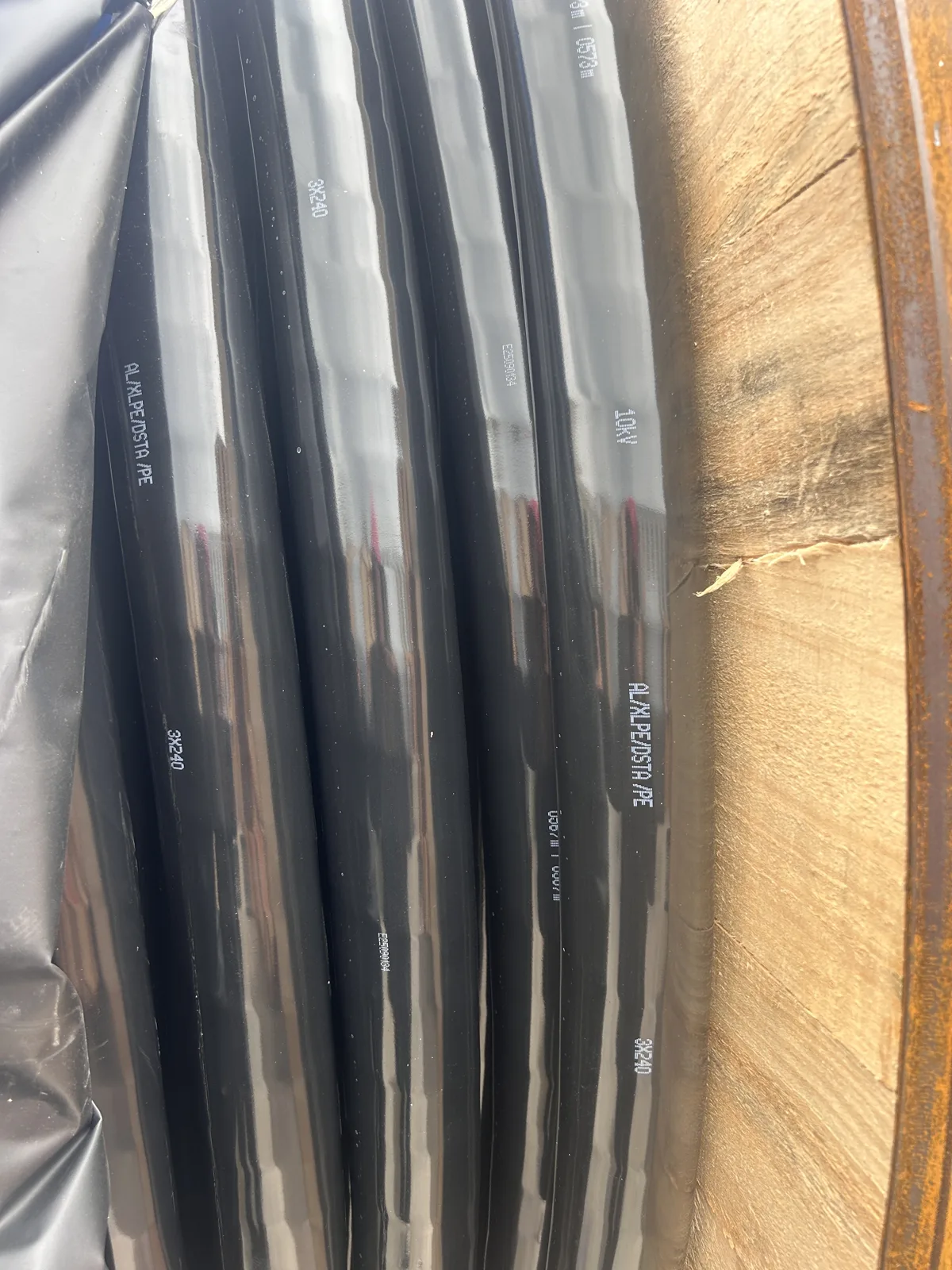
If the owner or the lender requires independent inspection, name the inspection body type, the tests to be witnessed and the notice period in the RFQ. You can see our quality certifications and test report types on our certificates page, and our production and test areas on the factory page.
Receipt, storage and commissioning
Receipt, storage and laying all affect the condition of the cable and its accessories, so commissioning control on an 11kV/415V underground circuit should start with the inspection at delivery.
Receipt checklist
- Drum number, BOQ item and length match the packing list and the drum schedule.
- Drum flanges and battens intact; no nails or battens pressing into the outer layer.
- Both cable ends sealed; end caps undamaged.
- Test records supplied for each drum number.
- Any damage photographed before the drum is moved, and reported within the agreed period.
Storage and handling
Store drums on firm, level, drained ground, chocked against rolling, and rolled only in the direction of the arrow on the flange. Keep end caps on until jointing. If a cable end has to be cut for a test, re-seal it the same day. Bending radius and pulling limits come from the manufacturer's datasheet; laying method comes from the installation design.
Commissioning sequence
The sequence below is a common order of work. The tests, test levels and acceptance criteria come from your specification and the utility's rules, not from this list.
- Before jointing: check each length for continuity and insulation resistance against the factory record, so that any transport damage is found before accessories are fitted.
- After jointing and terminating: complete the phase identification and check that the phase sequence matches at both ends of the 11kV circuit and at the transformer LV side.
- After-laying test on the 11kV circuit: carry out the sheath test and the insulation test required by the specification, with the owner's engineer or utility witnessing.
- 415V circuits: insulation resistance, continuity of conductors and protective conductors, and polarity or phase rotation checks per the project wiring rules.
- Earthing and bonding: confirm screen and armour bonding as designed, and record the earth connection at each end.
- Energisation: by the network operator or owner under their switching procedure. Whether the cable supplier attends is set by the contract.
- Record: results signed by the parties who carried out and witnessed each test.
If a site test fails, stop and agree the investigation with all parties before cutting cable. Keep the failed section, record where it failed, and compare the result against the factory routine test record for that drum.
Handover file checklist
Final payment is easier to agree when the handover file is defined in the RFQ. A complete file for an 11kV/415V underground cable package usually holds these records.
| Document | Source | Why it is needed |
|---|---|---|
| Approved cable datasheets and drawings | Cable supplier | Future repair and accessory ordering |
| Type test reports for the supplied constructions | Cable supplier | Proof of design compliance |
| Routine and sample test records by drum number | Cable supplier | Traceability of each installed length |
| Third-party inspection report, if any | Inspection body | Independent verification |
| Packing list and drum schedule as shipped | Cable supplier | Links drum numbers to circuits |
| Accessory type test reports and installation instructions | Accessory supplier | Proof of accessory compliance and correct method |
| Jointer records: joint position, date, jointer, kit batch | Installation contractor | Fault location and warranty |
| After-laying and commissioning test reports | Installation contractor, witnessed | Acceptance evidence |
| As-built route drawings with joint positions and depths | Installation contractor | Future excavation and fault repair |
| Warranty statements | Each supplier | Defines liability after handover |
Link each installed section to its drum number in the as-built records. Years later, when a fault appears, that one link lets the owner find the factory test record for the exact length in the ground.
What to send us for a quotation
To request a quotation for the cable part of an 11kV/415V package, send the BOQ in the structure above, with these items attached:
- The rated-voltage designation for every 11kV line, and 0.6/1 kV for the 415V lines.
- Conductor metal, cores and size for each line.
- Screen, armour and sheath requirements, and whether a water barrier is required.
- The governing standard, edition and any utility specification.
- Route lengths and the drum schedule or joint plan, if available.
- Sheath marking requirements.
- Incoterm, named place and destination.
- Inspection requirements and the handover document list.
In the enquiry, split cable, accessories, laying and site testing into separate BOQ items or responsibility lines, and ask every bidder to state its own supply boundary. Our LV and MV power cable range is on the power cable range. When the BOQ is ready, send it through the contact page.
FAQ
Is 11kV/415V cable one cable or two?
Two. The 11kV side is medium-voltage cable under IEC 60502-2 or the utility's standard. The 415V side is low-voltage cable, normally specified as 0.6/1 kV under IEC 60502-1. Keep them on separate BOQ lines.
Which voltage designation should I use for an 11kV feeder?
That depends on the network earthing and the allowed earth fault duration, so it is the design engineer's decision. Write the full U0/U (Um) designation in the BOQ. Our catalogue supplies 11 kV systems from the 8.7/15 kV class.
Does the cable supplier provide joints and terminations?
It depends on the supplier and the contract, so do not assume either way. List accessories as separate BOQ lines, ask each bidder to confirm in writing whether they are included, and send the final cable datasheet to the accessory supplier so the fit is confirmed against the cable's actual dimensions.
Can the factory test certificate replace the site test?
They cover different stages. Factory records show the results of the specified tests at the production stage. Site tests check the condition after transport, laying and accessory installation. Whether both are required is set by the project specification and the utility's rules.
Which edition of IEC 60502-2 should the RFQ name?
The one the consultant or utility requires. According to the IEC Webstore, the current base edition is IEC 60502-2:2014 (Edition 3.0), with Amendment 1 published in 2024 and a consolidated Edition 3.1. State in the RFQ whether the amendment applies.
How much extra length should I order over the route length?
There is no single percentage. Set it from the joint plan, termination tails, route bends and test cut-offs. The factory can then confirm the maximum length per drum for each construction.
What documents should I receive with the cable?
At minimum: datasheets, type test reports, routine and sample test records by drum number, and the packing list with drum schedule. Add inspection reports and warranty statements if the contract requires them.
Sources
- IEC Webstore (webstore.iec.ch), catalogue pages publication/64963, 2272, 95394, 68877 and 71131, checked September 2026: IEC 60502-1:2021 (Edition 3.0), IEC 60502-2:2014 (Edition 3.0) with Amendment 1:2024 and the consolidated IEC 60502-2:2014+AMD1:2024 CSV (Edition 3.1, published 2024-05-30, marked "Corrected Version 2026-07"), IEC 60502-4:2023 (Edition 4.0) and IEC 61442:2023 (Edition 3.0). Scope statements on this page summarise the abstracts in those records.
- Henan Huanghe Cable LV and MV power cable catalogue: rated-voltage classes and the 8.7/15 kV class used for 11 kV systems.