Key Takeaway
Solar farm medium voltage cable procurement guide for 26/35 kV collector circuits: define the RFQ, compare bids and use a copyable BOQ checklist.
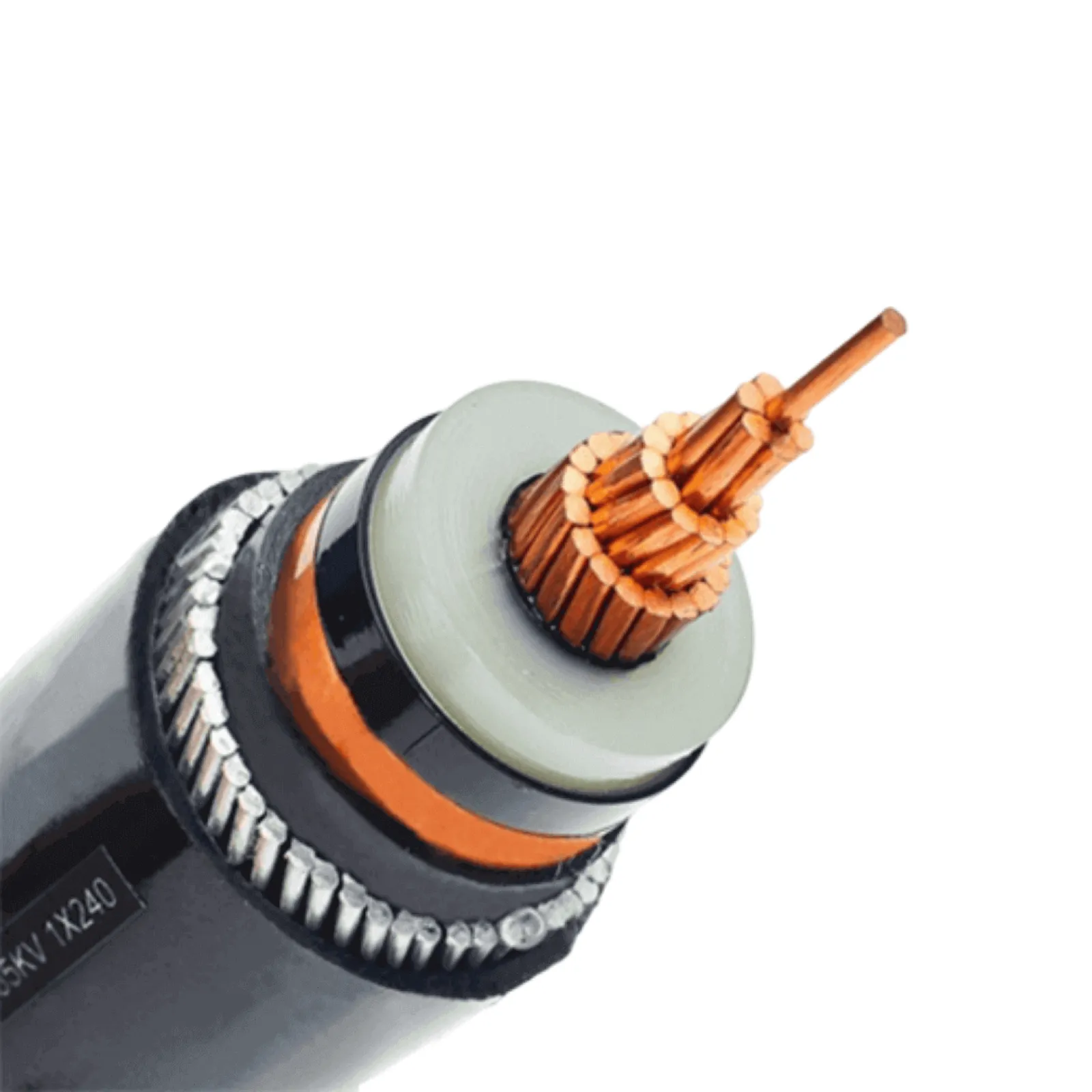
Before a 35 kV solar farm cable package goes out for pricing, the buyer has to lock six things in writing: the rated voltage as U0/U (Um), the conductor material, the number of cores, the cross-section of every circuit, the metallic screen with its fault rating, and the protection layers (water barrier, armour, outer sheath) for each route condition. Add the governing standard with its edition, the drum schedule and the termination interface, and suppliers can quote the same cable. Leave any of these open and every bid will be priced on a different construction, which makes the comparison meaningless.
That is the short answer. This guide on buying solar farm AC collector cable is written for EPC procurement teams, owner's engineers and electrical contractors who are buying the AC medium-voltage collector cable for a utility-scale PV plant in Africa, the Middle East, South Asia or Southeast Asia. It walks through solar farm medium voltage cable procurement in the order the decisions are actually made: what the collector cable is (and is not), what the design team must hand to procurement, the construction choices that change the price, the drum and accessory interface, the documents to request, a bid comparison table, and an RFQ/BOQ block you can copy.
What this guide does not do: it does not size cables, give prices, or recommend a construction for your site. Conductor size and current rating come from the project engineer's calculation for the actual route, laying method and soil. Our job in this article is to make sure the result of that calculation reaches the factory intact.
What is a 26/35 kV solar collector cable, and how is it different from DC PV cable?
A solar farm has two cable systems that are often bought by the same team but should never sit in the same RFQ line.
The DC PV cable runs from the modules to string combiner boxes and inverters. It is a low-voltage, single-core, flexible cable with a DC voltage rating, built for exposure to sunlight on module racks. It is ordered to photovoltaic cable standards such as EN 50618 or IEC 62930, and sizes are typically small. If that is the package you are buying, it belongs in a separate RFQ with its own standard and marking requirements, not in the collector cable lines described here.
The AC medium-voltage collector cable starts after the inverter step-up transformer (or the inverter station) and connects the blocks of the plant to the main substation. In a 35 kV collection system it is a screened, XLPE-insulated power cable with an AC rating such as 26/35 kV. It is usually laid underground in trenches or ducts over long routes, often in loops or radial feeders, and terminated at ring main units, switchgear and transformer bushings.
The differences that matter in procurement:
| Item | DC PV cable | 26/35 kV AC collector cable |
|---|---|---|
| System | DC, module strings to inverter | AC, transformer/inverter station to substation |
| Rating format | DC voltage rating of the PV cable standard | U0/U (Um), e.g. 26/35 kV |
| Insulation system | Cross-linked PV compound, no screen | Conductor screen, XLPE insulation, insulation screen |
| Metallic screen | None | Copper tape or copper wire screen, sized for earth fault |
| Typical laying | On racks and in cable trays, sun-exposed | Direct buried, in ducts or trenches |
| Standards family | EN 50618, IEC 62930 | IEC 60502-2 up to 18/30 (36) kV; national standards for 26/35 kV |
| Typical buyer question | Size, colour, UV/temperature rating, roll length | Voltage class, screen, water barrier, armour, drum lengths, accessories |
If a tender line just says "solar cable 35 kV", it is ambiguous. Ask whether the line means the AC collector circuit, and replace it with the full construction before the RFQ goes out.
Which voltage class does your 35 kV collector circuit actually need?
"35 kV" on a single-line diagram is the nominal system voltage. The cable is specified by a rated voltage written as U0/U (Um): U0 is the voltage between conductor and screen, U is the voltage between conductors, and Um is the highest system voltage the cable is designed for. Two cables can both be called "35 kV cable" in conversation and still have different insulation thicknesses and prices.
This is where many solar RFQs go wrong, because the standard named in the specification does not cover the voltage named on the drawing:
- IEC 60502-2 covers extruded-insulation power cables from 6 kV (Um = 7.2 kV) up to 30 kV (Um = 36 kV). Its top class is 18/30 (36) kV. The current edition is IEC 60502-2:2014 (Edition 3.0), and the IEC Webstore also lists a consolidated version with Amendment 1:2024 (IEC Webstore, checked October 2026).
- A 26/35 kV cable sits above that ceiling. It is a rated-voltage class used in Chinese GB-based specifications and in other national or utility specifications, and it is the class published in the Huanghe catalogue for 35 kV systems.
So a tender that says "35 kV collector cable to IEC 60502-2" contains a contradiction. Before the RFQ, ask the design engineer to confirm one of two things in writing: either the system needs an 18/30 (36) kV cable to IEC 60502-2, or it needs a 26/35 kV cable to a named national or utility specification, with the Um value stated. Both can be manufactured; they are not interchangeable, and a supplier who quotes one against a request for the other is quoting a different product.
For reference, the Huanghe catalogue lists both the 18/30 kV and the 26/35 kV classes, as well as 21/35 kV, with separate tables for each. In the 26/35 kV tables the nominal XLPE insulation thickness is 10.5 mm (source: Huanghe factory data, LV/MV power cable catalogue, 26/35 kV tables on PDF pp. 10, 14, 17 and 21). We use that figure only to show why the class matters for price and drum size; the governing standard sets the minimum.
What must engineering hand to procurement before the RFQ?
A collector cable RFQ is only as good as the design input behind it. Procurement should not be choosing conductor sizes, and a factory should not be asked to "recommend a size" for a route it has never seen. Current rating depends on the laying method, depth, grouping of circuits in the same trench, soil thermal resistivity, ambient and ground temperature, and the loading pattern of the plant. Those are design decisions. Catalogue current ratings are useful for a first look, but the catalogue states the conditions behind them, and your site will not match them.
For example, the Huanghe catalogue current ratings are based on 90 °C maximum conductor temperature, 40 °C ambient in air, 25 °C ground temperature, 80 cm laying depth and a soil thermal resistivity of 100 °C·cm/W (source: Huanghe factory data, catalogue PDF p. 6). A desert site with hot, dry backfill, or a trench carrying several circuits side by side, can move the real rating a long way from the catalogue value. That is exactly why the size has to come from the project engineer's calculation for each route section.
Ask the design team for this package, and attach it to the RFQ:
- Rated voltage as U0/U (Um), and the governing cable standard with its edition.
- Single-line diagram of the collection system showing each feeder, loop or radial circuit.
- Cable schedule: one line per circuit with from/to, route length, number of cores, conductor material and cross-section.
- Laying conditions per section: direct buried, in ducts, in trenches, on trays inside stations; and where the route crosses roads, drainage or wet ground.
- Earth-fault data for the metallic screen: the fault current and duration the screen must carry, and whether screens are bonded at both ends, single-point bonded or cross-bonded.
- Termination and jointing plan: what each cable end connects to, and where joints are allowed or not allowed.
- Environmental notes that affect the sheath: groundwater, termites or rodents, chemical exposure, UV on any exposed sections.
With that package, the supplier is quoting a defined product. Without it, the supplier is guessing, and the cheapest bid is often the one that guessed the lightest construction.
Copper or aluminium conductor?
The Huanghe 26/35 kV catalogue publishes tables for both copper (YJV) and aluminium (YJLV) conductors, in both single-core and three-core constructions (source: Huanghe factory data). Aluminium is often evaluated for long feeders because it is lighter and its material cost is lower; copper gives a smaller cable for the same current, which can matter where space, bending or terminations are tight. The choice changes the conductor size for the same current, the drum weight, and the lugs and connectors at every termination, so it is an engineering decision that has to be fixed before the RFQ, not a commercial option left for the supplier.
If you ask for both, ask for both explicitly, as two separate priced lines with their own cross-sections from the calculation. Do not assume that copper and aluminium conductors of the same cross-section are electrically equivalent. Any aluminium cross-section offered as an alternative has to be re-confirmed by the project engineer against current rating, voltage drop, losses and short-circuit duty.
Single-core or three-core?
Both constructions exist at 26/35 kV. The Huanghe catalogue lists single-core 26/35 kV cable from 50 to 800 mm² and three-core from 50 to 400 mm², in copper and aluminium (source: Huanghe factory data, PDF pp. 10, 14, 17 and 21). The choice affects:
- Current capacity and size range. Large feeders often go single-core because three-core sizes stop at a lower cross-section.
- Laying. Single-core circuits are laid in trefoil or flat formation; the formation and spacing change the rating and the screen losses.
- Screen bonding. Single-core screens carry induced currents; the bonding method has to be in the design.
- Armour. In single-core AC circuits, magnetic steel armour can cause significant additional losses. Where armour is needed, the design usually specifies a non-magnetic construction such as aluminium wire armour (AWA), confirmed against the project loss calculation, laying formation and applicable standard. The Huanghe XLPE page lists single-core MV in STA or AWA and three-core in STA, SWA or AWA (Huanghe XLPE cable page); that is a list of available options, not an engineering approval for your circuit.
- Drum count and joints. A three-core feeder is one drum per length; a single-core circuit is three.
Write the core count into every line of the cable schedule. "35 kV 1×240" and "35 kV 3×240" are two different cables with two different prices, drums and accessories.
Cross-section: who decides?
The project engineer. The cross-section on each line of the RFQ should come from the current rating, voltage drop, loss and short-circuit checks for that route. Procurement can legitimately ask the engineer to rationalise sizes, because ordering four sizes instead of seven reduces drum count, spare stock and accessory variants. But the factory should not be the one who decides that a 185 mm² feeder can be 150 mm².
How do the screen, water barrier, armour and sheath depend on the route?
Above the insulation, everything in a 26/35 kV cable is chosen for the installation and the fault level. These layers are also where most of the price difference between bids hides.
The Huanghe catalogue cross-section sketch shows the MV build-up as conductor, conductor screen, XLPE insulation, insulation screen, metal screen, filler (three-core), separating sheath, armour and oversheath (source: Huanghe factory data, PDF p. 7). The XLPE page lists copper tape screen as the standard, with copper wire plus copper tape helical screen as an option, steel tape, steel wire or aluminium wire armour as options, and PVC, PE or LSZH sheath (Huanghe XLPE cable page).
Metallic screen
The metallic screen confines the electric field within the insulation and, when connected and earthed as designed, provides a path for capacitive (charging) current and fault current. Its cross-section and bonding arrangement are set by the earth-fault current and its duration in the design. A copper tape screen and a copper wire screen with a stated cross-section are not equivalent; if the design requires a minimum screen cross-section in mm², write it in the RFQ and ask each supplier to state the screen construction and its cross-section in the bid.
Longitudinal and radial water barrier
Collector cables in solar plants spend their life in trenches that can flood in a rainy season or sit in wet ground. If water enters at a damaged sheath or an open cable end, it can travel along the screen. Some specifications require longitudinal water-blocking tapes or swelling powder under the sheath, and some require a radial moisture barrier such as a laminated metal foil bonded to the sheath. These are construction options that must be named in the RFQ, because they change the price and the termination method. Huanghe's published MV construction does not list a water-blocking layer as standard, so if your specification requires one, treat it as a configuration to be confirmed in writing, with the construction drawing, before you accept the bid.
Armour
Direct-buried routes where the trench may be disturbed, or where rocky backfill is expected, often call for armour; routes in ducts often do not. The Huanghe catalogue describes the application split clearly: unarmoured YJV/YJLV for laying indoors, in tunnels, underground and in channels where the cable does not have to bear external mechanical force; steel tape armoured (YJV22) where it must bear external mechanical forces but not large pulling force; fine steel wire armoured (YJV32) where it must bear external mechanical pressure and moderate pulling force (source: Huanghe factory data, PDF p. 6).
For single-core AC circuits, magnetic steel armour can cause significant additional losses, so where armour is needed the design usually specifies a non-magnetic construction such as AWA; confirm it against the project loss calculation, laying formation and applicable standard. For three-core, the choice between tape and wire depends on whether pulling tension and ground movement matter on that route. The armour choice also changes the overall diameter and weight a lot: in the 26/35 kV three-core copper table, a 3 × 240 mm² cable is listed at 105.4 mm overall diameter and 13,161 kg/km unarmoured, and every armoured variant listed for the same size in that table is larger and heavier (source: Huanghe factory data, PDF p. 17). Confirm the exact armoured diameter and weight on the datasheet for the construction you order. That moves drum size, drum count and freight.
Outer sheath
PVC and PE are both used. The choice is a specification decision: name the sheath material and grade per route section, for example where a buried route and a section inside a station or building have different requirements. If termite protection, a flame-retardant grade or UV resistance on exposed sections is needed, write the requirement and the test reference. The Huanghe XLPE page lists anti-termite, FR and LSZH variants as available (Huanghe XLPE cable page); those are options to confirm per order, not defaults.
A practical rule for the RFQ: describe the construction per route section, not once for the whole plant. A plant can have one cable type in ducts inside the substation and another for long direct-buried feeders.
Drum lengths, drum numbers and the termination interface
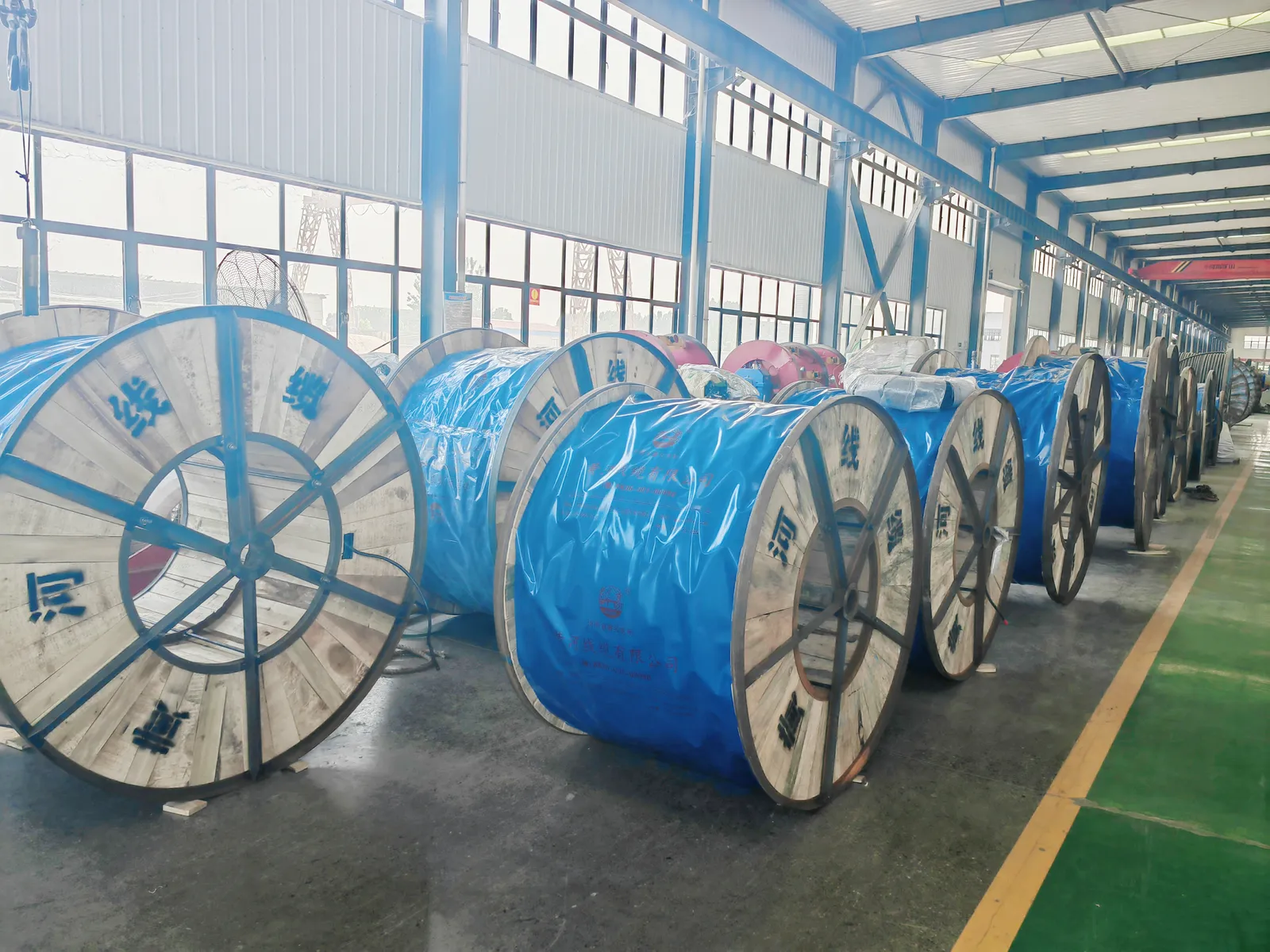
On a solar farm, the cable schedule is long and the circuits are repetitive. That makes drum planning a cost item, not an afterthought. Every joint is an extra accessory, extra jointing labour and an extra failure point, and every drum that arrives with the wrong length either leaves an offcut or forces a joint the design did not plan.
Drum schedule
Send suppliers a drum schedule, not just a total length per size. For each size, list the route lengths and mark the runs that must be delivered in one continuous length. The factory then works out how many runs fit on each drum, within its maximum drum size and weight and within your site's handling limits. Ask the supplier to return:
- Drum number for every drum, matched to the circuit or circuits it serves.
- Length on each drum, and the tolerance the supplier is quoting against.
- Drum type, flange diameter, width and gross weight.
- Confirmation that both cable ends are sealed with end caps for storage and transport.
The overall diameter and weight from the datasheet drive all of this. A 26/35 kV three-core copper cable of 3 × 400 mm² is listed at 117.6 mm overall diameter and 18,789 kg/km unarmoured in the Huanghe catalogue (source: Huanghe factory data, PDF p. 17). At those dimensions, drum capacity, crane capacity at site and road access to remote solar sites become real constraints. If your site has a weight limit for unloading or for the road, put it in the RFQ.
Marking
Ask for sheath marking that lets the site team identify the cable without opening the drum label: manufacturer, rated voltage U0/U (Um), cores and cross-section, conductor material, standard, year of manufacture, and sequential length marking. If the project requires a project name or owner reference on the sheath, give the exact text.
Terminations and joints
The cable is only half of the interface. Terminations at ring main units, switchgear and transformers, and joints along the route, must match the cable's insulation diameter, conductor material and cross-section, and screen construction. Before the RFQ:
- List the equipment each cable end connects to, and the type of interface (indoor termination, outdoor termination, separable connector or bushing type).
- State whether accessories are in the cable supplier's scope or bought separately.
- If accessories are bought separately, give the accessory supplier the cable datasheet with insulation diameter and screen details, and ask for written confirmation that the accessories fit.
If the cable's overall or insulation diameter falls outside the accessory's fitting range, the result is a mismatch at site, delay and a dispute over responsibility. Check the fit in writing at the bid stage.
Delivery documents
The delivery package should be agreed in the RFQ, so it can be checked against drums on arrival:
- Packing list with drum numbers, cable type, size and length per drum.
- Factory test records traceable to each drum or production length.
- Commercial invoice and certificate of origin. For ASEAN destinations, FORM E is commonly requested; Huanghe issues FORM E, general certificates of origin, commercial invoices and packing lists (Huanghe XLPE cable page).
- Any third-party inspection report that was ordered.
Which IEC 60502-2 documents and test records should you request?
Ask for the evidence that matches the standard and edition in your specification, and be specific about which category of test each document belongs to. IEC 60502-2 organises the tests for MV cable into routine tests (carried out on every manufactured length), sample tests (on samples taken from production) and type tests (carried out once on a construction to prove the design). These are different kinds of evidence and should not be confused in a bid.
The practical document list for a collector cable RFQ:
| Document | When | What it should show |
|---|---|---|
| Datasheet and construction drawing | With the bid | Layer by layer construction, thicknesses, screen type and cross-section, armour, sheath, OD, weight, standard and edition |
| Routine test records | With each shipment | Results per drum or production length, traceable by drum number |
| Sample test records | With the shipment or on request | Results for the samples taken from the production run, per the named standard |
| Type test report | With the bid | Laboratory, construction and voltage class tested, standard and edition; the report should cover a construction close enough to the offered one for your engineer to accept |
| Factory inspection and test plan (ITP) | Before production | Which tests are done, at which stage, and which are open to witness |
| Third-party inspection report | If ordered | Scope and results of the inspection agreed in the contract |
Three points that save time in bid clarification:
- Match the voltage class to the standard. A type test to IEC 60502-2 covers classes up to 18/30 (36) kV. If you are buying 26/35 kV to a national specification, ask for the type test evidence that specification requires, and do not accept an IEC 60502-2 report as proof for a class the standard does not cover.
- Check what a certificate actually names. Ask suppliers to show the scope page of every certificate they cite. A product certificate covers the constructions and voltage classes named in it, and nothing else. For example, the CB certificates on our certificates page are not offered as evidence for 26/35 kV collector cable; for this class we work to the test plan and witness arrangements agreed in the order.
- Decide witness points early. If the owner's engineer wants to witness routine tests or a sample test, put it in the RFQ, because it affects the production plan.
For a deeper walk-through of the test categories and how to read the numbers on a report, see our guide on how to read a power cable test report.
How do you compare 26/35 kV collector cable bids side by side?
Once the RFQ is out, the bids rarely come back in the same shape. One supplier quotes per metre with the drums included, another quotes per kilometre ex-works with drums extra, a third has quietly changed the screen or dropped the water barrier. The only reliable method is to normalise every bid into the same grid before anyone looks at the price.
Use one row per RFQ line and these columns per supplier. Fill it from the bid documents, not from the cover email.
| Comparison item | What to check | Red flag |
|---|---|---|
| Rated voltage U0/U (Um) | Same class as the RFQ line | "35 kV" with no U0/U, or a lower class |
| Standard and edition | Same as the RFQ | A different standard with no deviation note |
| Conductor | Material, class, cross-section | Aluminium offered at the copper size without the engineer's re-check |
| Insulation | XLPE, nominal thickness on the datasheet | Thickness missing or below the named standard |
| Metallic screen | Type and cross-section in mm² | "Copper tape" with no cross-section when the design gives one |
| Water barrier | Longitudinal and/or radial, as specified | Silent omission |
| Armour | Type (tape, wire, non-magnetic) | Magnetic steel armour offered on single-core AC circuits without the design's loss check |
| Outer sheath | Material, grade, colour, special properties | PVC offered where PE was asked, without a note |
| OD and weight | Per size, from the datasheet | Values that do not match the stated construction |
| Drum plan | Drum count, lengths, drum weight | Lengths that force unplanned joints |
| Documents | Datasheet, test records, type test evidence | Type test for a different voltage class or construction |
| Witness and inspection | Accepted as asked | "Available on request" without confirming scope |
| Commercial basis | Incoterm, currency, validity, payment terms | Different Incoterms across bids |
| Production time | Stated as production only or delivery to site | Production time presented as arrival date |
| Deviations | Listed line by line | A general "as per our standard" clause |
Two habits make this table work. First, ask every bidder to answer the RFQ line by line and to list deviations in a separate table, so a changed construction cannot hide in a datasheet. Second, compare price only between bids that pass the technical rows, and keep the commercial terms on the same basis (same Incoterm, same drum treatment) before ranking.
For the commercial row, be careful with production time: ask whether it is production only or delivery to site. On our side, price, MOQ and the production schedule are quoted and confirmed per order, once the voltage class, construction, lengths, drums and inspection requirements are confirmed.
A copyable 26/35 kV collector cable RFQ and BOQ template
Copy the block below into your RFQ, or use it as a sheet attached to the tender; it doubles as an MV cable RFQ checklist for the design review. One BOQ line per cable type and size. Where a field is still open, write "to be confirmed" rather than deleting it, so bidders can see what is still open. This is a blank template, not an extract from a real project.
RFQ – AC MV collector cable for solar PV plant

Project / tender reference: ____________________
Destination country and port: ____________________
Site location and road access limits (drum size / weight): ____________________
Incoterm and named place: ____________________
Bid validity required: ____________________

Rated voltage U0/U (Um): ____ / ____ (____) kV
Governing cable standard and edition: ____________________
Other specifications (owner / utility / consultant): ____________________

BOQ
Line | Cores x mm² | Conductor (Cu/Al), class | Screen type + mm² | Water barrier (none / long. / radial) | Armour | Sheath | Total length (m) | Drum schedule ref.
1    |             |                          |                   |                                      |        |        |                  |
2    |             |                          |                   |                                      |        |        |                  |
3    |             |                          |                   |                                      |        |        |                  |

Laying per route section (direct buried / duct / trench / tray): ____________________
Screen earth-fault rating (kA, s) and bonding method: ____________________
Environment (groundwater, termites, chemicals, UV on exposed sections): ____________________
Sheath marking text: ____________________

Terminations / joints: in cable supplier scope? Yes / No
Equipment interfaces (RMU / switchgear / transformer, type): ____________________

Documents with bid: datasheet and drawing per line, type test evidence for the offered class, deviation list
Documents before production: inspection and test plan, drum schedule with drum numbers
Documents with shipment: routine test records per drum, packing list, certificate of origin (type: ______)
Witness / third-party inspection: No / Yes – body and scope: ____________
Required delivery window at site: ____________________
Send the same filled template to every bidder. When the bids return, transfer each answer into the comparison table above, line by line.
What Huanghe can supply for 26/35 kV collector circuits
We are the export site of Huanghe Cable Group (Henan Interbath Cable Co., Ltd.). This is what our published data supports for 26/35 kV, and nothing more:
| Item | Verified scope | Source |
|---|---|---|
| MV voltage classes | 3.6/6, 6/10, 8.7/15, 12/20, 18/30 and 26/35 kV (the catalogue also tabulates 21/35 kV) | Huanghe XLPE cable page; catalogue |
| Constructions | YJV (copper) and YJLV (aluminium), XLPE insulated, PVC or PE sheath | Huanghe XLPE cable page |
| 26/35 kV sizes, single-core | 50–800 mm², copper and aluminium | Catalogue PDF pp. 10, 14 |
| 26/35 kV sizes, three-core | 50–400 mm², copper and aluminium | Catalogue PDF pp. 17, 21 |
| Nominal XLPE insulation, 26/35 kV | 10.5 mm | Catalogue 26/35 kV tables |
| Conductor temperature | 90 °C continuous; 250 °C short circuit, not more than 5 s | Catalogue PDF p. 6 |
| Metallic screen | Copper tape screen; copper wire + copper tape helical screen optional | Huanghe XLPE cable page |
| Armour | Optional: steel tape, steel wire or aluminium wire; MV single-core listed in STA or AWA, three-core in STA, SWA or AWA. Listed options only; armour for single-core AC circuits is set by the project design and loss calculation | Huanghe XLPE cable page |
| Variants | FR, LSZH and anti-termite versions listed as available | Huanghe XLPE cable page |
All values above are Huanghe factory data as published. The full 26/35 kV three-core copper and aluminium tables, with overall diameter, weight and catalogue current ratings per size, are on our 26/35 kV YJV/YJLV product page. Treat the catalogue current ratings as factory data under the catalogue's stated conditions, not as a size selection for your route.
What we confirm per order, rather than claim in advance: water-blocking constructions, screen cross-sections set by your fault level, non-standard armour, maximum drum lengths for each size, and the type test evidence for the class and standard in your specification. Those are answered in writing with the datasheet for your exact line.
If you want to see where the cable is made, our factory page shows the production and test areas, and the certificates page linked above lists what each certificate we hold actually covers. For context on screen types and the wider 11 kV and 33 kV range, see our 11kV and 33kV medium voltage cable guide.
Send us your collector cable package
The fastest way to get a quotation that can be compared against other bids is to send the RFQ block above, filled in. If you are not there yet, send these items and we will come back with a datasheet per line and a quotation against your specification:
- Rated voltage as U0/U (Um), and the governing standard with its edition.
- Conductor material (copper or aluminium), number of cores and cross-section for every line, from your design.
- Total length per size and, if you have it, the drum schedule with route lengths.
- Laying method per route section: direct buried, ducts, trenches or trays.
- Screen requirement (type, cross-section or fault rating), water barrier, armour and sheath.
- Destination port and Incoterm, plus any drum size or weight limit at site.
- Documents and inspection you need with the bid and with the shipment.
Our other MV and LV power cable ranges are listed under power cables. When your list is ready, send it through the contact page.
FAQ
What is the difference between DC PV cable and 26/35 kV AC collector cable?
DC PV cable is a low-voltage, single-core flexible cable that connects modules to combiner boxes and inverters, made to standards such as EN 50618 or IEC 62930. A 26/35 kV collector cable is a screened XLPE medium-voltage AC cable that connects inverter transformer stations to the substation. They are different products and belong in separate RFQ lines.
Does IEC 60502-2 cover 26/35 kV cable?
No. IEC 60502-2 covers rated voltages from 6 kV (Um = 7.2 kV) up to 30 kV (Um = 36 kV), so its top class is 18/30 (36) kV. A 26/35 kV cable is specified to a national or utility specification. Confirm with the design engineer which class and standard the project needs before the RFQ.
Who should choose the cable size for a solar collector circuit?
The project engineer. The cross-section depends on current rating, laying method, grouping, soil and ambient conditions, voltage drop and short-circuit duty for each route. Catalogue current ratings are based on stated reference conditions and do not replace that calculation.
Should collector cable be copper or aluminium?
Both are used. Aluminium is lighter and lower in material cost; copper gives a smaller cable for the same current. The choice changes size, drum weight and termination hardware, so it should be fixed in the design and written per line in the RFQ.
Do 26/35 kV collector cables need armour?
It depends on the route. Unarmoured cable is used where the cable will not bear external mechanical force, such as in ducts; steel tape or wire armour is used where mechanical protection or pulling strength is needed. For single-core AC cables, magnetic steel armour can cause significant additional losses; where armour is needed, the design usually specifies a non-magnetic construction such as AWA, confirmed by the project loss calculation.
What documents should a collector cable bid include?
A datasheet and construction drawing per line, type test evidence for the offered voltage class and standard, an inspection and test plan, and a deviation list. With the shipment, ask for routine test records per drum, a packing list with drum numbers and the certificate of origin.
Do you publish prices or lead times for 26/35 kV cable?
No. Price, MOQ and the production schedule are quoted and confirmed per order, once the voltage class, construction, lengths, drums and inspection requirements are confirmed.
Sources
- Huanghe factory data: Huanghe Cable Group LV/MV power cable catalogue (PDF published on huanghecables.com), 26/35 kV single-core and three-core copper and aluminium tables (PDF pp. 10, 14, 17, 21), cable application table and service conditions (p. 6), MV cross-section structure (p. 7).
- Huanghe XLPE insulated electric cable page, huanghecables.com: MV voltage classes, constructions, screen, armour and sheath options, packing and export documents. Checked October 2026.
- IEC 60502-2:2014 (Edition 3.0), Power cables with extruded insulation and their accessories for rated voltages from 1 kV (Um = 1.2 kV) up to 30 kV (Um = 36 kV), Part 2: Cables for rated voltages from 6 kV (Um = 7.2 kV) up to 30 kV (Um = 36 kV). IEC Webstore listing, including the consolidated version with Amendment 1:2024, checked October 2026.
- Market context only: a Nexans product listing for 35 kV medium-voltage solar farm cable, and another manufacturer's renewable-energy cable range that lists 26/35 kV solar cable alongside 0.6/1 kV PV cable. These were used to confirm the procurement scenario, not as data for this article.